Department of The First Clinical medicine, Shandong University of Traditional Chinese Medicine, Jinan, China.
Department of Health Science, Shandong University of Traditional Chinese Medicine, Jinan, China.
BMC Psychiatry. 2024 Mar 27;24(1):232. doi: 10.1186/s12888-024-05693-4.
Neurodevelopmental disorders (NDDs), such as Attention-Deficit/Hyperactivity Disorder (ADHD), Autism Spectrum Disorder (ASD), and Tourette Syndrome (TS), have been extensively studied for their multifaceted impacts on social and emotional well-being. Recently, there has been growing interest in their potential relationship with fracture risks in adulthood. This study aims to explore the associations between these disorders and fracture rates, in order to facilitate better prevention and treatment.
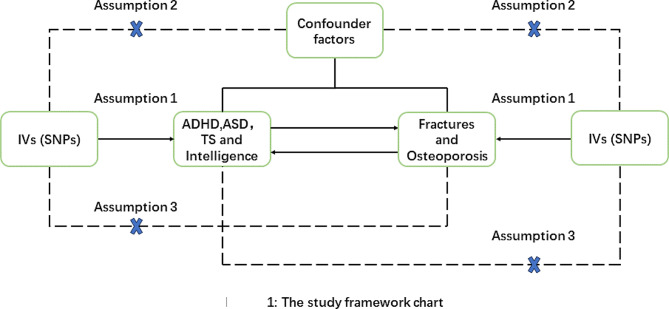
Employing a novel approach, this study utilized Mendelian randomization (MR) analysis to investigate the complex interplay between ADHD, ASD, TS, and fractures. The MR framework, leveraging extensive genomic datasets, facilitated a systematic examination of potential causal relationships and genetic predispositions.
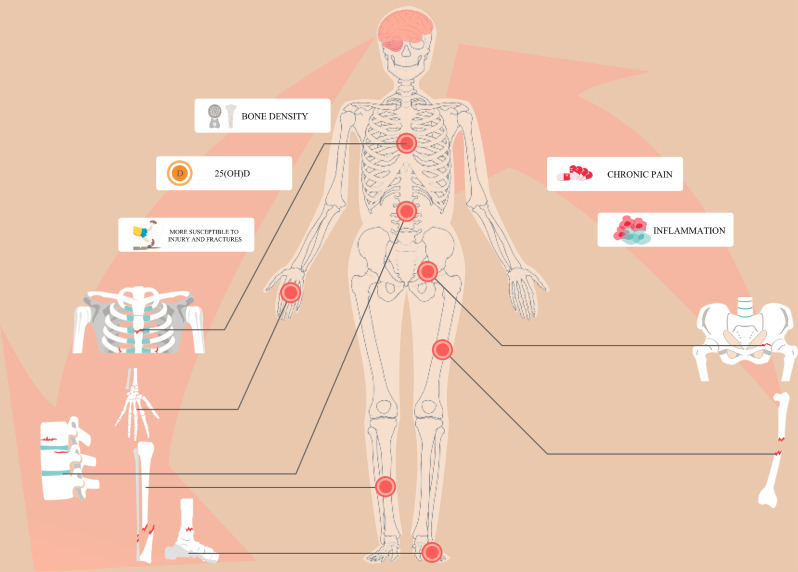
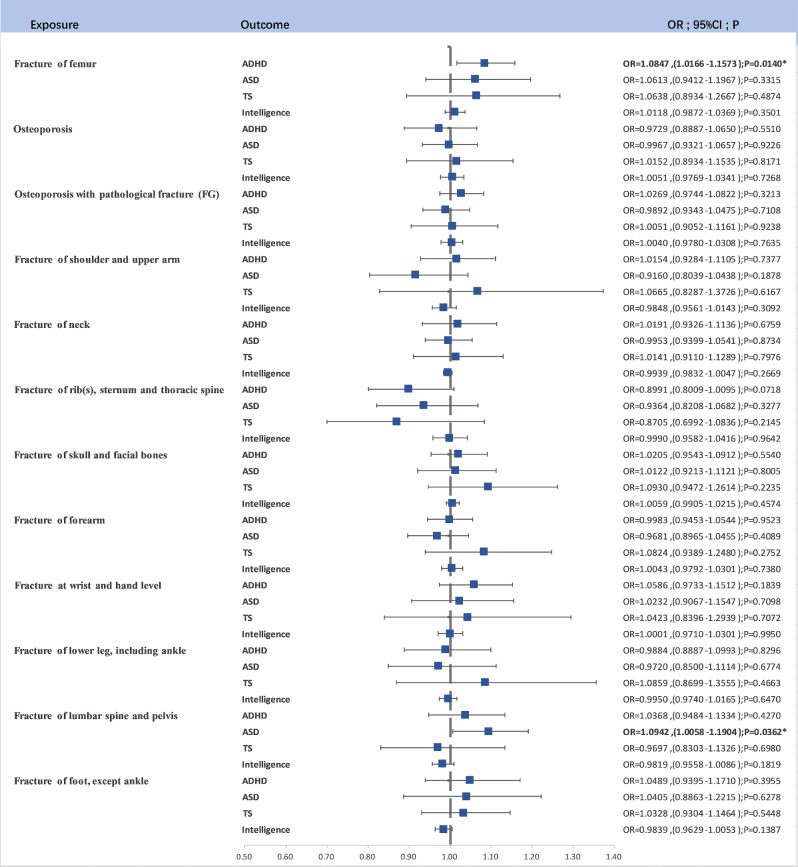
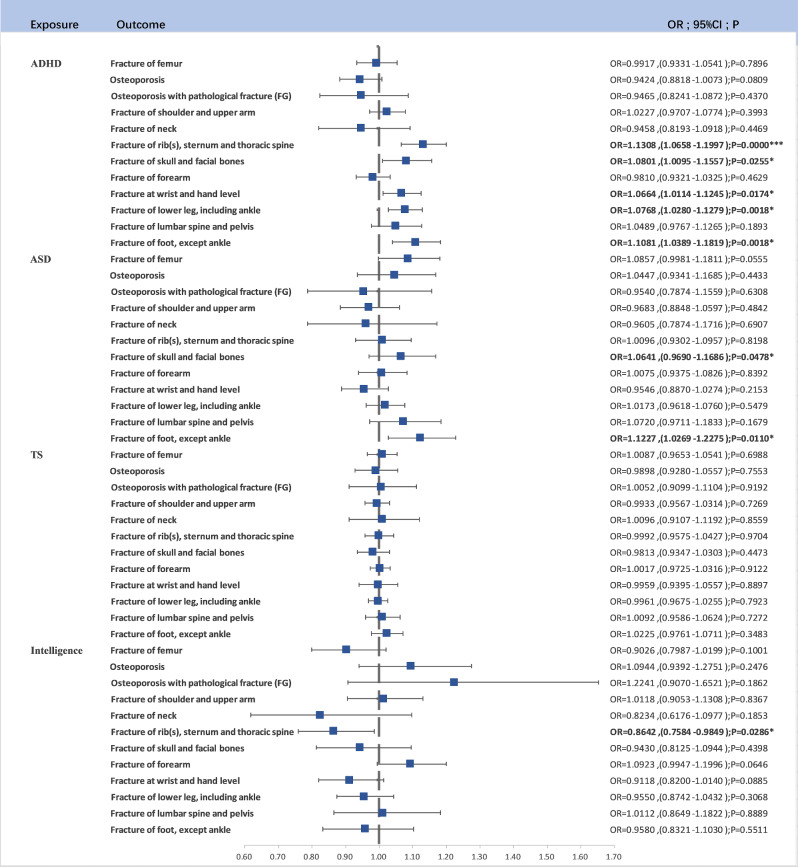
The findings unveil intriguing bidirectional causal links between ADHD, ASD, and specific types of fractures. Notably, ADHD is identified as a risk factor for fractures, with pronounced associations in various anatomical regions, including the skull, trunk, and lower limbs. Conversely, individuals with specific fractures, notably those affecting the femur and lumbar spine, exhibit an increased genetic predisposition to ADHD and ASD. In this research, no correlation was found between TS and fractures, or osteoporosis.These results provide a genetic perspective on the complex relationships between NDDs and fractures, emphasizing the importance of early diagnosis, intervention, and a holistic approach to healthcare.
This research sheds new light on the intricate connections between NDDs and fractures, offering valuable insights into potential risk factors and causal links. The bidirectional causal relationships between ADHD, ASD, and specific fractures highlight the need for comprehensive clinical approaches that consider both NDDs and physical well-being.
神经发育障碍(NDD),如注意力缺陷/多动障碍(ADHD)、自闭症谱系障碍(ASD)和妥瑞氏综合征(TS),因其对社会和情感福祉的多方面影响而受到广泛研究。最近,人们对它们与成年期骨折风险之间的潜在关系越来越感兴趣。本研究旨在探讨这些疾病与骨折发生率之间的关联,以便更好地进行预防和治疗。
本研究采用新方法,即利用孟德尔随机化(MR)分析来研究 ADHD、ASD、TS 与骨折之间的复杂关系。MR 框架利用广泛的基因组数据集,系统地检查了潜在的因果关系和遗传易感性。
研究结果揭示了 ADHD、ASD 与特定类型骨折之间存在引人入胜的双向因果关系。值得注意的是,ADHD 是骨折的一个危险因素,与颅骨、躯干和下肢等多个解剖区域的骨折明显相关。相反,患有特定骨折的个体,特别是影响股骨和腰椎的骨折,表现出对 ADHD 和 ASD 的遗传易感性增加。本研究未发现 TS 与骨折或骨质疏松症之间存在相关性。这些结果从遗传角度揭示了 NDD 与骨折之间的复杂关系,强调了早期诊断、干预和整体医疗保健方法的重要性。
本研究揭示了 NDD 与骨折之间错综复杂的联系,为潜在的风险因素和因果关系提供了新的见解。ADHD、ASD 与特定骨折之间的双向因果关系强调了需要采用综合临床方法来考虑 NDD 和身体健康。