Cater Daniel T, Clem Charles, Marozkina Nadzeya, Gaston Benjamin
Division of Critical Care, Department of Pediatrics, Riley Hospital for Children, Indiana University School of Medicine, Indianapolis, IN 46202, USA.
Division of Pulmonology, Department of Pediatrics, Riley Hospital for Children, Indiana University School of Medicine, Indianapolis, IN 46202, USA.
Antioxidants (Basel). 2024 Feb 21;13(3):263. doi: 10.3390/antiox13030263.
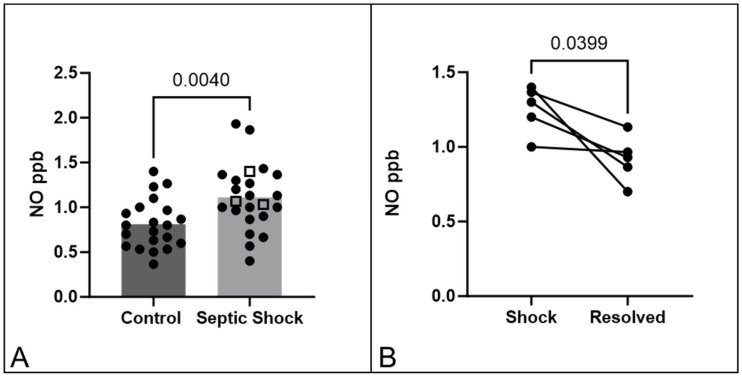
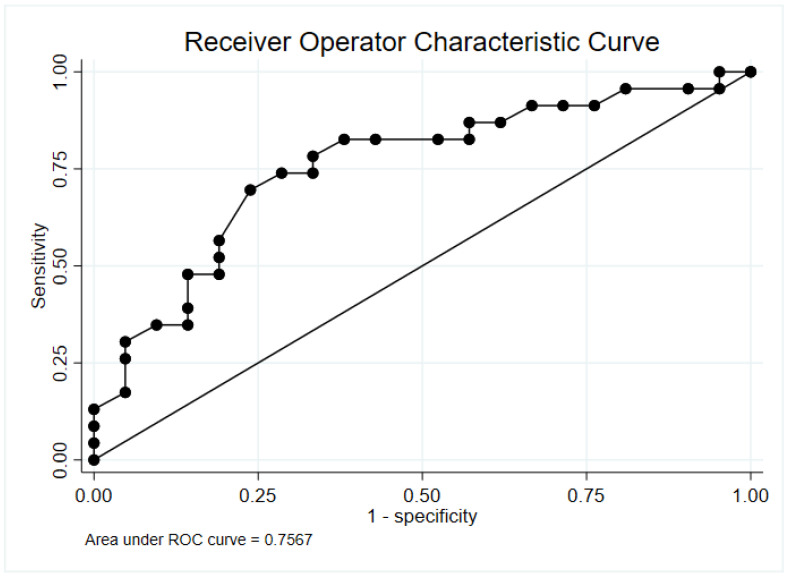
S-nitrosothiols are endogenous, bioactive molecules. S-nitrosothiols are implicated in many diseases, including sepsis. It is currently cumbersome to measure S-nitrosothiols clinically. We have previously developed an instrument to measure tissue S-nitrosothiols non-invasively using ultraviolet light. We have performed a prospective case control study of controls and children with sepsis admitted to the PICU. We hypothesized that tissue S-nitrosothiols would be higher in septic patients than controls. Controls were patients with no cardiopulmonary instability. Cases were patients with septic shock. We measured S-nitrosothiols, both at diagnosis and after resolution of shock. A total of 44 patients were enrolled: 21 controls and 23 with sepsis. At baseline, the controls were younger [median age 5 years (IQR 0, 9) versus 11 years (IQR: 6, 16), -value = 0.012], had fewer comorbidities [7 (33.3%) vs. 20 (87.0%), -value < 0.001], and had lower PELOD scores [0 (IQR: 0, 0) vs. 12 (IQR: 11, 21), -value < 0.001]. S-nitrosothiol levels were higher in sepsis cohort (1.1 ppb vs. 0.8 ppb, = 0.004). Five patients with sepsis had longitudinal measures and had a downtrend after resolution of shock (1.3 ppb vs. 0.9 ppb, = 0.04). We dichotomized patients based on S-nitrosothiol levels and found an association with worse clinical outcomes, but further work will be needed to validate these findings.
S-亚硝基硫醇是内源性生物活性分子。S-亚硝基硫醇与包括脓毒症在内的多种疾病有关。目前临床上测量S-亚硝基硫醇很麻烦。我们之前开发了一种仪器,可使用紫外线非侵入性地测量组织中的S-亚硝基硫醇。我们对入住儿科重症监护病房(PICU)的对照组和脓毒症患儿进行了一项前瞻性病例对照研究。我们假设脓毒症患者组织中的S-亚硝基硫醇水平会高于对照组。对照组为无心肺功能不稳定的患者。病例组为感染性休克患者。我们在诊断时和休克缓解后测量了S-亚硝基硫醇。共纳入44例患者:21例对照组和23例脓毒症患者。基线时,对照组患者年龄更小[中位年龄5岁(四分位间距0,9)对11岁(四分位间距:6,16),P值 = 0.012],合并症更少[7例(33.3%)对20例(87.0%),P值 < 0.001],且儿科死亡风险评估(PELOD)评分更低[0(四分位间距:0,0)对12(四分位间距:11,21),P值 < 0.001]。脓毒症队列中的S-亚硝基硫醇水平更高(1.1 ppb对0.8 ppb,P = 0.004)。5例脓毒症患者进行了纵向测量,休克缓解后呈下降趋势(1.3 ppb对0.9 ppb,P = 0.04)。我们根据S-亚硝基硫醇水平对患者进行二分法分析,发现其与更差的临床结局相关,但需要进一步研究来验证这些发现。