Šojat Dunja, Volarić Mile, Keškić Tanja, Volarić Nikola, Cerovečki Venija, Trtica Majnarić Ljiljana
Department of Family Medicine, Faculty of Medicine, Josip Juraj Strossmayer University of Osijek, J. Huttlera 4, 31000 Osijek, Croatia.
Department of Gastroenterology and Hepatology, University Clinical Hospital Mostar, Bijeli Brijeg bb, 88000 Mostar, Bosnia and Herzegovina.
Biomedicines. 2024 Mar 21;12(3):702. doi: 10.3390/biomedicines12030702.
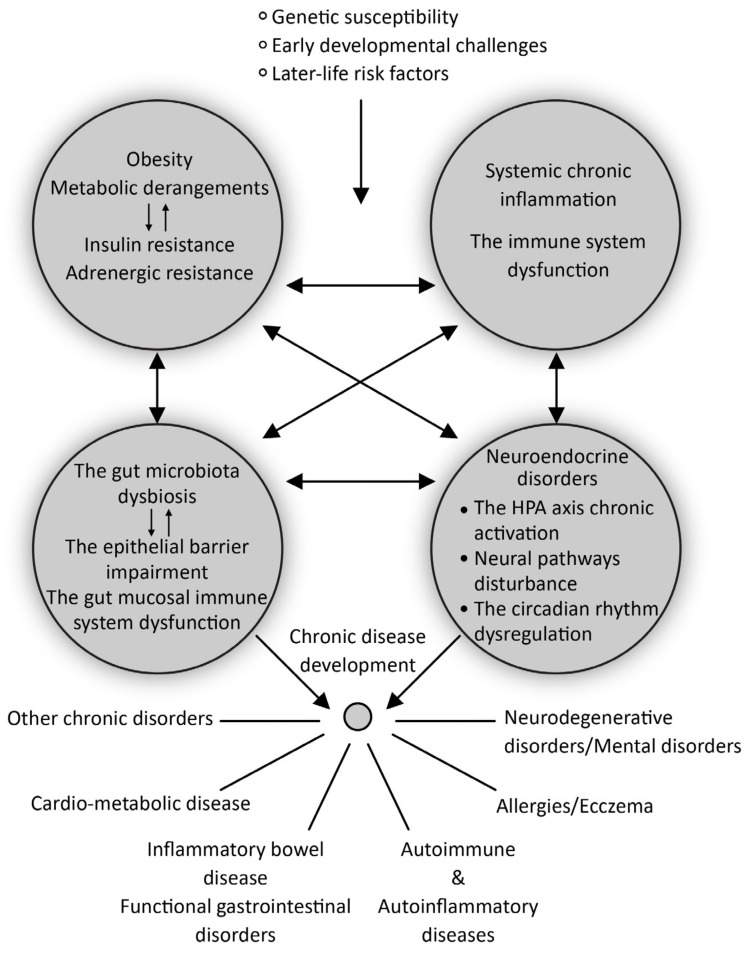
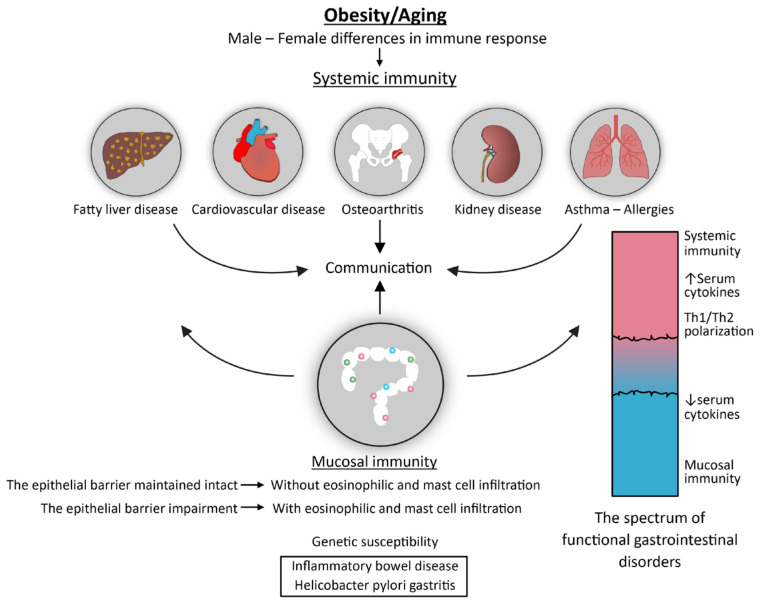
The spectrum, intensity, and overlap of symptoms between functional gastrointestinal disorders (FGIDs) and other gastrointestinal disorders characterize patients with FGIDs, who are incredibly different in their backgrounds. An additional challenge with regard to the diagnosis of FGID and the applicability of a given treatment is the ongoing expansion of the risk factors believed to be connected to these disorders. Many cytokines and inflammatory cells have been found to cause the continuous existence of a low level of inflammation, which is thought to be a basic pathophysiological process. The idea of the gut-brain axis has been created to offer a basic framework for the complex interactions that occur between the nervous system and the intestinal functions, including the involvement of gut bacteria. In this review paper, we intend to promote the hypothesis that FGIDs should be seen through the perspective of the network of the neuroendocrine, immunological, metabolic, and microbiome pathways. This hypothesis arises from an increased understanding of chronic inflammation as a systemic disorder, that is omnipresent in chronic health conditions. A better understanding of inflammation's role in the pathogenesis of FGIDs can be achieved by clustering markers of inflammation with data indicating symptoms, comorbidities, and psycho-social factors. Finding subclasses among related entities of FGIDs may reduce patient heterogeneity and help clarify the pathophysiology of this disease to allow for better treatment.
功能性胃肠疾病(FGIDs)与其他胃肠疾病之间症状的范围、强度和重叠情况,是FGIDs患者的特征,这些患者在背景方面差异极大。FGID诊断以及特定治疗方法适用性面临的另一个挑战是,被认为与这些疾病相关的风险因素在不断增加。已发现许多细胞因子和炎症细胞会导致低水平炎症持续存在,而这被认为是一个基本的病理生理过程。肠脑轴的概念应运而生,为神经系统与肠道功能之间发生的复杂相互作用提供了一个基本框架,其中包括肠道细菌的参与。在这篇综述论文中,我们旨在推广这样一种假说,即FGIDs应从神经内分泌、免疫、代谢和微生物群途径网络的角度来看待。这一假说源于对慢性炎症作为一种全身性疾病的认识不断加深,慢性炎症在慢性健康状况中普遍存在。通过将炎症标志物与表明症状、合并症和心理社会因素的数据进行聚类,可以更好地理解炎症在FGIDs发病机制中的作用。在FGIDs相关实体中找到亚类可能会降低患者的异质性,并有助于阐明该疾病的病理生理学,从而实现更好的治疗。