Motor Neuron Disease Unit, Division of Neuromuscular Diseases, Federal University of Sao Paulo (UNIFESP), Sao Paulo 04039-060, Brazil.
Genes (Basel). 2024 Feb 28;15(3):311. doi: 10.3390/genes15030311.
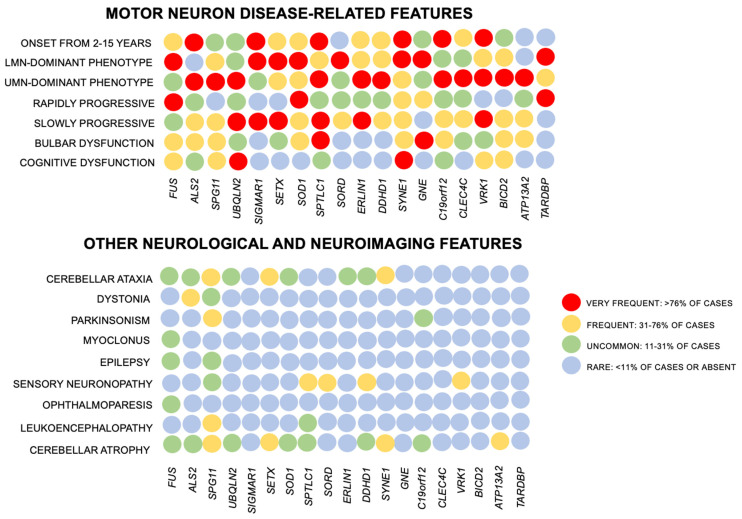
Juvenile Amyotrophic Lateral Sclerosis is a genetically heterogeneous neurodegenerative disorder, which is frequently misdiagnosed due to low clinical suspicion and little knowledge about disease characteristics. More than 20 different genetic have been associated with both sporadic and familial juvenile Amyotrophic Lateral Sclerosis. Currently, almost 40% of cases have an identifiable monogenic basis; type 6, associated with gene variants, is the most prevalent globally. Despite several upper motor neuron-dominant forms being generally associated with long-standing motor symptoms and slowly progressive course, certain subtypes with lower motor neuron-dominant features and early bulbar compromise lead to rapidly progressive motor handicap. For some monogenic forms, there is a well-established genotypic-phenotypic correlation. There are no specific biochemical and neuroimaging biomarkers for the diagnosis of juvenile Amyotrophic Lateral Sclerosis. There are several inherited neurodegenerative and neurometabolic disorders which can lead to the signs of motor neuron impairment. This review emphasizes the importance of high clinical suspicion, assessment, and proper diagnostic work-up for juvenile Amyotrophic Lateral Sclerosis.
青少年肌萎缩侧索硬化症是一种遗传异质性的神经退行性疾病,由于临床怀疑低和对疾病特征的了解甚少,常被误诊。超过 20 种不同的基因与散发性和家族性青少年肌萎缩侧索硬化症有关。目前,几乎 40%的病例有可识别的单基因基础;全球最常见的是与 基因变异相关的 6 型。尽管几种以上运动神经元占优势的形式通常与长期运动症状和缓慢进展过程有关,但某些以下运动神经元占优势特征和早期延髓损害的亚型会导致进行性运动障碍。对于某些单基因形式,存在明确的基因型-表型相关性。目前还没有用于诊断青少年肌萎缩侧索硬化症的特定生化和神经影像学生物标志物。有几种遗传性神经退行性和神经代谢性疾病可导致运动神经元损伤的迹象。本综述强调了对青少年肌萎缩侧索硬化症进行高度临床怀疑、评估和适当诊断的重要性。