Olayiwola Yusuff, Gollahon Lauren
Department of Biological Sciences, Texas Tech University, 2500 Broadway, Lubbock, TX 79409, USA.
Obesity Research Institute, Texas Tech University, 2500 Broadway, Lubbock, TX 79409, USA.
Pharmaceuticals (Basel). 2024 Mar 11;17(3):361. doi: 10.3390/ph17030361.
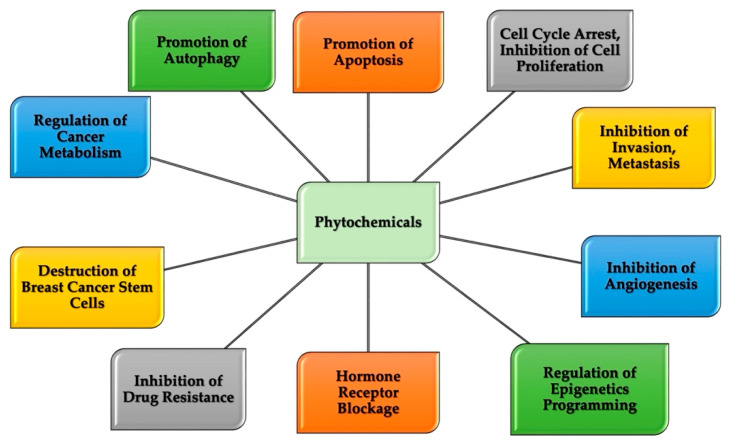
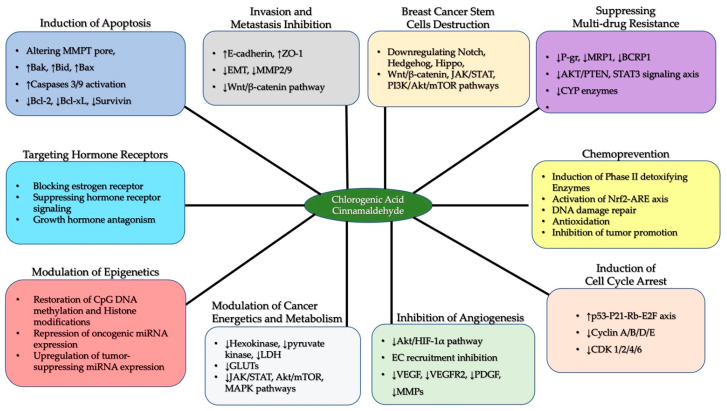
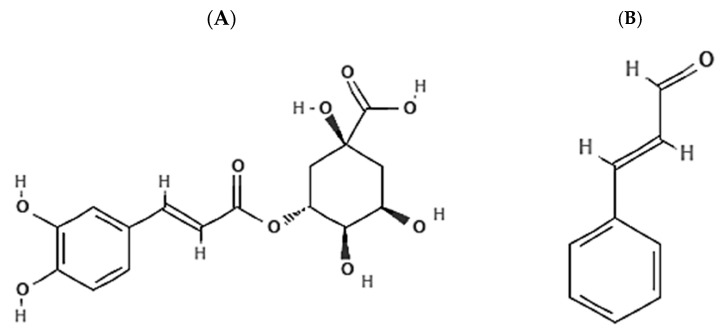
Globally, breast cancer is not only the most frequently diagnosed cancer but also the leading cause of cancer death in women. Depending on breast cancer histotype, conventional breast cancer treatment options vary greatly in efficacy and accompanying side effects. Thus, there is a need for more effective and safer strategies that impact breast cancer at all stages. Plant-based natural products are easily available, with them proving effective and inexpensive. Two such phytochemicals are chlorogenic acid and cinnamaldehyde. Studies have shown their efficacy against different molecular subtypes of breast cancers in vitro and in vivo. In this review, we discuss their current status in anticancer research with specific emphasis on chlorogenic acid and cinnamaldehyde. We describe their multiple mechanisms of action in destroying breast cancer cells, their potential uses, and the need for translational applications. We also include future directions for investigations to progress chlorogenic acid and cinnamaldehyde research from bench to bedside.
在全球范围内,乳腺癌不仅是最常被诊断出的癌症,也是女性癌症死亡的主要原因。根据乳腺癌组织类型,传统的乳腺癌治疗方案在疗效和伴随的副作用方面差异很大。因此,需要更有效、更安全的策略来在乳腺癌的各个阶段发挥作用。植物性天然产物易于获取,且已证明其有效且价格低廉。绿原酸和肉桂醛就是这样两种植物化学物质。研究表明它们在体外和体内对不同分子亚型的乳腺癌均有疗效。在本综述中,我们讨论它们在抗癌研究中的现状,特别强调绿原酸和肉桂醛。我们描述了它们在破坏乳腺癌细胞中的多种作用机制、潜在用途以及转化应用的必要性。我们还纳入了未来的研究方向,以推动绿原酸和肉桂醛研究从实验室走向临床应用。