Seguin Johanne, El Hajjam Mostafa, Legagneux Josette, Diakhaby Sarah, Mignet Nathalie, Boudy Vincent, Toussaint Balthazar, Peschaud Frederique, Emile Jean François, Capron Claude, Malafosse Robert
Université Paris Cité, CNRS, INSERM, UTCBS, 4 Avenue de l'Observatoire, 75006 Paris, France.
Department of Interventional Radiology, Assistance Publique-Hôpitaux de Paris (AP-HP), Ambroise Pare Hospital, 9 Avenue Charles de Gaulle, 92104 Boulogne-Billancourt, France.
Pharmaceutics. 2024 Feb 23;16(3):315. doi: 10.3390/pharmaceutics16030315.
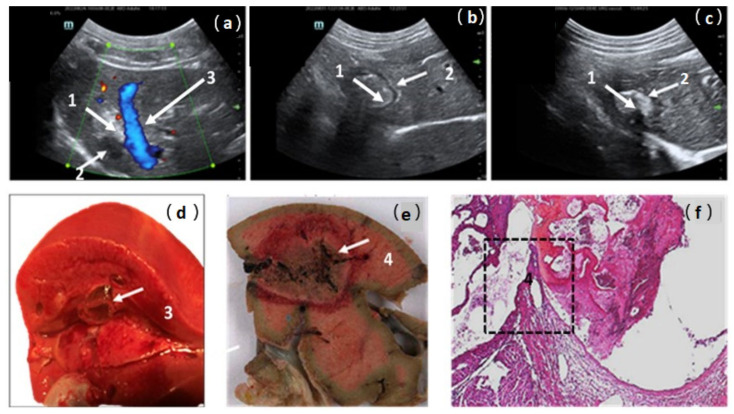
Radiofrequency ablation (RFA) of cancer induces an anti-tumor immunity, which is insufficient to prevent recurrences. In mice, RFA-intratumoral immunotherapy by granulocyte-macrophage colony-stimulating factor (GM-CSF) and Bacillus Calmette-Guerin resulted in complete metastases regression. Infectious risk in human needs replacement of live vaccines. Intratumoral purified protein derivatives (PPD) have never been tested in digestive cancers, and the safety of intratumoral immunotherapy after RFA has not yet been validated in human models. We investigated the therapeutic efficacy of combined radiofrequency ablation (RFA) and intratumoral immunotherapy (ITI) using an immune-muco-adherent thermogel (IMT) in a mouse model of metastatic colorectal cancer (CRC) and the safety of this approach in a pig model. Intratumoral stability of the immunogel was assessed using magnetic resonance imaging (MRI) and bioluminescent imaging. Seventy-four CT26 tumor-bearing female BALB/c mice were treated with RFA either alone or in combination with intratumoral IMT. Regression of distant metastasis and survival were monitored for 60 days. Six pigs that received liver radiofrequency and intralesional IMT injections were followed for 15 days. Experimental gel embolisms were treated using an intravascular approach. Pertinent rheology of IMT was confirmed in tumors, by the signal stability during 3 days in MRI and 7 days in bioluminescence imaging. In mice, the abscopal effect of RFA-intratumoral immunotherapy resulted in regression of distant lesions completed at day 16 vs. a volume of 350 ± 99.3 mm in the RFA group at day 25 and a 10-fold survival rate at 60 days. In pigs, injection of immunogel in the liver RFA area was safe after volume adjustment without clinical, hematological, and liver biology disorder. Flow cytometry showed an early increase in CD3 TCRγδ+T cells at D7 ( < 0.05) and a late decrease in CD29-CD8 T cells at D15 ( < 0.05), reflecting the inflammation status changes. Systemic GM-CSF release was not detectable. Experimental caval and pulmonary thermogel embolisms were treated by percutaneous catheterism and cold serum infusion. RFA-intratumoral immunotherapy as efficient and safe mini-invasive interventional oncology is able to improve ablative treatment of colorectal liver metastases.
癌症的射频消融(RFA)可诱导抗肿瘤免疫,但这种免疫不足以预防复发。在小鼠中,通过粒细胞-巨噬细胞集落刺激因子(GM-CSF)和卡介苗进行的RFA瘤内免疫疗法可使转移灶完全消退。人类的感染风险需要更换活疫苗。瘤内纯化蛋白衍生物(PPD)从未在消化系统癌症中进行过测试,RFA后瘤内免疫疗法的安全性在人体模型中尚未得到验证。我们在转移性结直肠癌(CRC)小鼠模型中研究了联合射频消融(RFA)和使用免疫黏液黏附热凝胶(IMT)的瘤内免疫疗法(ITI)的治疗效果,以及该方法在猪模型中的安全性。使用磁共振成像(MRI)和生物发光成像评估免疫凝胶在瘤内的稳定性。74只荷CT26肿瘤的雌性BALB/c小鼠接受单独的RFA治疗或联合瘤内IMT治疗。监测远处转移的消退和生存情况60天。对6只接受肝脏射频和瘤内IMT注射的猪进行15天的随访。使用血管内方法治疗实验性凝胶栓塞。通过MRI 3天和生物发光成像7天期间的信号稳定性,证实了IMT在肿瘤中的相关流变学特性。在小鼠中,RFA瘤内免疫疗法的远隔效应导致远处病灶在第16天消退,而RFA组在第25天的体积为350±99.3立方毫米,60天时生存率提高了10倍。在猪中,在调整体积后,在肝脏RFA区域注射免疫凝胶是安全的,没有临床、血液学和肝脏生物学紊乱。流式细胞术显示在第7天CD3 TCRγδ+T细胞早期增加(<0.05),在第1天CD29-CD8 T细胞晚期减少(<0.05),反映了炎症状态的变化。未检测到全身性GM-CSF释放。通过经皮导管插入术和冷血清输注治疗实验性腔静脉和肺热凝胶栓塞。RFA瘤内免疫疗法作为一种高效且安全的微创介入肿瘤学方法,能够改善结直肠癌肝转移的消融治疗。