Department of Ophthalmology, University of California, San Francisco, 490 Illinois Street, 94158, San Francisco, CA, USA.
Market Scope, St. Louis, MO, USA.
BMC Ophthalmol. 2024 Mar 28;24(1):142. doi: 10.1186/s12886-024-03378-w.
Incorporation of the rapid advances in ophthalmologic surgical and diagnostic techniques inherent in the field poses a challenge to residency training programs. This study investigates exposure to new technologies during residency and perception of its impact on practice patterns.
Ophthalmology residents at various training levels and practicing ophthalmologists who had completed their training were invited to participate in a survey study assessing exposure to various technologies in residency and in practice. Data collection occurred from December 2022 to June 2023. Descriptive statistics were performed.
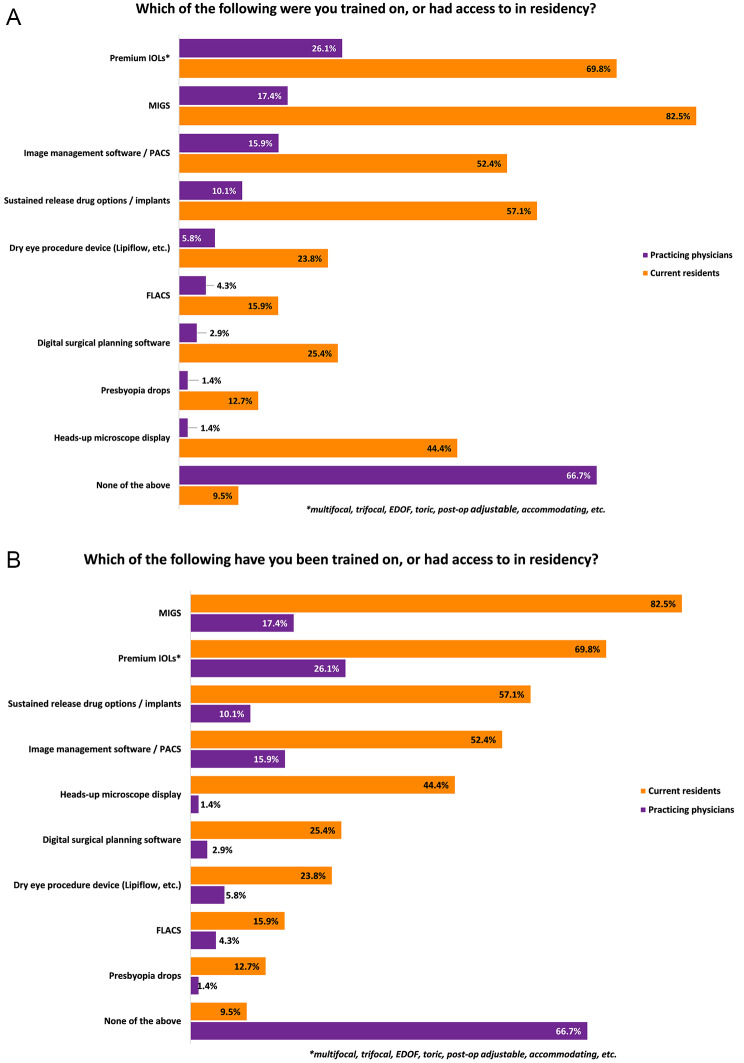
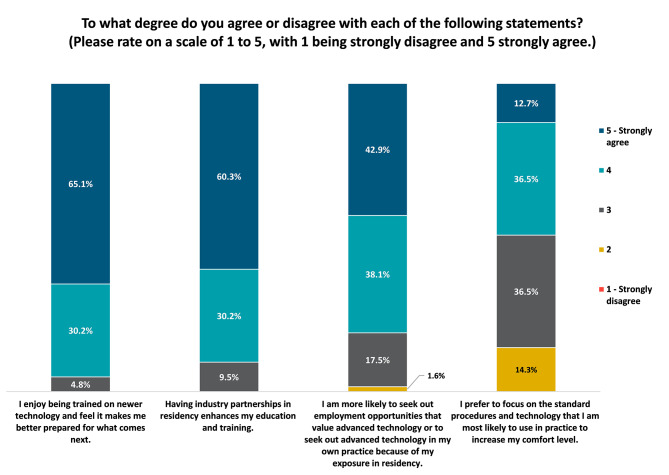
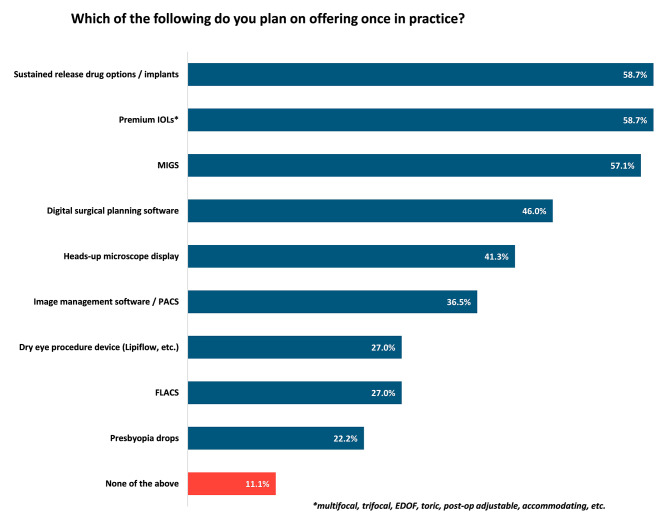
The study received 132 unique responses, including 63 ophthalmology residents and 69 practicing ophthalmologists. 65.2% (n = 45) of practicing ophthalmologists and 47.6% (n = 30) of current residents reported discussion/training on newly developed products on the market (e.g. premium IOLS, MIGS), was "minimally discussed but not emphasized" or "not discussed at all" in residency. 55.1% (n = 38) of practicing ophthalmologists reported that exposure to new technologies during residency did influence types of technologies employed during practice. The majority resident physicians reported enjoying being trained on newer technology and feeling more prepared for future changes in the field (95.2%, n = 60) and felt that having industry partnerships in residency enhances education and training (90.5%, n = 57).
Considering how to maximize exposure to newer technologies/devices during residency training is important, and may contribute to training more confident, adaptable surgeons, who are more likely to critically consider new technologies and adopt promising ones into their future clinical practice.
眼科手术和诊断技术的快速进步给住院医师培训项目带来了挑战。本研究调查了住院医师培训期间新技术的接触情况及其对实践模式的影响。
邀请不同培训水平的眼科住院医师和已完成培训的眼科医生参与一项调查研究,评估他们在住院医师培训和实践中接触各种技术的情况。数据收集于 2022 年 12 月至 2023 年 6 月进行。进行了描述性统计。
该研究共收到 132 份独特的回复,其中包括 63 名眼科住院医师和 69 名执业眼科医生。65.2%(n=45)的执业眼科医生和 47.6%(n=30)的现任住院医师报告说,市场上新开发的产品(如高级人工晶状体、MIGS)的讨论/培训“讨论得很少但不强调”或“根本没有讨论”在住院医师培训中。55.1%(n=38)的执业眼科医生报告说,住院医师期间接触新技术确实影响了他们在实践中使用的技术类型。大多数住院医师报告说,他们喜欢接受新技术的培训,并且对未来该领域的变化更有准备(95.2%,n=60),并认为住院医师期间的行业合作关系可以提高教育和培训(90.5%,n=57)。
考虑如何在住院医师培训中最大限度地接触新技术/设备非常重要,这可能有助于培养更有信心、适应性强的外科医生,他们更有可能批判性地考虑新技术,并将有前途的技术应用于未来的临床实践。