Kehrer-Dunlap Abigail L, Keleman Audrey A, Bollinger Rebecca M, Stark Susan L
Program in Occupational Therapy, Washington University in St. Louis School of Medicine, 4444 Forest Park Ave., Box 8505, St. Louis, MO 63110, USA.
Adv Geriatr Med Res. 2024;6(1). doi: 10.20900/agmr.20240001. Epub 2024 Feb 14.
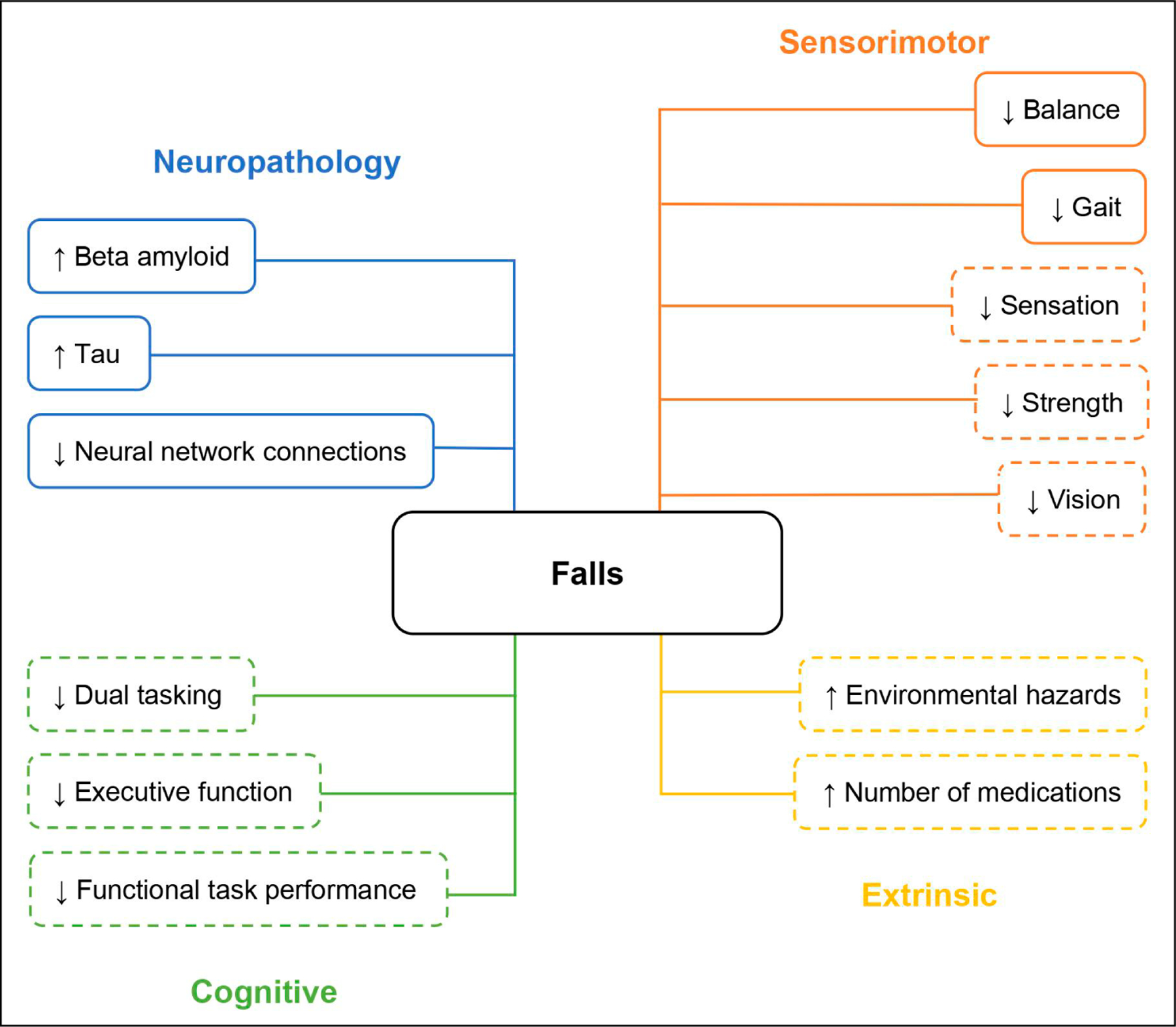
Falls are the leading cause of injury, disability, and injury-related mortality in the older adult population. Older adults with Alzheimer disease (AD) are over twice as likely to experience a fall compared to cognitively normal older adults. Intrinsic and extrinsic fall risk factors may influence falls during symptomatic AD; intrinsic factors include changes in cognition and impaired functional mobility, and extrinsic factors include polypharmacy and environmental fall hazards. Despite many known fall risk factors, the high prevalence of falls, and the presence of effective fall prevention interventions for older adults without cognitive impairment, effective fall prevention interventions for older adults with AD to date are limited and inconclusive. Falls may precede AD-related cognitive impairment during the preclinical phase of AD, though a narrow understanding of fall risk factors and fall prevention interventions for older adults with preclinical AD limits clinical treatment of falls among cognitively normal older adults with preclinical AD. This mini review explores fall risk factors in symptomatic AD, evidence for effective fall prevention interventions in symptomatic AD, and preclinical AD as an avenue for future falls research, including recommendations for future research directions to improve our understanding of falls and fall risk during preclinical AD. Early detection and tailored interventions to address these functional changes are needed to reduce the risk of falls for those at risk for developing AD. Concerted efforts should be dedicated to understanding falls to inform precision fall prevention strategies for this population.
跌倒是老年人群受伤、残疾及与损伤相关死亡的主要原因。与认知正常的老年人相比,患有阿尔茨海默病(AD)的老年人跌倒的可能性要高出两倍多。内在和外在的跌倒风险因素可能会影响有症状AD患者的跌倒情况;内在因素包括认知变化和功能活动能力受损,外在因素包括多种药物治疗及环境中的跌倒危险因素。尽管已知许多跌倒风险因素,跌倒的高发生率,以及针对无认知障碍老年人存在有效的跌倒预防干预措施,但迄今为止,针对患有AD的老年人的有效跌倒预防干预措施仍然有限且尚无定论。在AD的临床前期,跌倒可能先于与AD相关的认知障碍出现,不过对临床前期AD老年人跌倒风险因素和跌倒预防干预措施的狭隘理解限制了对临床前期AD认知正常的老年人跌倒的临床治疗。本综述探讨了有症状AD中的跌倒风险因素、有症状AD中有效跌倒预防干预措施的证据,以及临床前期AD作为未来跌倒研究的一个途径,包括对未来研究方向的建议,以增进我们对临床前期AD期间跌倒及跌倒风险的理解。需要早期检测和针对性干预来应对这些功能变化,以降低有患AD风险人群的跌倒风险。应齐心协力了解跌倒情况,为该人群制定精准的跌倒预防策略提供依据。