Tušar Kaja, Serša Igor
Jožef Stefan International Postgraduate School, Jamova 39, 1000, Ljubljana, Slovenia.
Jožef Stefan Institute, Jamova 39, 1000, Ljubljana, Slovenia.
Sci Rep. 2024 Mar 29;14(1):7521. doi: 10.1038/s41598-024-58229-x.
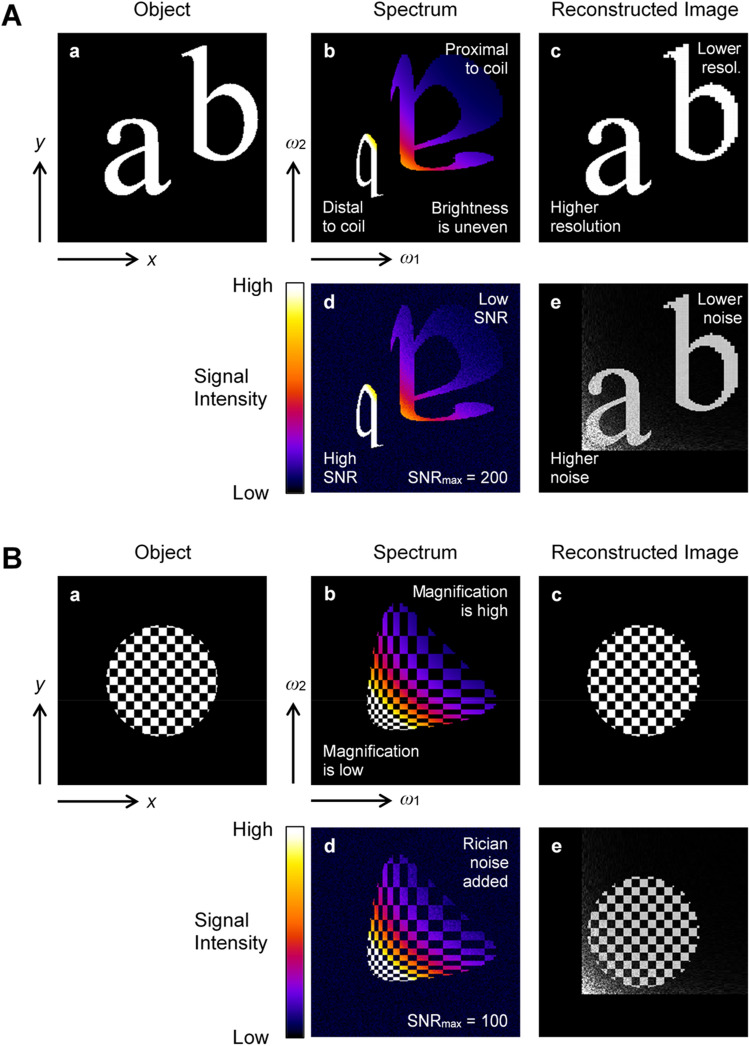
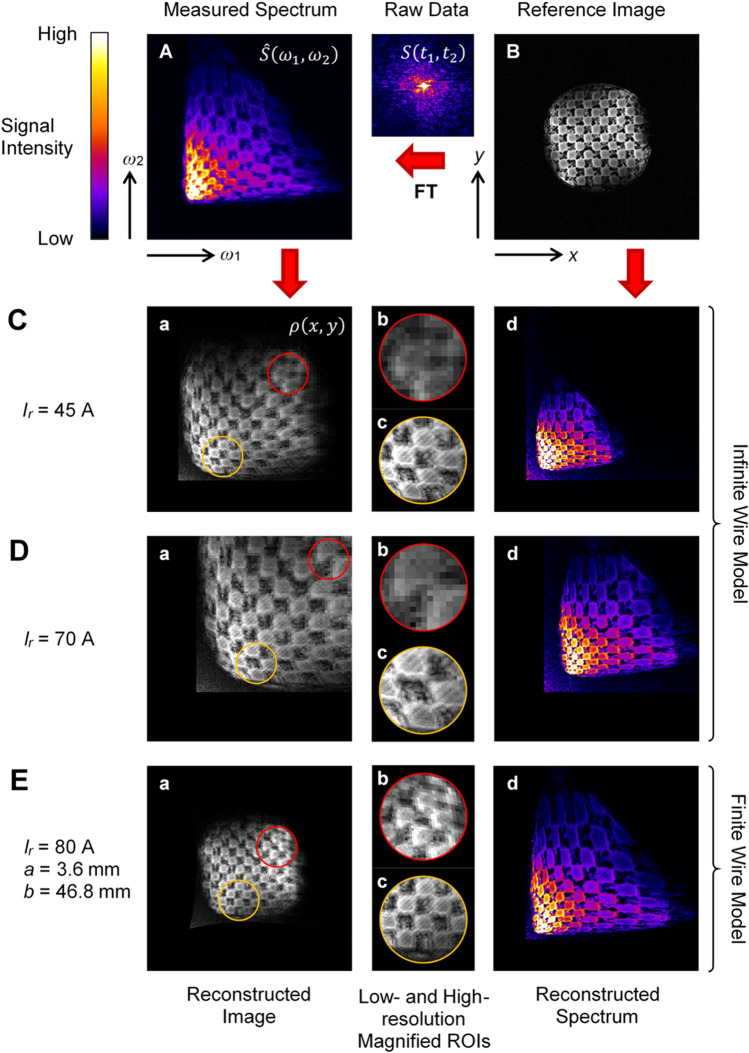
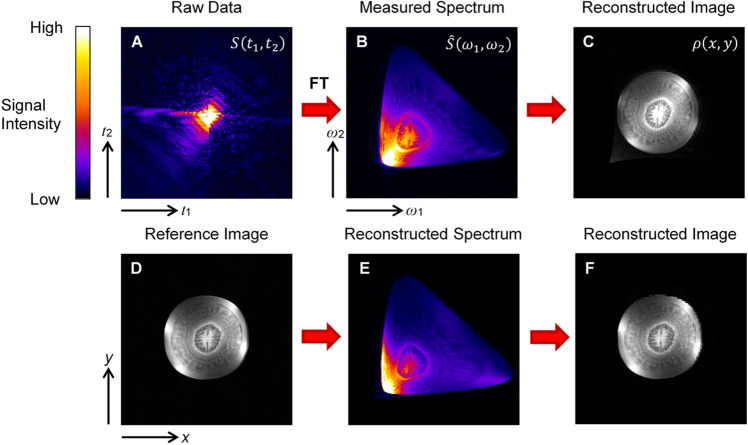
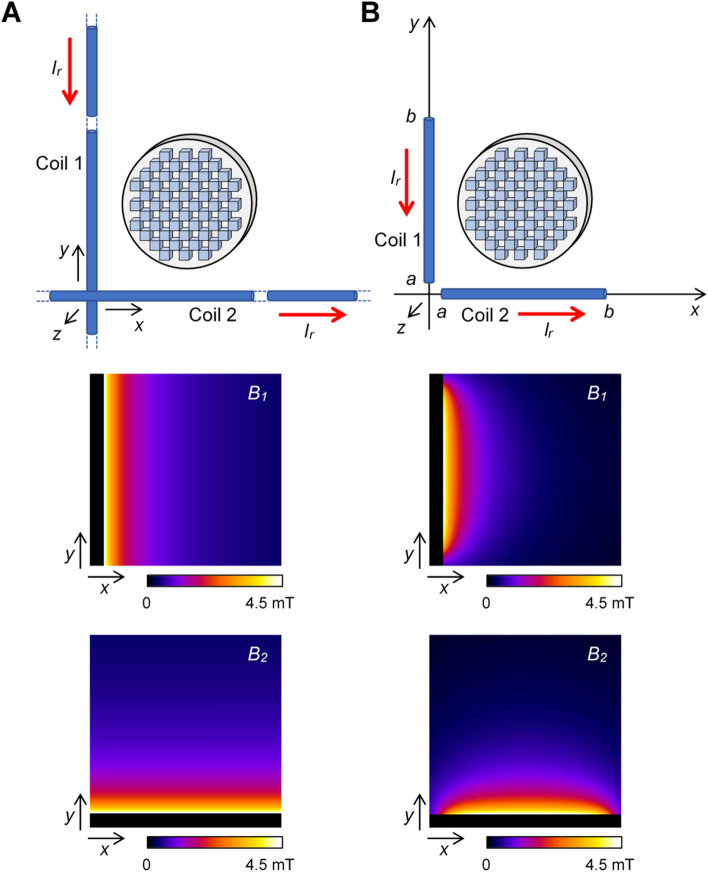
This study examines the use of nonlinear magnetic field coils for spatial encoding in magnetic resonance imaging. Existing theories on imaging with such coils share a complex reconstruction process that originates from a suboptimal signal interpretation in the spatial-frequency domain (k-space). In this study, a new solution to this problem is proposed, namely a two-step reconstruction process, in which in the first step, the image signal is converted into a frequency spectrum, and in the second step, the spectrum, which represents the distorted image, is geometrically and intensity corrected to obtain an undistorted image. This theory has been verified by numerical simulations and experimentally using a straight wire as a coil model for an extremely nonlinear magnetic field. The results of this study facilitate the use of simple encoding coil designs that can feature low inductance, allowing for much faster switching times and higher magnetic field gradients.
本研究探讨了非线性磁场线圈在磁共振成像空间编码中的应用。关于此类线圈成像的现有理论都有一个复杂的重建过程,该过程源于空间频率域(k空间)中次优的信号解释。在本研究中,针对此问题提出了一种新的解决方案,即两步重建过程,其中第一步,将图像信号转换为频谱,第二步,对表示失真图像的频谱进行几何和强度校正,以获得未失真的图像。该理论已通过数值模拟以及使用直导线作为极非线性磁场的线圈模型进行了实验验证。本研究结果有助于使用具有低电感特性的简单编码线圈设计,从而实现更快的切换时间和更高的磁场梯度。