Guangxi Key Laboratory of Molecular Medicine in Liver Injury and Repair, the Affiliated Hospital of Guilin Medical University, Guilin, Guangxi, China.
Department of Hepatobiliary and Pancreatic Surgery, the First Affiliated Hospital of Zhengzhou University, Zhengzhou, Henan, China.
Exp Mol Med. 2024 Apr;56(4):946-958. doi: 10.1038/s12276-024-01203-4. Epub 2024 Apr 1.
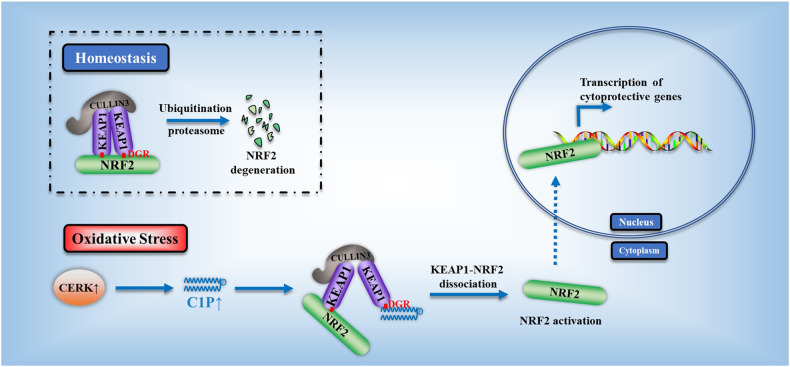
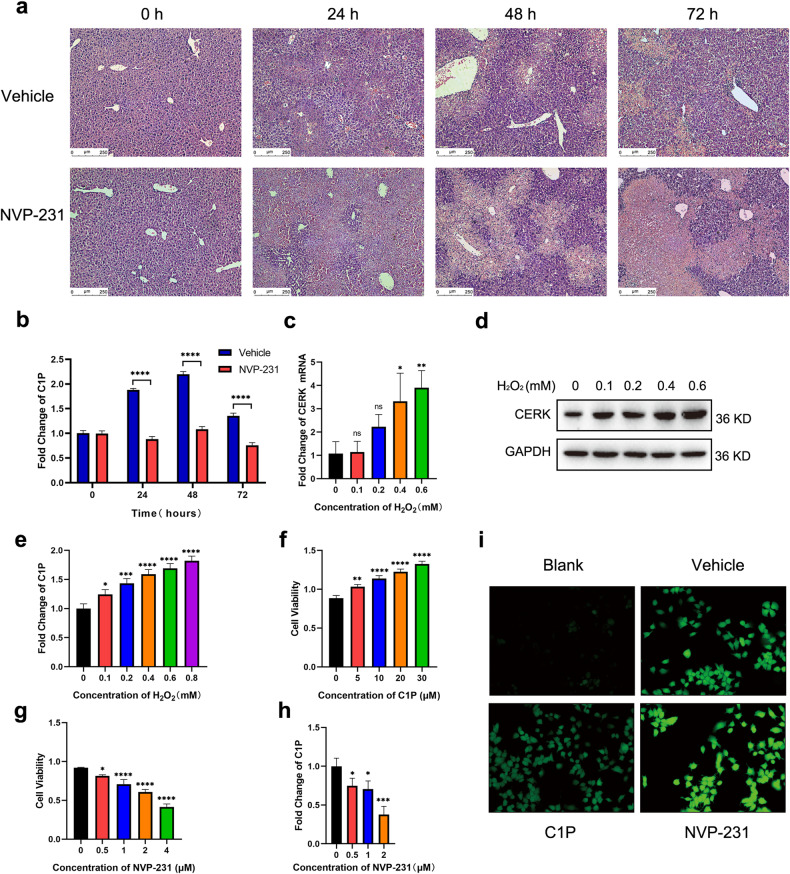
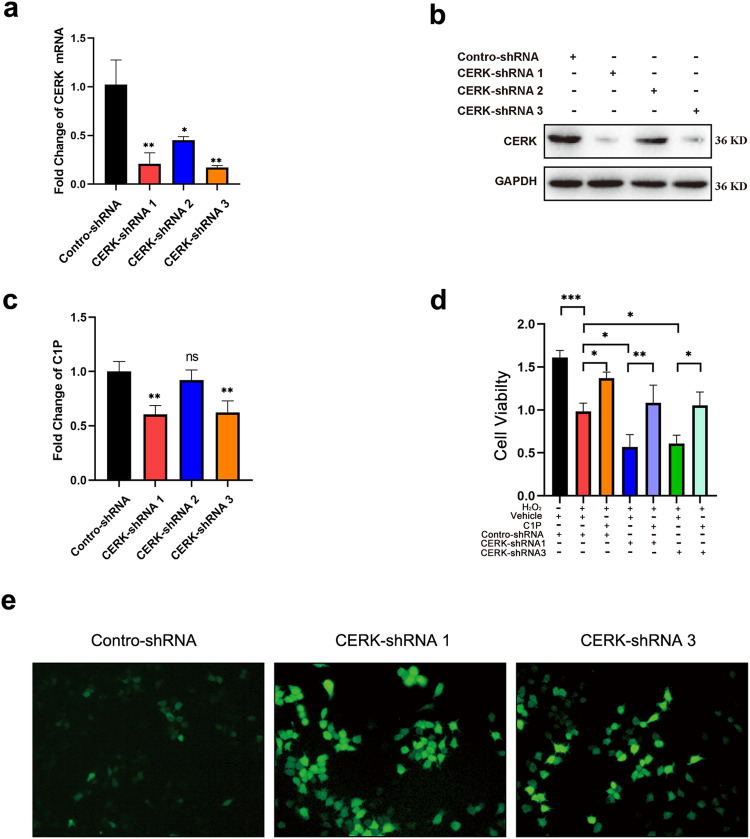
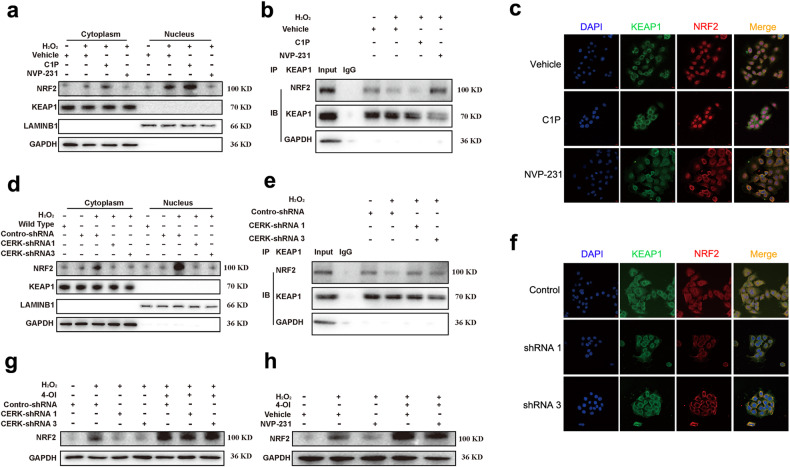
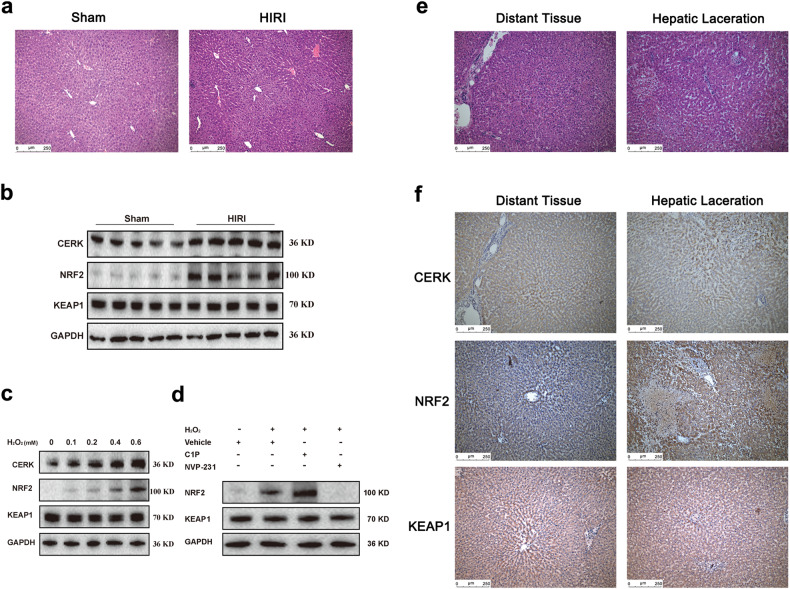
Acute liver injury is the basis of the pathogenesis of diverse liver diseases. However, the mechanism underlying liver injury is complex and not completely understood. In our study, we revealed that CERK, which phosphorylates ceramide to produce ceramide-1-phosphate (C1P), was the sphingolipid pathway-related protein that had the most significantly upregulated expression during acute liver injury. A functional study confirmed that CERK and C1P attenuate hepatic injury both in vitro and in vivo through antioxidant effects. Mechanistic studies have shown that CERK and C1P positively regulate the protein expression of NRF2, which is a crucial protein that helps maintain redox homeostasis. Furthermore, our results indicated that C1P disrupted the interaction between NRF2 and KEAP1 by competitively binding to KEAP1, which allowed for the nuclear translocation of NRF2. In addition, pull-down assays and molecular docking analyses revealed that C1P binds to the DGR domain of KEAP1, which allows it to maintain its interaction with NRF2. Importantly, these findings were verified in human primary hepatocytes and a mouse model of hepatic ischemia‒reperfusion injury. Taken together, our findings demonstrated that CERK-mediated C1P metabolism attenuates acute liver injury via the binding of C1P to the DGR domain of KEAP1 and subsequently the release and nuclear translocation of NRF2, which activates the transcription of cytoprotective and antioxidant genes. Our study suggested that the upregulation of CERK and C1P expression may serve as a potential antioxidant strategy to alleviate acute liver injury.
急性肝损伤是多种肝脏疾病发病机制的基础。然而,肝损伤的机制很复杂,尚未完全阐明。在我们的研究中,我们揭示了 CERK(一种将神经酰胺磷酸化为神经酰胺-1-磷酸(C1P)的鞘脂途径相关蛋白)在急性肝损伤过程中表达上调最显著。功能研究证实,CERK 和 C1P 通过抗氧化作用在体外和体内均减轻肝损伤。机制研究表明,CERK 和 C1P 通过正向调节 NRF2 的蛋白表达来发挥作用,NRF2 是一种帮助维持氧化还原平衡的关键蛋白。此外,我们的结果表明,C1P 通过竞争性结合 KEAP1 破坏了 NRF2 与 KEAP1 之间的相互作用,从而使 NRF2 易位到核内。此外,下拉实验和分子对接分析表明,C1P 结合 KEAP1 的 DGR 结构域,从而使其能够维持与 NRF2 的相互作用。重要的是,这些发现已在人原代肝细胞和肝缺血再灌注损伤的小鼠模型中得到验证。总之,我们的研究结果表明,CERK 介导的 C1P 代谢通过 C1P 与 KEAP1 的 DGR 结构域结合,随后 NRF2 的释放和核易位,激活保护性和抗氧化基因的转录,从而减轻急性肝损伤。我们的研究表明,上调 CERK 和 C1P 的表达可能成为缓解急性肝损伤的一种潜在抗氧化策略。