Goldberg Maria, Mondragon-Soto Michel G, Altawalbeh Ghaith, Meyer Bernhard, Aftahy Amir Kaywan
Department of Neurosurgery, School of Medicine, Klinikum Rechts der Isar, Technical University of Munich, Munich, DEU.
Neurological Surgery, Instituto Nacional de Neurologia y Neurocirugia, Mexico, MEX.
Cureus. 2024 Feb 28;16(2):e55187. doi: 10.7759/cureus.55187. eCollection 2024 Feb.
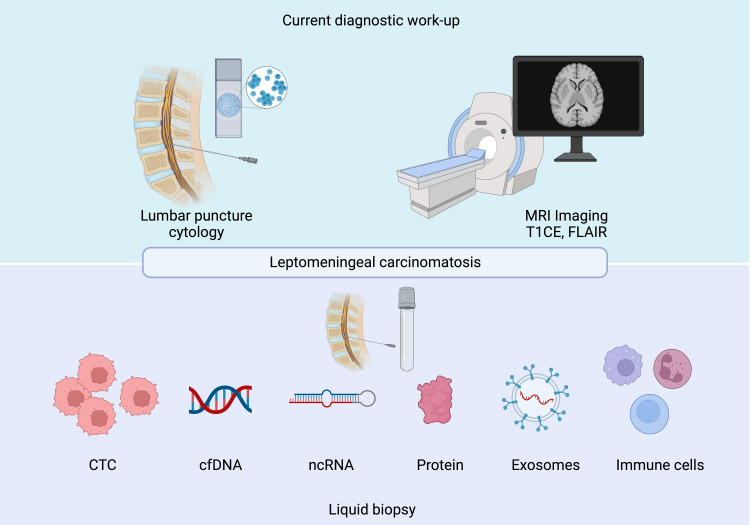
Leptomeningeal carcinomatosis represents a terminal stage and is a devastating complication of cancer. Despite its high incidence, current diagnostic methods fail to accurately detect this condition in a timely manner. This failure to diagnose leads to the refusal of treatment and the absence of clinical trials, hampering the development of new therapy strategies. The use of liquid biopsy is revolutionizing the field of diagnostic oncology. The dynamic and non-invasive detection of tumor markers has enormous potential in cancer diagnostics and treatment. Leptomeningeal carcinomatosis is a condition where invasive tissue biopsy is not part of the routine diagnostic analysis, making liquid biopsy an essential diagnostic tool. Several elements in cerebrospinal fluid (CSF) have been investigated as potential targets of liquid biopsy, including free circulating tumor cells, free circulating nucleic acids, proteins, exosomes, and even non-tumor cells as part of the dynamic tumor microenvironment. This review aims to summarize current breakthroughs in the research on liquid biopsy, including the latest breakthroughs in the identification of tumor cells and nucleic acids, and give an overview of future directions in the diagnosis of leptomeningeal carcinomatosis.
软脑膜癌病是癌症的终末期,也是一种毁灭性的并发症。尽管其发病率很高,但目前的诊断方法无法及时准确地检测出这种疾病。这种诊断失败导致治疗被拒绝且缺乏临床试验,阻碍了新治疗策略的发展。液体活检的应用正在彻底改变诊断肿瘤学领域。肿瘤标志物的动态和非侵入性检测在癌症诊断和治疗中具有巨大潜力。软脑膜癌病是一种侵袭性组织活检并非常规诊断分析一部分的疾病,这使得液体活检成为一种重要的诊断工具。脑脊液(CSF)中的几种成分已被研究作为液体活检的潜在靶点,包括游离循环肿瘤细胞、游离循环核酸、蛋白质、外泌体,甚至作为动态肿瘤微环境一部分的非肿瘤细胞。本综述旨在总结液体活检研究的当前突破,包括肿瘤细胞和核酸鉴定方面的最新突破,并概述软脑膜癌病诊断的未来方向。