Chai Dafei, Wang Xu, Neeli Praveen, Zhou Shan, Yu Xingfang, Sabapathy Kanaga, Li Yong
Department of Medicine, Section of Epidemiology and Population Sciences, Dan L Duncan Comprehensive Cancer Center, Baylor College of Medicine, Houston, TX 77030, USA.
Division of Cellular & Molecular Research, Humphrey Oei Institute of Cancer Research, National Cancer Centre Singapore, Singapore 168583, Singapore.
Genes Dis. 2023 Jun 23;11(4):100994. doi: 10.1016/j.gendis.2023.04.027. eCollection 2024 Jul.
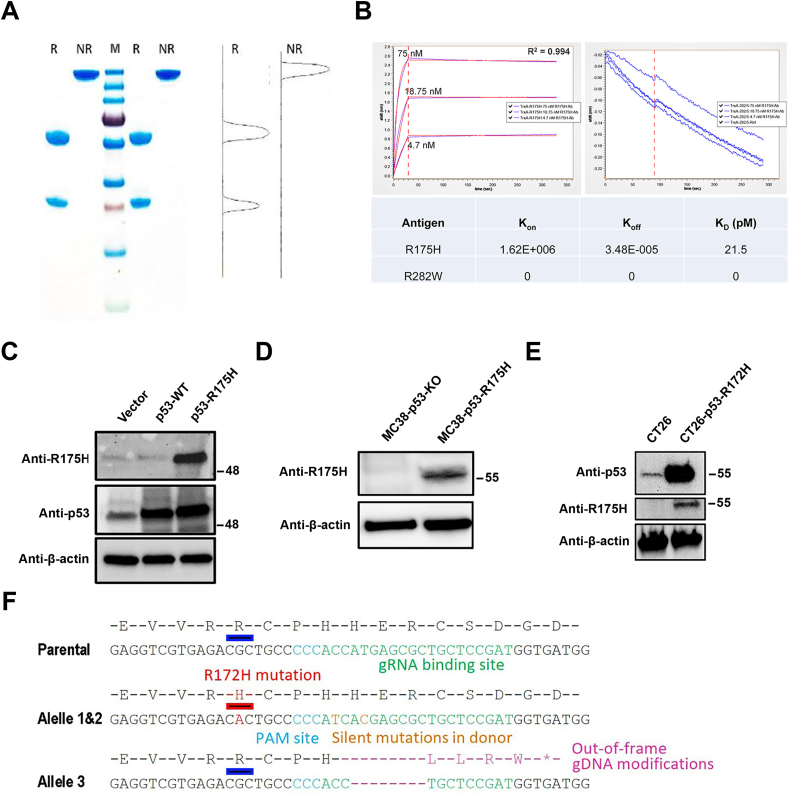
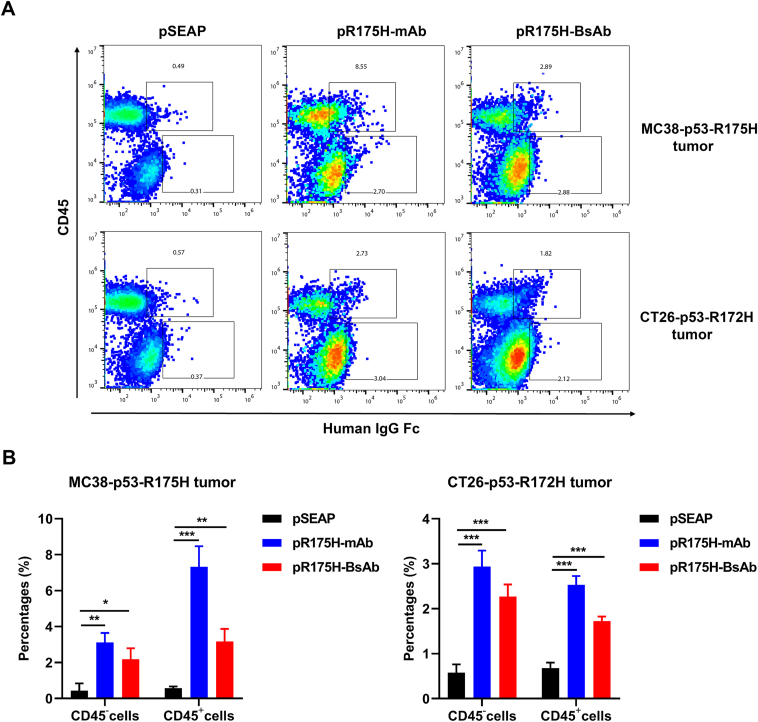
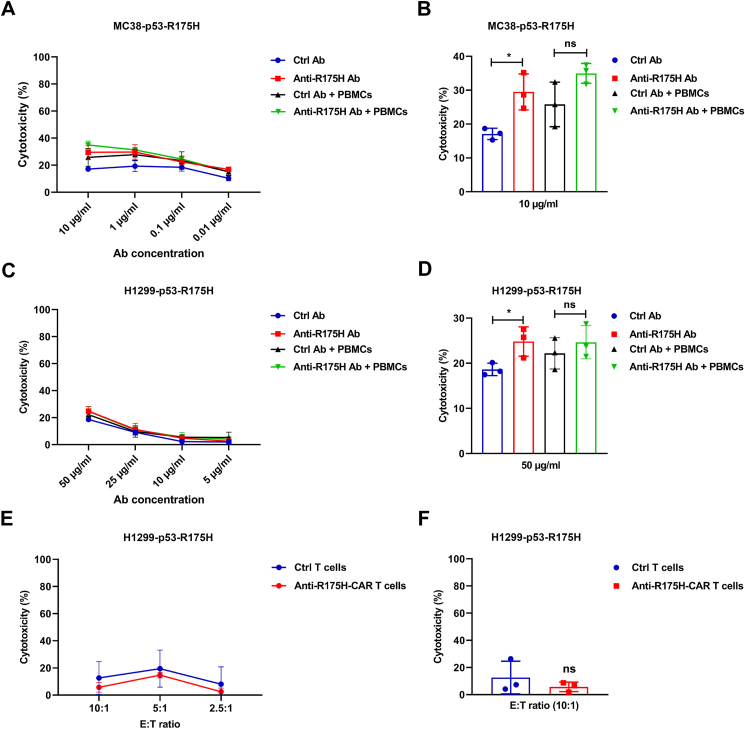
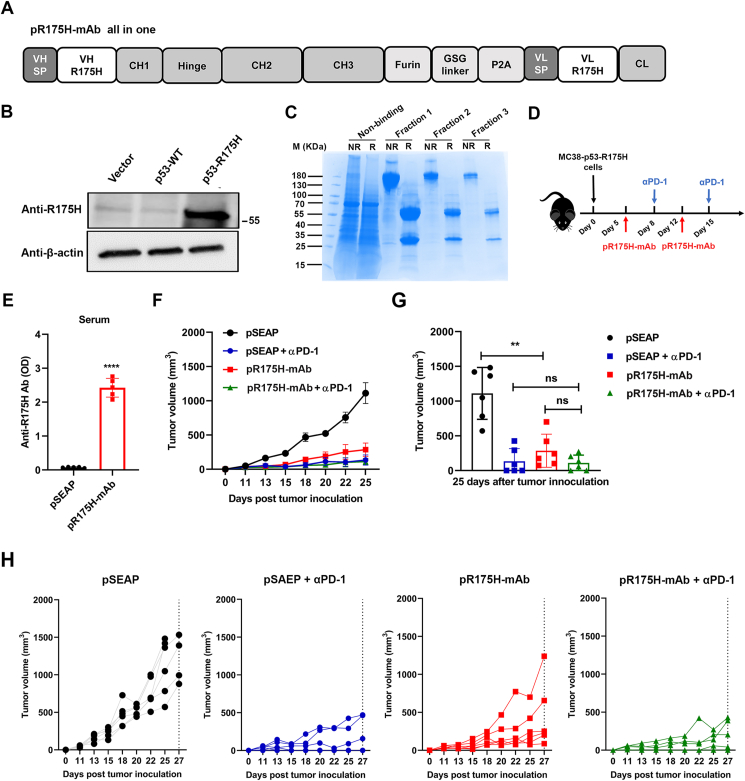
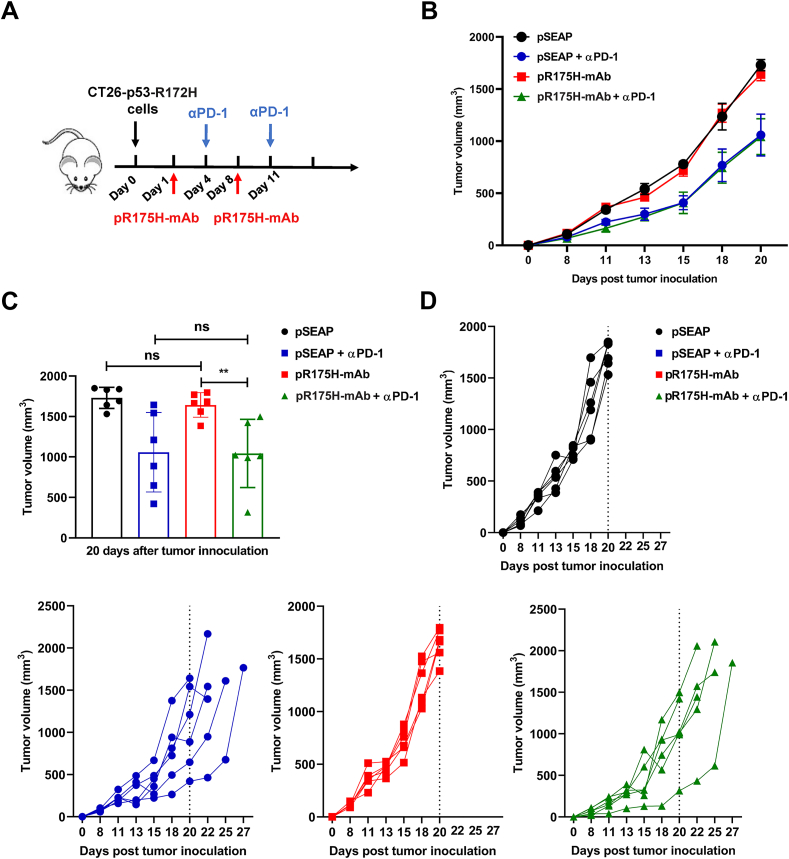
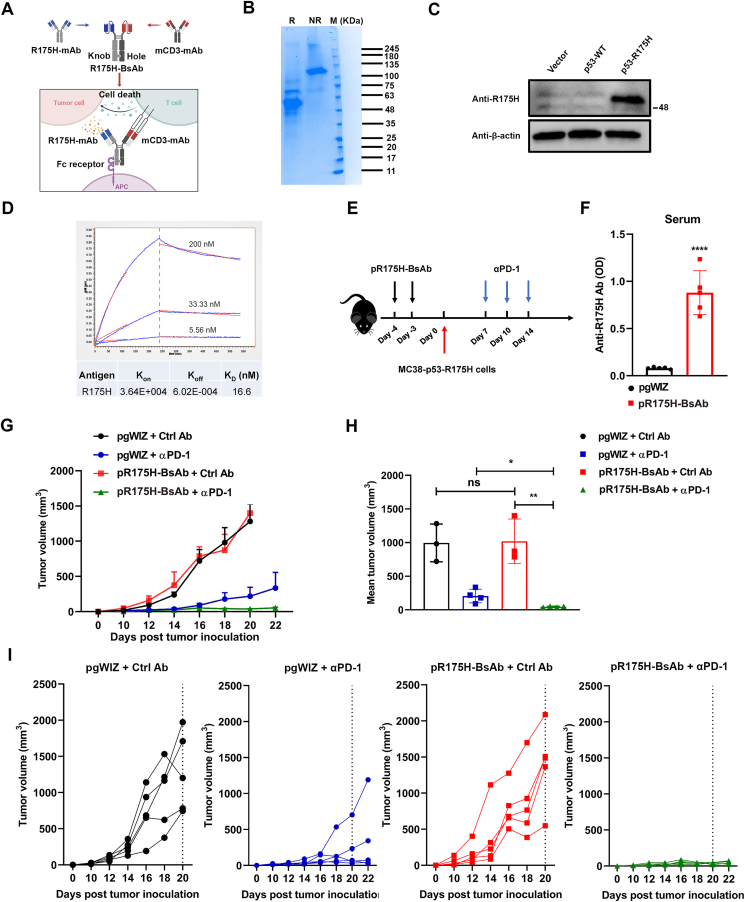
The tumor suppressor is the most common mutated gene in cancer, with the R175H as the most frequent p53 missense mutant. However, there are currently no approved targeted therapies or immunotherapies against mutant p53. Here, we characterized and investigated a monoclonal antibody (mAb) that recognizes the mutant p53-R175H for its affinity, specificity, and activity against tumor cells . We then delivered DNA plasmids expressing the anti-R175H mAb or a bispecific antibody (BsAb) into mice to evaluate their therapeutic effects. Our results showed that the anti-R175H mAb specifically bound to the p53-R175H antigen with a high affinity and recognized the human mutant p53-R175H antigen expressed on HEK293T or MC38 cells, with no cross-reactivity with wild-type p53. In cultured cells, the anti-R175H mAb showed higher cytotoxicity than the control but did not induce antibody-dependent cellular cytotoxicity. We made a recombinant MC38 mouse cell line (MC38-p53-R175H) that overexpressed the human p53-R175H after knocking out the endogenous mutant alleles. , administration of the anti-R175H mAb plasmid elicited a robust anti-tumor effect against MC38-p53-R175H in mice. The administration of the anti-R175H BsAb plasmid showed no therapeutic effects, yet potent anti-tumor activity was observed in combination with the anti-PD-1 antibody. These results indicate that targeting specific mutant epitopes using DNA-delivered mAbs or BsAbs presents a form of improved natural immunity derived from tumor-infiltrating B cells and plasma cells against intracellular tumor antigens.
肿瘤抑制因子是癌症中最常见的突变基因,其中R175H是最常见的p53错义突变体。然而,目前尚无针对突变型p53的获批靶向疗法或免疫疗法。在此,我们鉴定并研究了一种单克隆抗体(mAb),该抗体识别突变型p53-R175H,考察其对肿瘤细胞的亲和力、特异性和活性。然后,我们将表达抗R175H mAb或双特异性抗体(BsAb)的DNA质粒导入小鼠体内,以评估它们的治疗效果。我们的结果表明,抗R175H mAb以高亲和力特异性结合p53-R175H抗原,并识别在HEK293T或MC38细胞上表达的人突变型p53-R175H抗原,与野生型p53无交叉反应。在培养细胞中,抗R175H mAb显示出比对照更高的细胞毒性,但未诱导抗体依赖性细胞毒性。我们构建了一种重组MC38小鼠细胞系(MC38-p53-R175H),在敲除内源性突变等位基因后过表达人p53-R175H。给予抗R175H mAb质粒可在小鼠体内对MC38-p53-R175H产生强大的抗肿瘤作用。给予抗R175H BsAb质粒未显示出治疗效果,但与抗PD-1抗体联合使用时观察到了强大的抗肿瘤活性。这些结果表明,使用DNA递送的mAb或BsAb靶向特定突变表位呈现出一种源自肿瘤浸润性B细胞和浆细胞针对细胞内肿瘤抗原的改良天然免疫形式。