Lowe Center for Thoracic Oncology, Dana-Farber Cancer Institute, Boston, Massachusetts.
Department of Medical Oncology, Memorial Sloan Kettering Cancer Center and Weill Cornell Medical College, New York, New York.
Cancer Discov. 2024 Aug 2;14(8):1440-1456. doi: 10.1158/2159-8290.CD-23-1217.
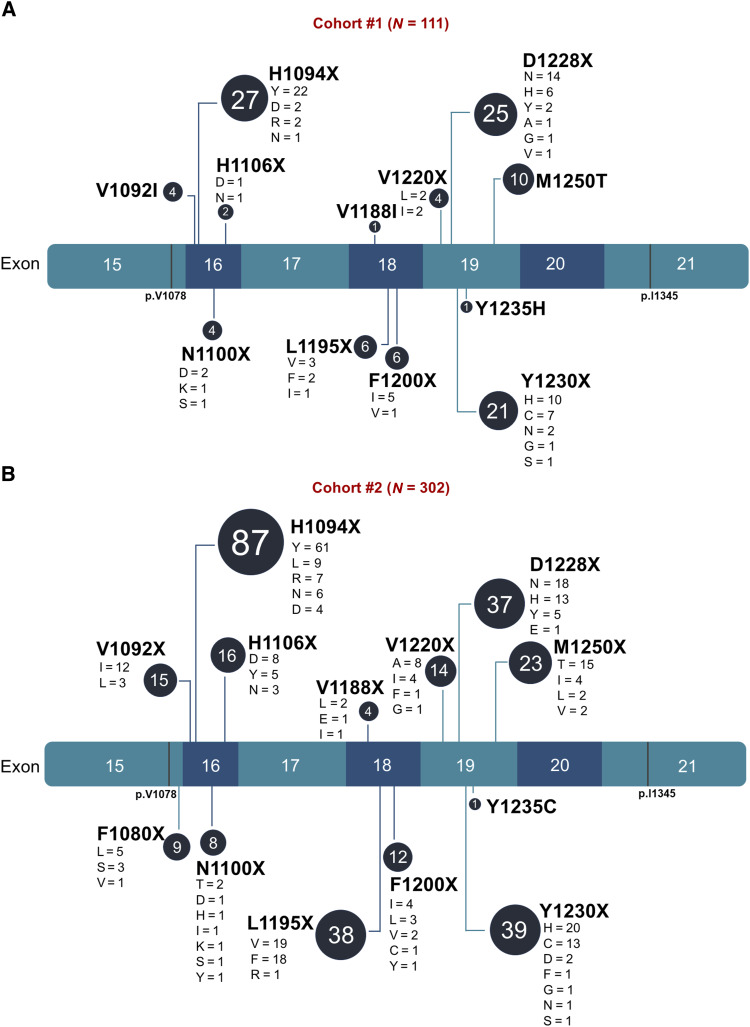
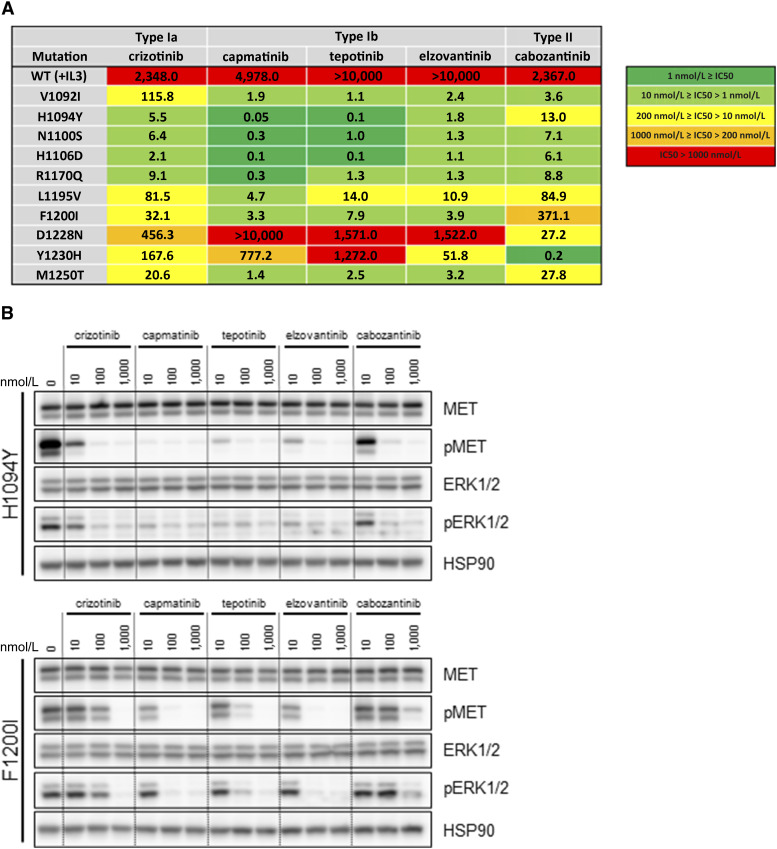
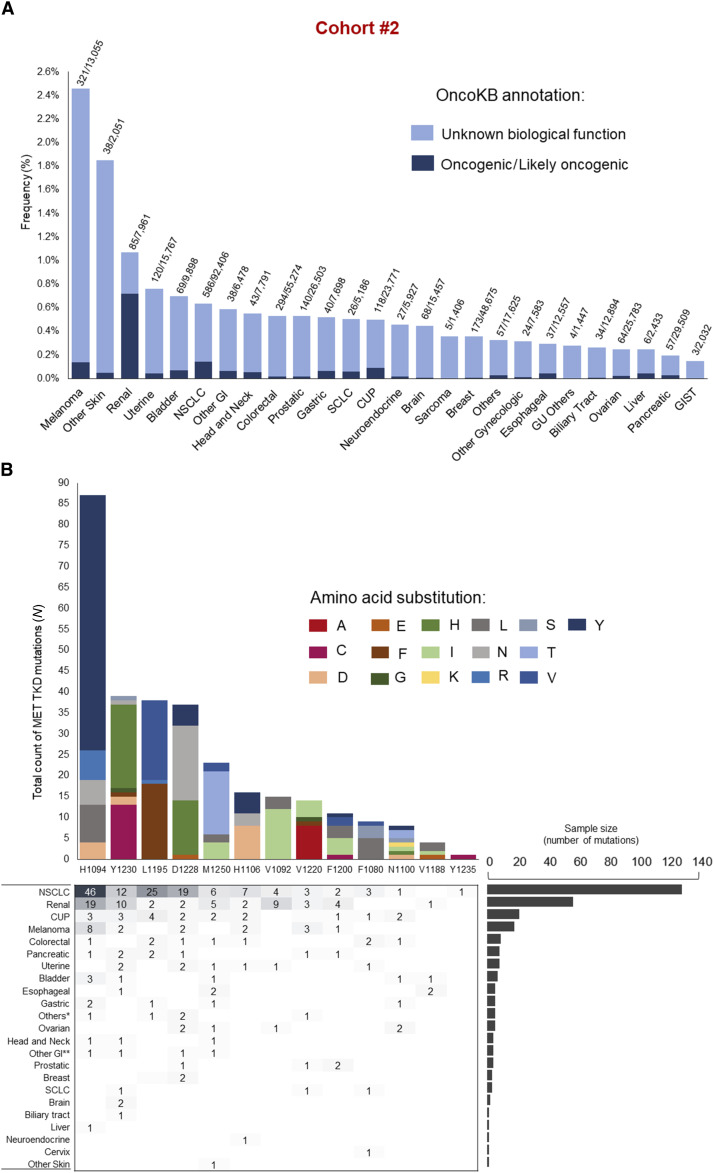
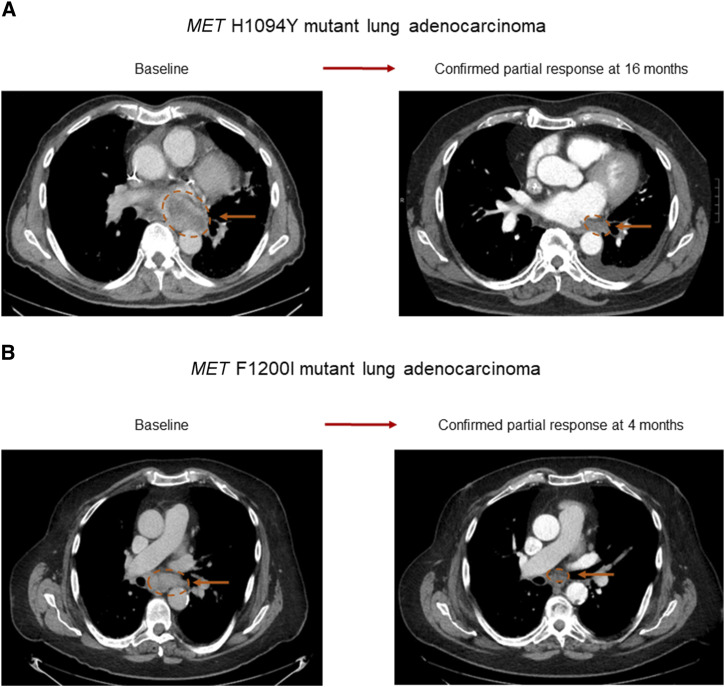
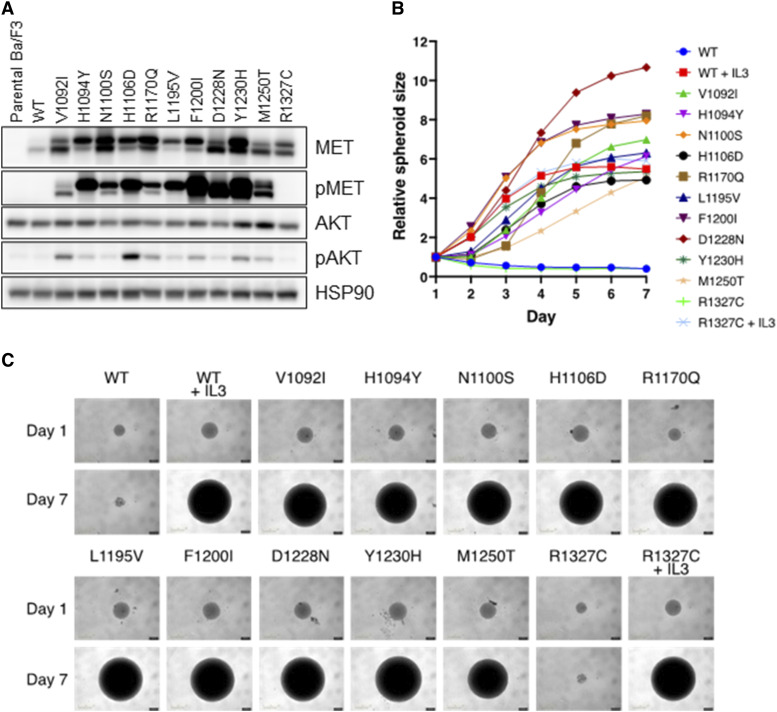
Activating point mutations in the MET tyrosine kinase domain (TKD) are oncogenic in a subset of papillary renal cell carcinomas. Here, using comprehensive genomic profiling among >600,000 patients, we identify activating MET TKD point mutations as putative oncogenic driver across diverse cancers, with a frequency of ∼0.5%. The most common mutations in the MET TKD defined as oncogenic or likely oncogenic according to OncoKB resulted in amino acid substitutions at positions H1094, L1195, F1200, D1228, Y1230, M1250, and others. Preclinical modeling of these alterations confirmed their oncogenic potential and also demonstrated differential patterns of sensitivity to type I and type II MET inhibitors. Two patients with metastatic lung adenocarcinoma harboring MET TKD mutations (H1094Y, F1200I) and no other known oncogenic drivers achieved confirmed partial responses to a type I MET inhibitor. Activating MET TKD mutations occur in multiple malignancies and may confer clinical sensitivity to currently available MET inhibitors. Significance: The identification of targetable genomic subsets of cancer has revolutionized precision oncology and offers patients treatments with more selective and effective agents. Here, we demonstrate that activating, oncogenic MET tyrosine kinase domain mutations are found across a diversity of cancer types and are responsive to MET tyrosine kinase inhibitors.
MET 酪氨酸激酶结构域 (TKD) 的激活点突变是一部分乳头状肾细胞癌的致癌因素。在这里,我们通过对超过 60 万名患者进行全面的基因组分析,确定激活的 MET TKD 点突变是多种癌症中潜在的致癌驱动因素,其频率约为 0.5%。根据 OncoKB,MET TKD 中最常见的被定义为致癌或可能致癌的突变导致了 H1094、L1195、F1200、D1228、Y1230、M1250 等位置的氨基酸取代。对这些改变的临床前建模证实了它们的致癌潜力,并表明对 I 型和 II 型 MET 抑制剂的敏感性存在差异模式。两名患有转移性肺腺癌的患者携带 MET TKD 突变(H1094Y、F1200I)且没有其他已知的致癌驱动因素,对 I 型 MET 抑制剂确证部分缓解。激活的 MET TKD 突变发生在多种恶性肿瘤中,可能对目前可用的 MET 抑制剂具有临床敏感性。意义:鉴定可靶向的癌症基因组亚群彻底改变了精准肿瘤学,并为患者提供了更具选择性和有效的治疗方法。在这里,我们证明了激活的、致癌的 MET 酪氨酸激酶结构域突变存在于多种癌症类型中,并对 MET 酪氨酸激酶抑制剂有反应。