Department of Psychology, University of Texas at Austin, 108 E. Dean Keeton Stop A8000, Austin, TX, 78712-1043, USA.
Department of Neurology, Oregon Health and Science University, Portland, OR, USA.
Sci Rep. 2024 Apr 2;14(1):7804. doi: 10.1038/s41598-024-58258-6.
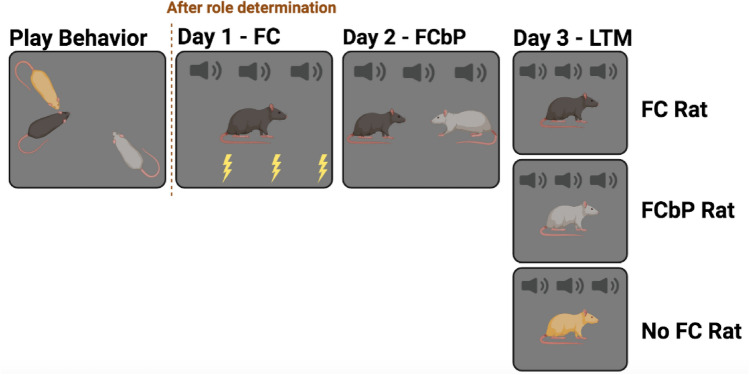
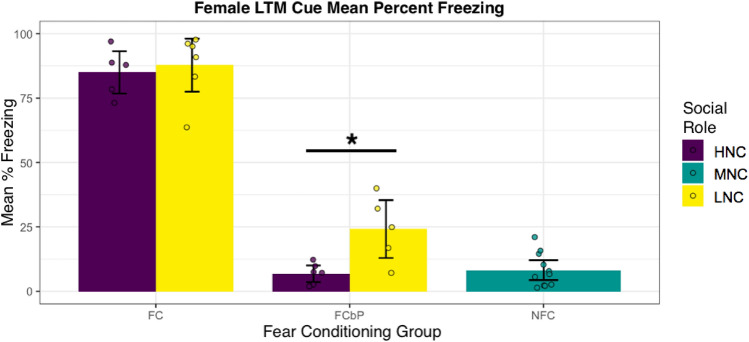
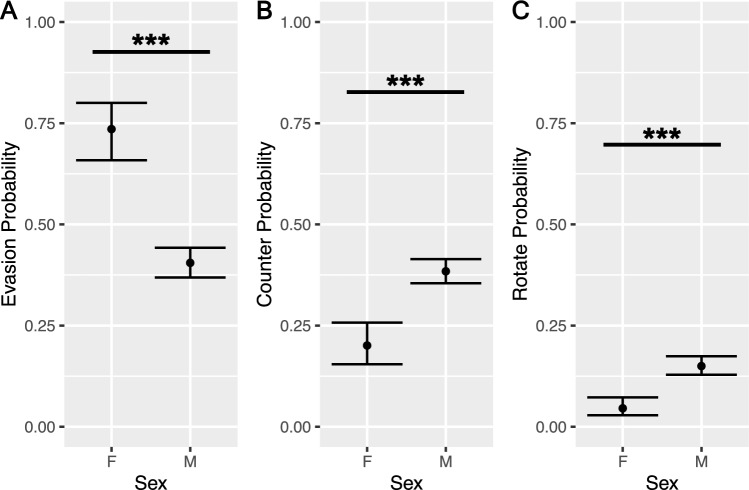
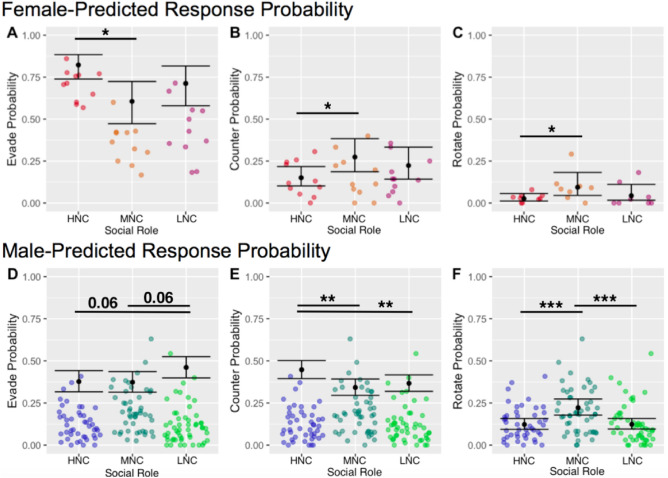
Social transmission of fear occurs in a subset of individuals, where an Observer displays a fear response to a previously neutral stimulus after witnessing or interacting with a conspecific Demonstrator during memory retrieval. The conditions under which fear can be acquired socially in rats have received attention in recent years, and suggest that social factors modulate social transmission of information. We previously found that one such factor, social rank, impacts fear conditioning by proxy in male rats. Here, we aimed to investigate whether social roles as determined by nape contacts in females, might also have an influence on social transmission of fear. In-line with previous findings in males, we found that social interactions in the home cage can provide insight into the social relationship between female rats and that these relationships predict the degree of fear acquired by-proxy. These results suggest that play behavior affects the social transfer/transmission of information in female rats.
恐惧的社会传递发生在一小部分个体中,即观察者在记忆检索过程中观察到或与同性别展示者相互作用后,对先前中性的刺激表现出恐惧反应。近年来,人们关注了老鼠中恐惧可以通过社会途径获得的条件,并表明社会因素调节了信息的社会传递。我们之前发现,社会等级等社会因素会通过代理影响雄性老鼠的恐惧条件反射。在这里,我们旨在研究颈部接触决定的社会角色是否也会对雌性老鼠的恐惧社会传递产生影响。与之前在雄性老鼠中发现的结果一致,我们发现,笼内的社会互动可以深入了解雌性老鼠之间的社会关系,并且这些关系可以预测通过代理获得的恐惧程度。这些结果表明,玩耍行为会影响雌性老鼠中信息的社会传递。