Ge Xiaogang, Cai Qiqi, Cai Yangyang, Mou Caiguo, Fu Junhui, Lin Feng
Vascular and Endovascular Surgery, Huangyan Hospital Affiliated to Wenzhou Medical University, Taizhou First People's Hospital, Taizhou, Zhejiang, China.
Department of Emergency Intensive Care Unit, Huangyan Hospital Affiliated to Wenzhou Medical University, Taizhou First People's Hospital, Taizhou, Zhejiang, China.
Front Mol Biosci. 2024 Mar 19;11:1277818. doi: 10.3389/fmolb.2024.1277818. eCollection 2024.
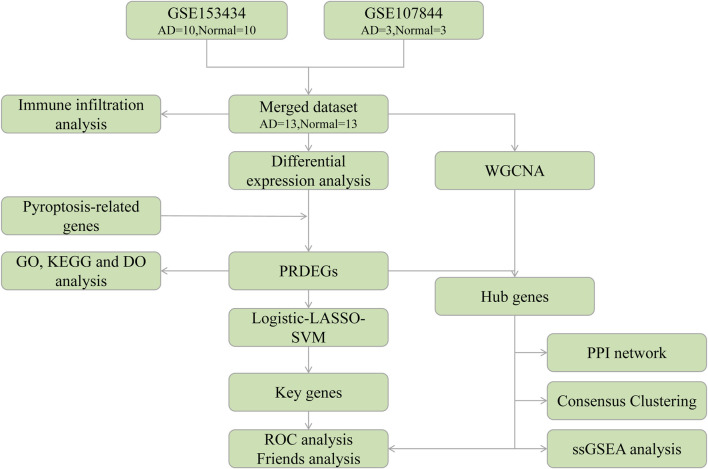
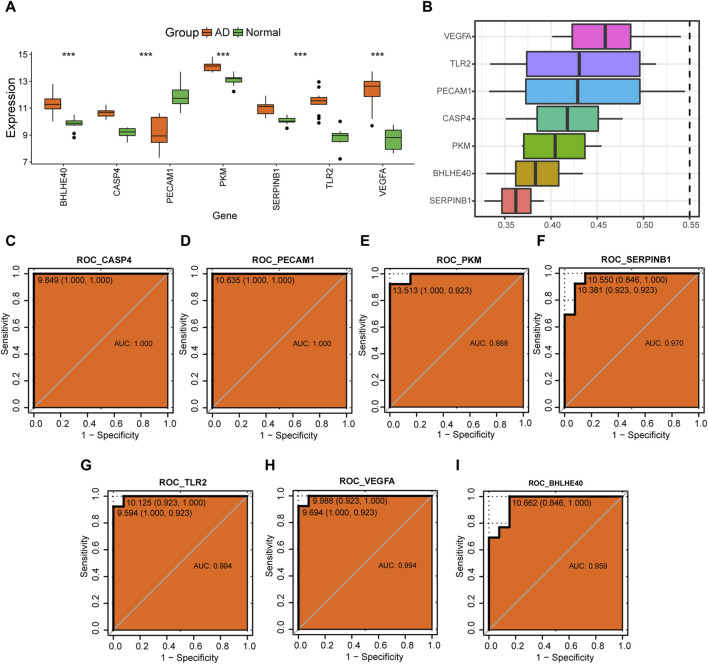
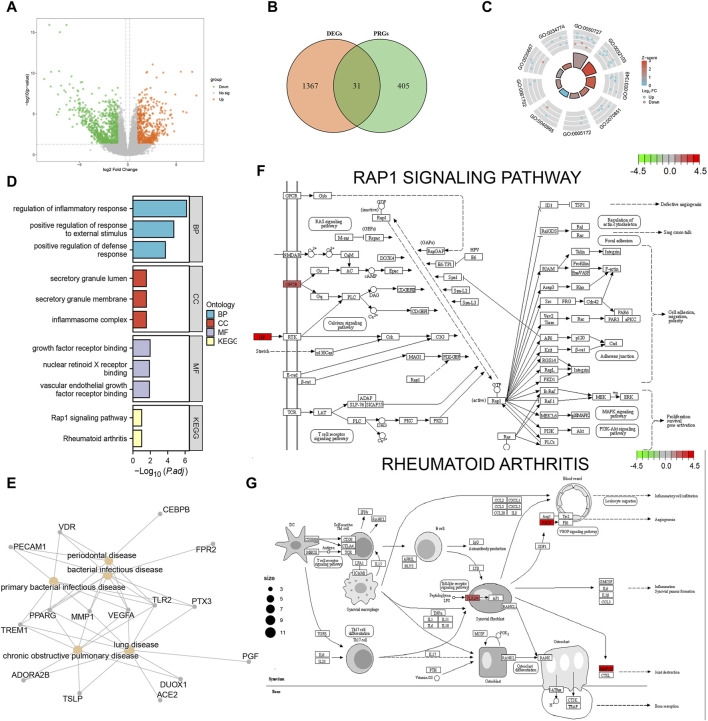
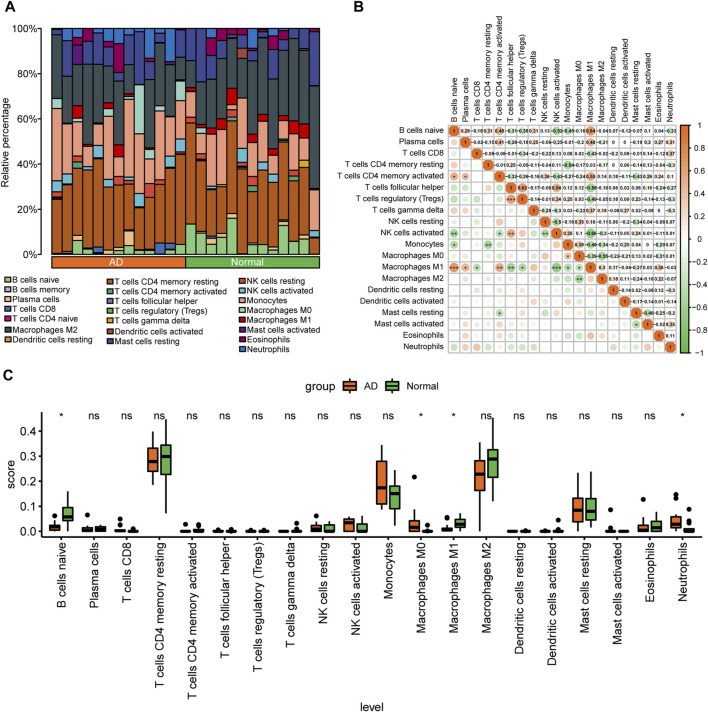
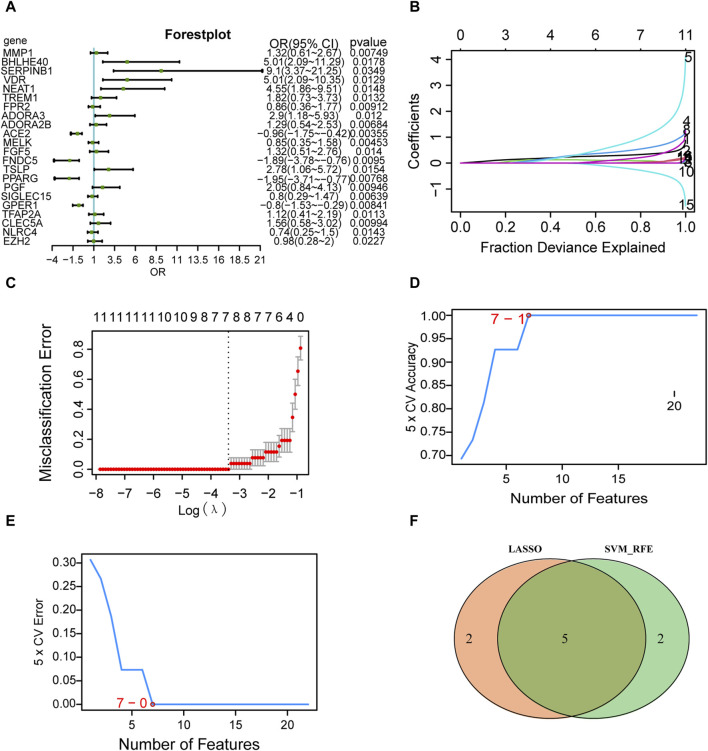
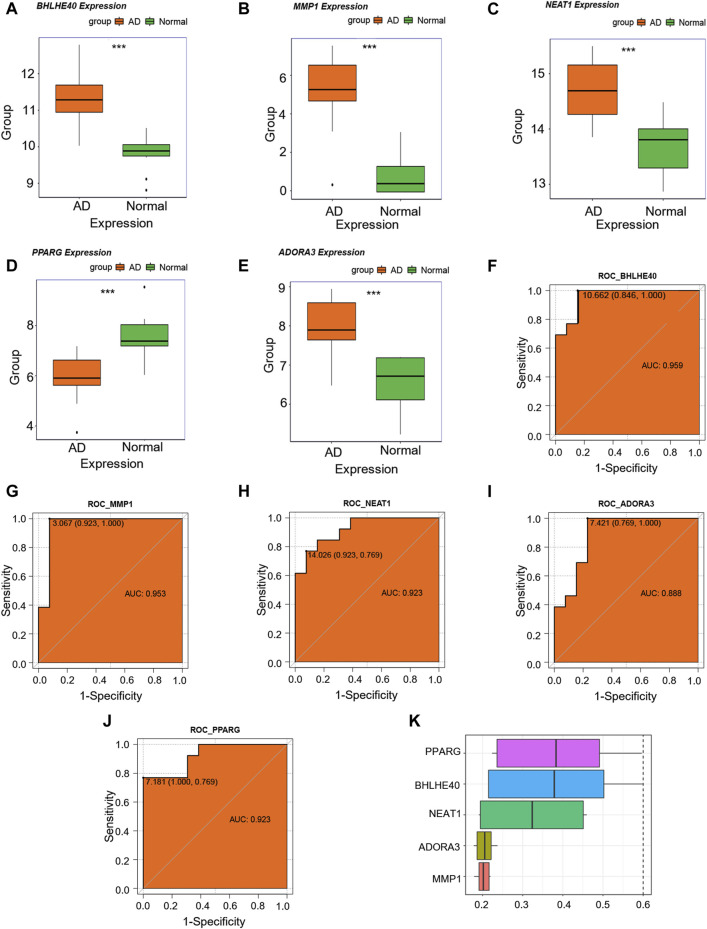
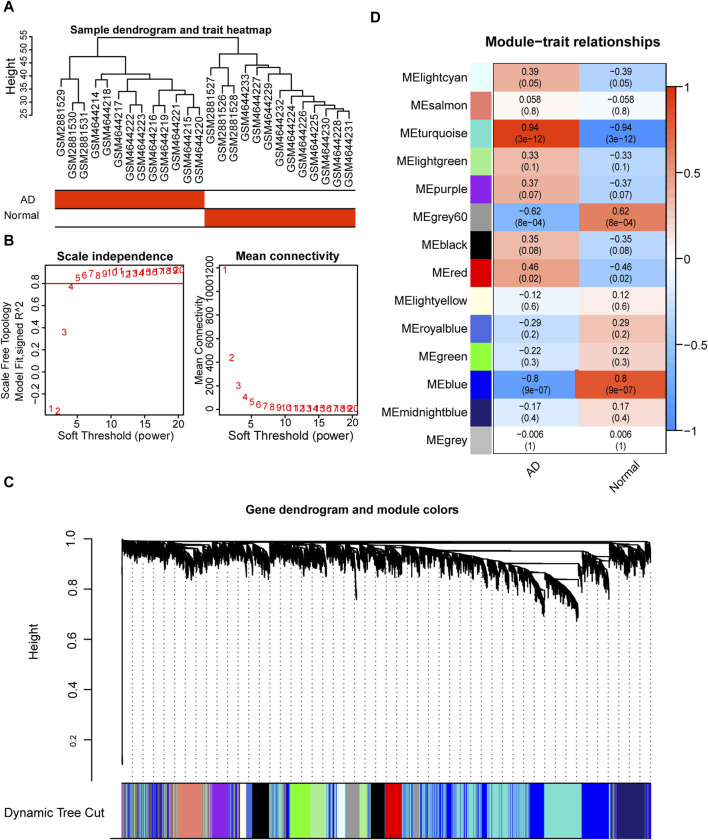
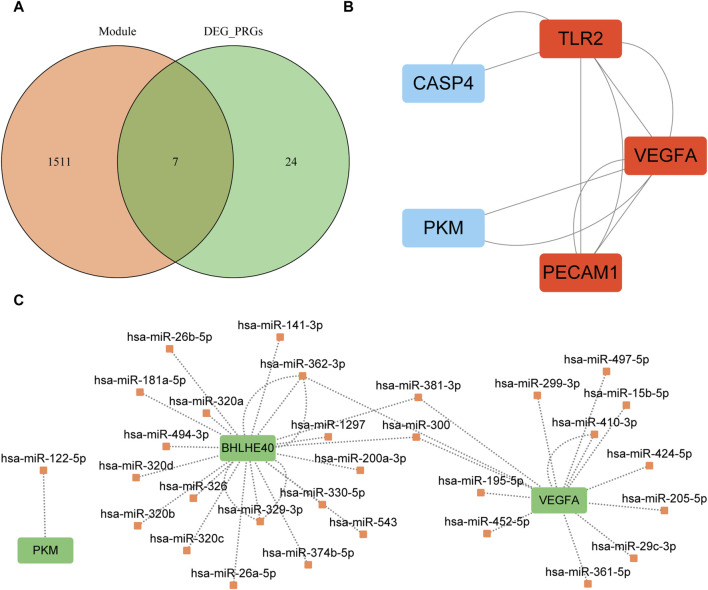
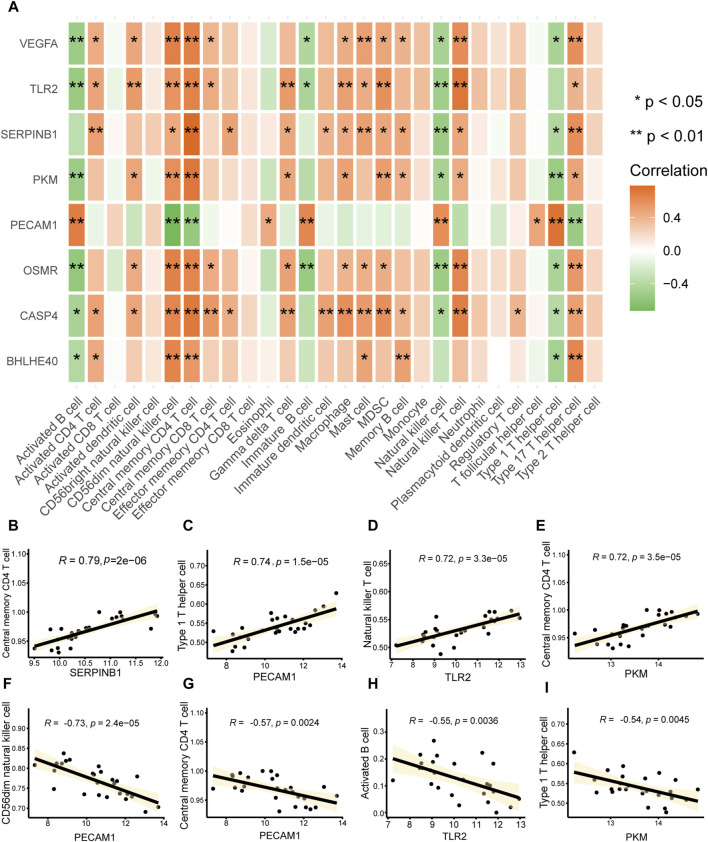
Aortic dissection (AD) is often fatal, and its pathogenesis involves immune infiltration and pyroptosis, though the molecular pathways connecting these processes remain unclear. This study aimed to investigate the role of immune infiltration and pyroptosis in AD pathogenesis using bioinformatics analysis. Two Gene Expression Omnibus datasets and a Gene Cards dataset of pyroptosis-related genes (PRGs) were utilized. Immunological infiltration was assessed using CIBERSORT, and AD diagnostic markers were identified through univariate logistic regression and least absolute shrinkage and selection operator regression. Interaction networks were constructed using STRING, and weighted gene correlation network analysis (WGCNA) was employed to identify important modules and essential genes. Single-sample gene set enrichment analysis determined immune infiltration, and Pearson correlation analysis assessed the association of key genes with infiltrating immune cells. Thirty-one PRGs associated with inflammatory response, vascular epidermal growth factor receptor, and Rap1 signaling pathways were identified. WGCNA revealed seven important genes within a critical module. CIBERSORT detected immune cell infiltration, indicating significant changes in immune cell infiltration and pyroptosis genes in AD and their connections. Our findings suggest that key PRGs may serve as indicators for AD or high-risk individuals. Understanding the role of pyroptosis and immune cell infiltration in AD pathogenesis may lead to the development of novel molecular-targeted therapies for AD. This study provides insights into the molecular mechanisms underlying AD pathogenesis, highlighting the importance of immune infiltration and pyroptosis. Identification of diagnostic markers and potential therapeutic targets may improve the management of AD and reduce associated morbidity and mortality.
主动脉夹层(AD)通常是致命的,其发病机制涉及免疫浸润和细胞焦亡,尽管连接这些过程的分子途径仍不清楚。本研究旨在通过生物信息学分析探讨免疫浸润和细胞焦亡在AD发病机制中的作用。使用了两个基因表达综合数据集和一个细胞焦亡相关基因(PRG)的基因卡数据集。使用CIBERSORT评估免疫浸润,并通过单变量逻辑回归和最小绝对收缩和选择算子回归确定AD诊断标志物。使用STRING构建相互作用网络,并采用加权基因共表达网络分析(WGCNA)来识别重要模块和关键基因。单样本基因集富集分析确定免疫浸润,Pearson相关分析评估关键基因与浸润免疫细胞的关联。鉴定出31个与炎症反应、血管表皮生长因子受体和Rap1信号通路相关的PRG。WGCNA在一个关键模块中揭示了7个重要基因。CIBERSORT检测到免疫细胞浸润,表明AD中免疫细胞浸润和细胞焦亡基因及其连接存在显著变化。我们的研究结果表明,关键PRG可能作为AD或高危个体的指标。了解细胞焦亡和免疫细胞浸润在AD发病机制中的作用可能会导致开发针对AD的新型分子靶向疗法。本研究为AD发病机制的分子机制提供了见解,突出了免疫浸润和细胞焦亡的重要性。诊断标志物和潜在治疗靶点的鉴定可能会改善AD的管理并降低相关的发病率和死亡率。