Salami Maryam, Heidari Bahram, Alizadeh Bahram, Batley Jacqueline, Wang Jin, Tan Xiao-Li, Dadkhodaie Ali, Richards Christopher
Department of Plant Production and Genetics, School of Agriculture, Shiraz University, Shiraz, Iran.
Oil Crops Research Department, Seed and Plant Improvement Institute, Agricultural Research Education and Extension, Organization, (AREEO), Karaj, Iran.
Front Plant Sci. 2024 Mar 19;15:1342359. doi: 10.3389/fpls.2024.1342359. eCollection 2024.
An important strategy to combat yield loss challenge is the development of varieties with increased tolerance to drought to maintain production. Improvement of crop yield under drought stress is critical to global food security.
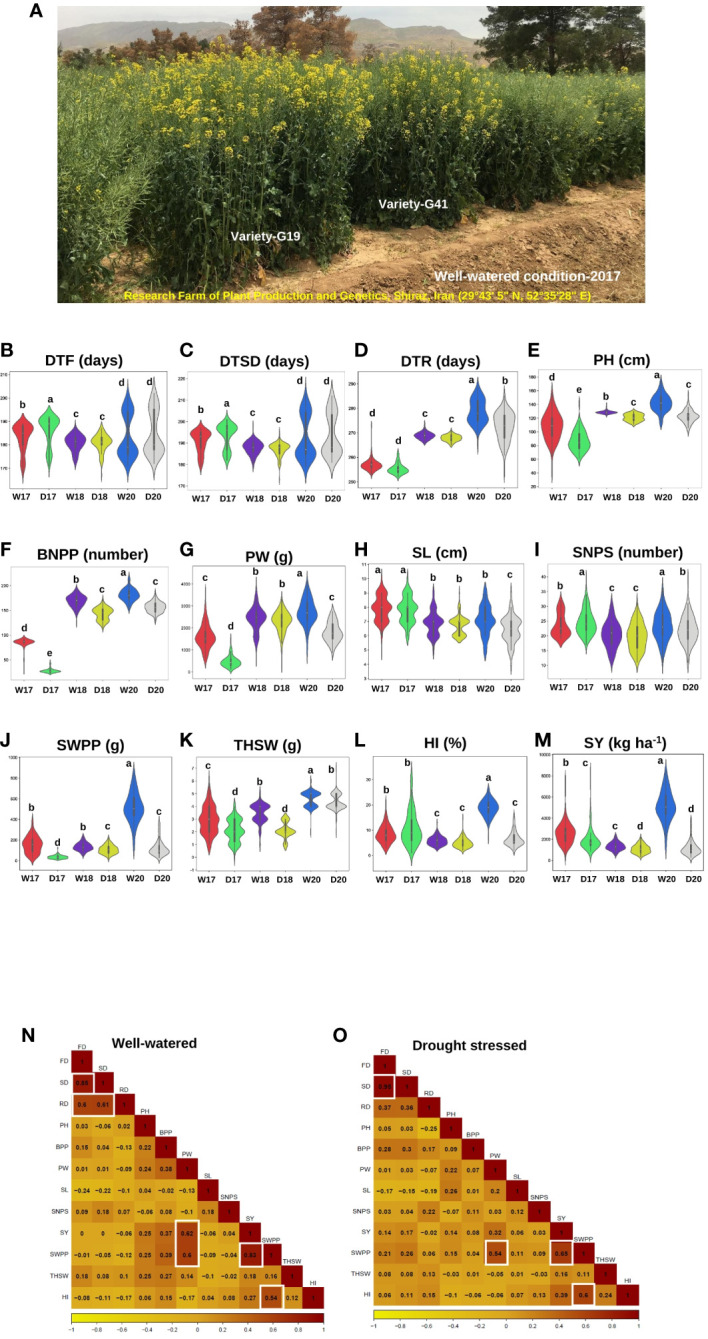
In this study, we performed multiomics analysis in a collection of 119 diverse rapeseed ( L.) varieties to dissect the genetic control of agronomic traits in two watering regimes [well-watered (WW) and drought stress (DS)] for 3 years. In the DS treatment, irrigation continued till the 50% pod development stage, whereas in the WW condition, it was performed throughout the whole growing season.
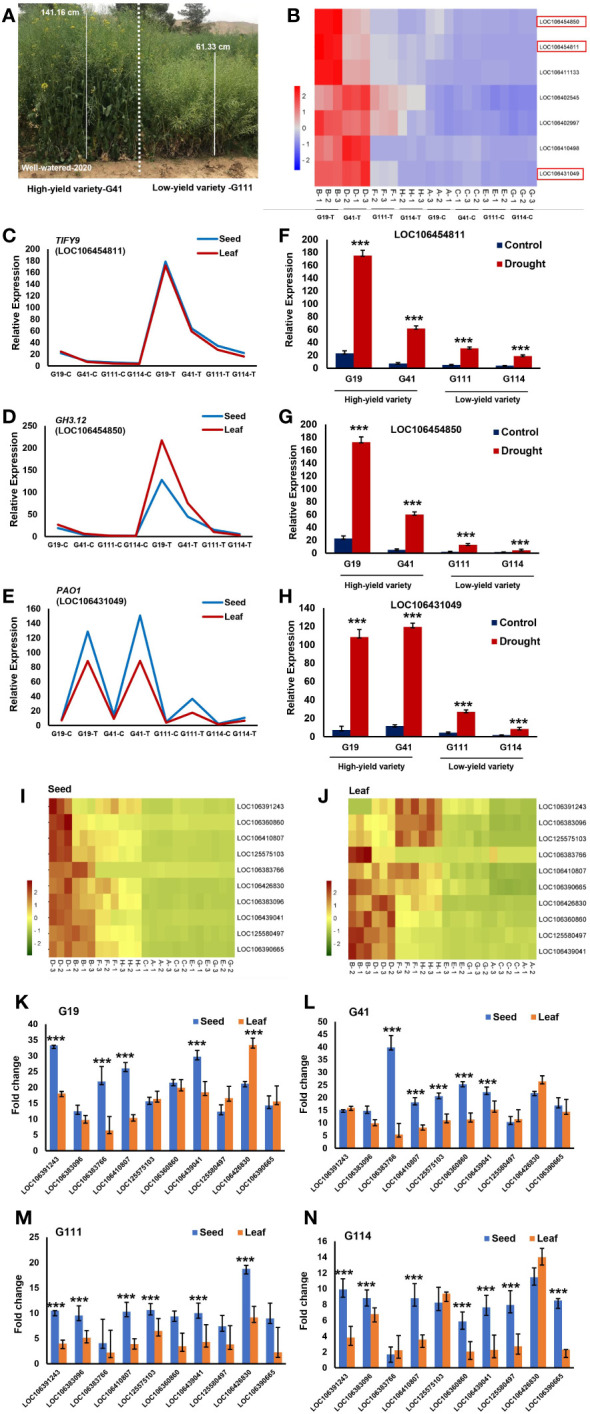
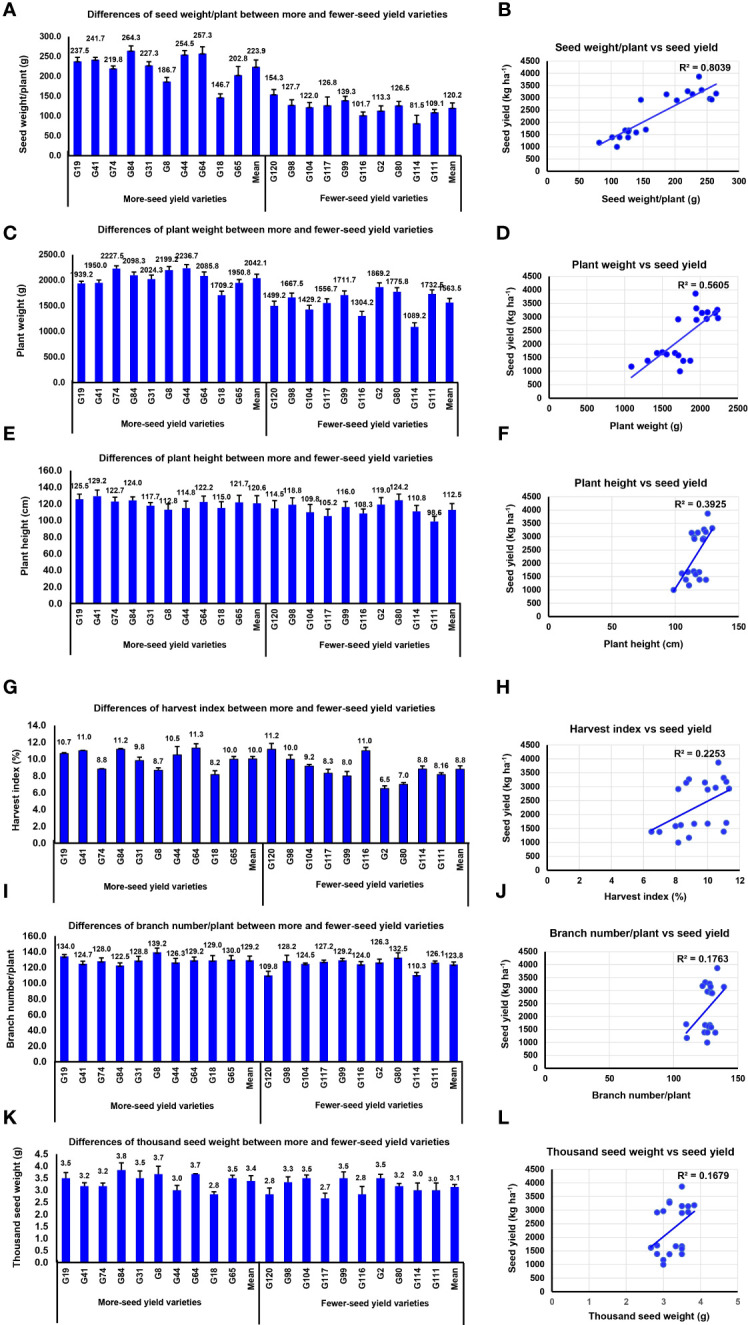
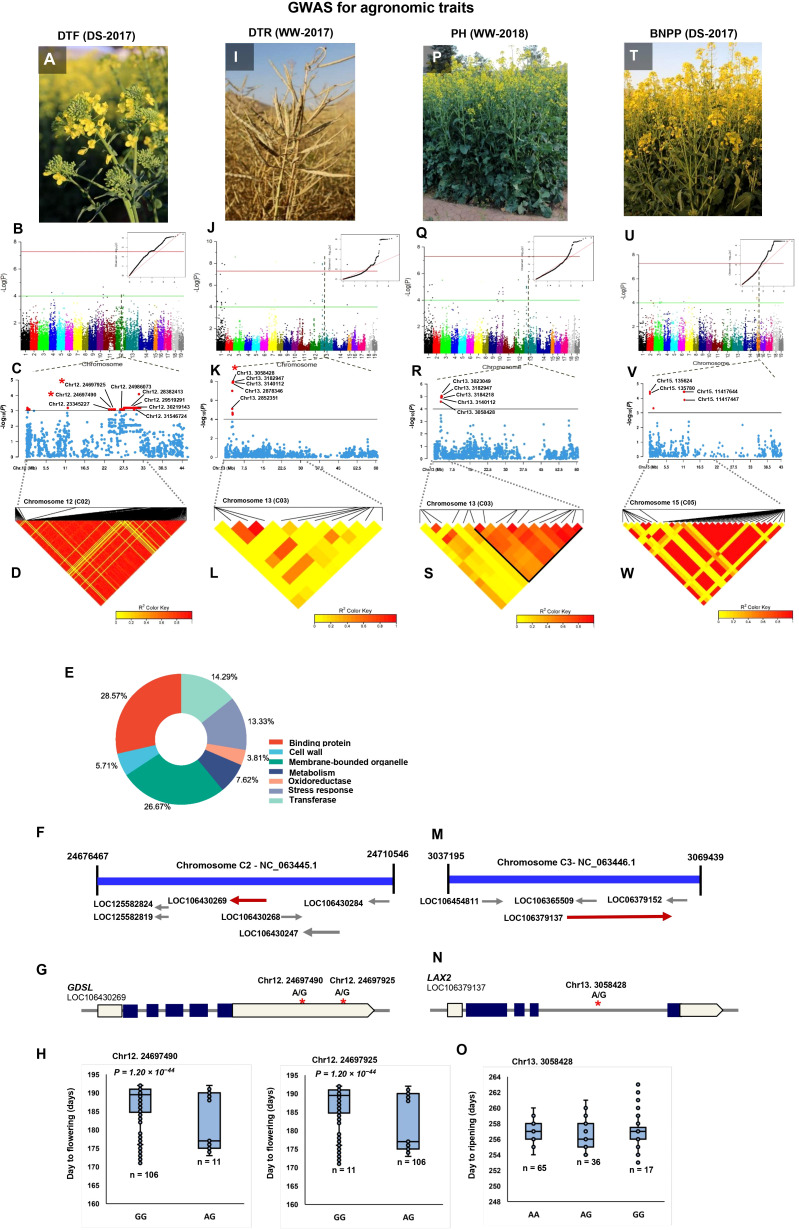
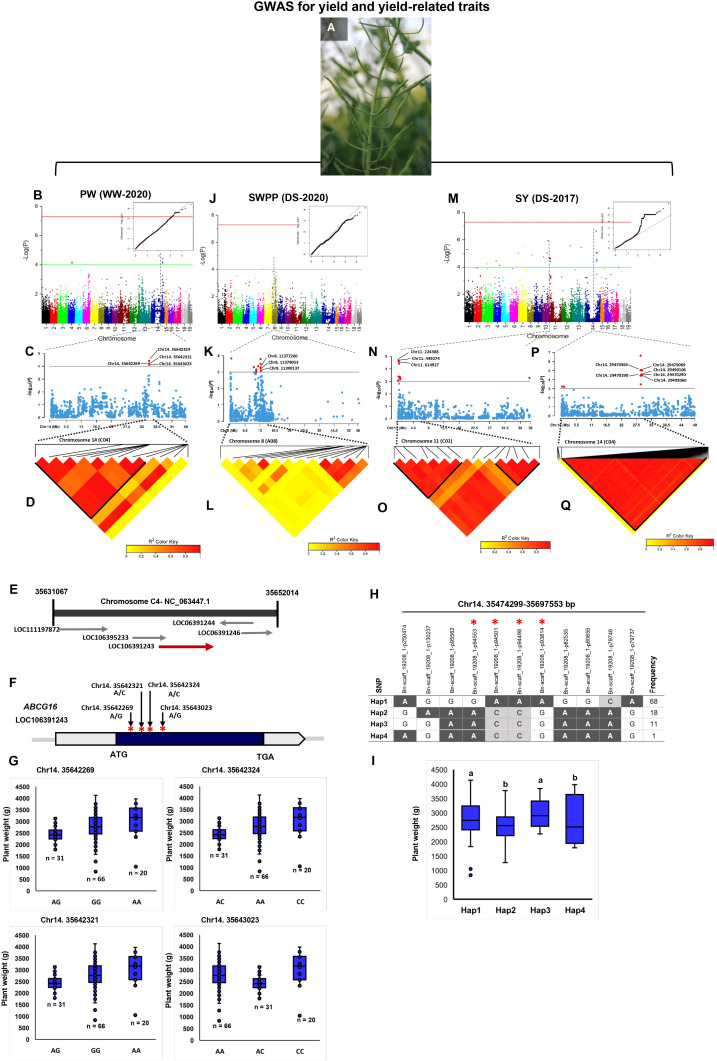
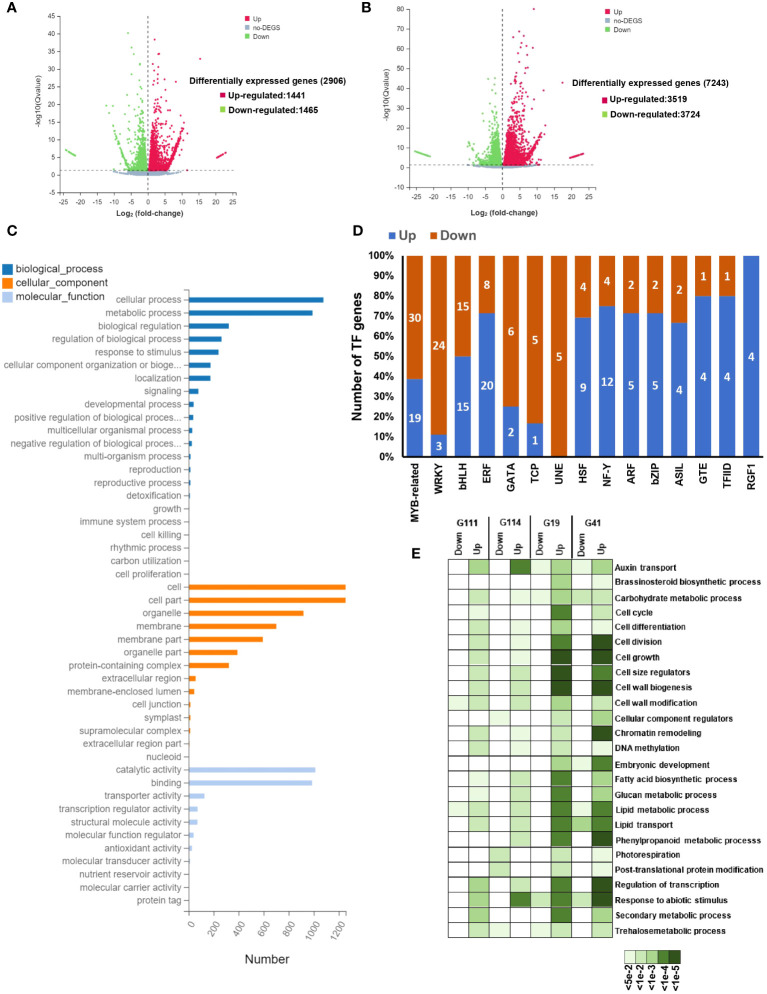
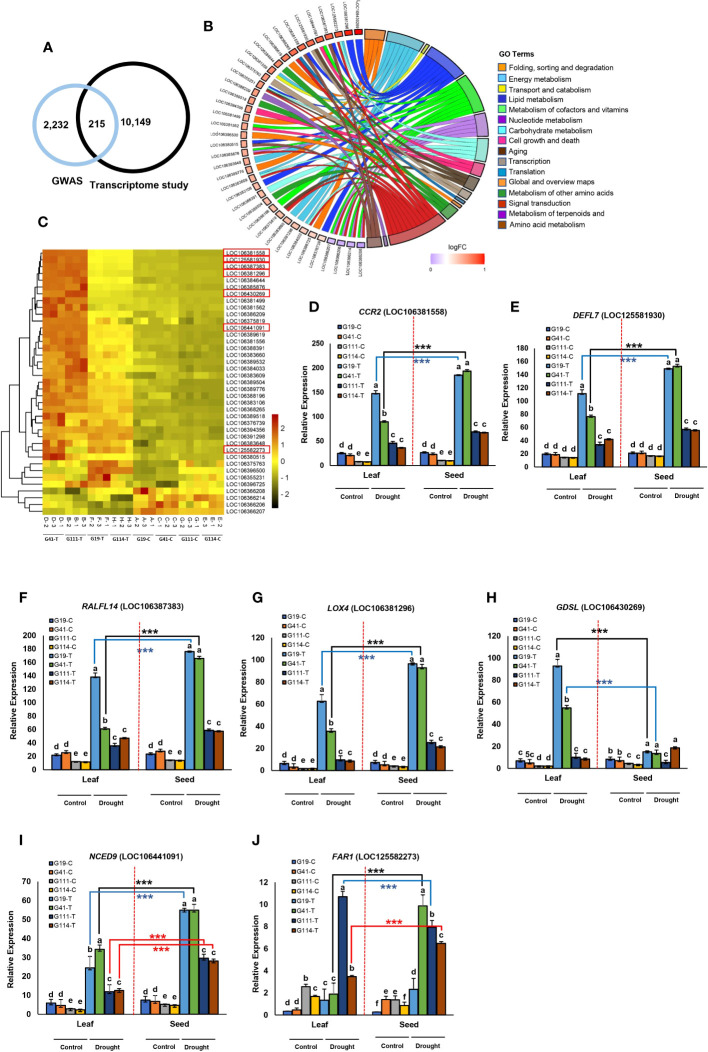
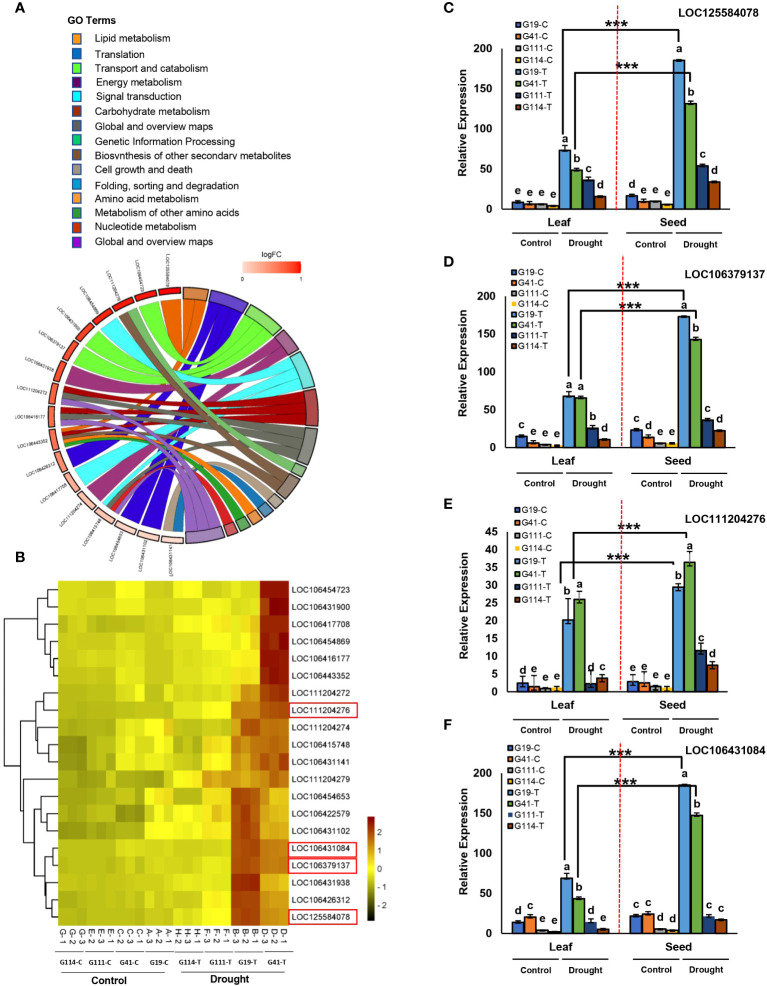
The results of the genome-wide association study (GWAS) using 52,157 single-nucleotide polymorphisms (SNPs) revealed 1,281 SNPs associated with traits. Six stable SNPs showed sequence variation for flowering time between the two irrigation conditions across years. Three novel SNPs on chromosome C04 for plant weight were located within drought tolerance-related gene , and their pleiotropically effects on seed weight per plant and seed yield were characterized. We identified the C02 peak as a novel signal for flowering time, harboring 52.77% of the associated SNPs. The 288-kbps LD decay distance analysis revealed 2,232 candidate genes (CGs) associated with traits. The CGs -, , , , and were involved in phytohormone signaling and pollen development with significant effects on seed number, seed weight, and grain yield in drought conditions. By integrating GWAS and RNA-seq, 215 promising CGs were associated with developmental process, reproductive processes, cell wall organization, and response to stress. GWAS and differentially expressed genes (DEGs) of leaf and seed in the yield contrasting accessions identified , , and genes for yield variation.
The results of our study provide insights into the genetic control of drought tolerance and the improvement of marker-assisted selection (MAS) for breeding high-yield and drought-tolerant varieties.
应对产量损失挑战的一项重要策略是培育耐旱性更强的品种以维持产量。在干旱胁迫下提高作物产量对全球粮食安全至关重要。
在本研究中,我们对119个不同的油菜(L.)品种进行了多组学分析,以剖析在两种浇水制度[充分浇水(WW)和干旱胁迫(DS)]下持续3年的农艺性状的遗传控制。在DS处理中,灌溉持续到50%荚果发育阶段,而在WW条件下,整个生长季节都进行灌溉。
使用52,157个单核苷酸多态性(SNP)进行全基因组关联研究(GWAS)的结果揭示了1,281个与性状相关的SNP。六个稳定的SNP显示了多年来两种灌溉条件下开花时间的序列变异。位于染色体C04上与植株重量相关的三个新SNP位于耐旱相关基因内,并对单株种子重量和种子产量具有多效性影响。我们将C02峰值鉴定为开花时间的一个新信号,包含52.77%的相关SNP。288-kbps的连锁不平衡衰减距离分析揭示了2,232个与性状相关的候选基因(CG)。CGs -、、、、和参与植物激素信号传导和花粉发育,对干旱条件下的种子数量、种子重量和籽粒产量有显著影响。通过整合GWAS和RNA-seq,215个有前景的CG与发育过程、生殖过程、细胞壁组织和对胁迫的反应相关。产量对比材料中叶片和种子的GWAS和差异表达基因(DEG)鉴定出了与产量变异相关的、和基因。
我们的研究结果为耐旱性的遗传控制以及高产耐旱品种育种的标记辅助选择(MAS)改进提供了见解。