Division of Microbiology, Department of Pathology and Laboratory Medicine, Nova Scotia Health, Halifax, Nova Scotia, Canada.
Department of Pathology, Dalhousie University, Halifax, Nova Scotia, Canada.
Microbiol Spectr. 2024 May 2;12(5):e0407323. doi: 10.1128/spectrum.04073-23. Epub 2024 Apr 3.
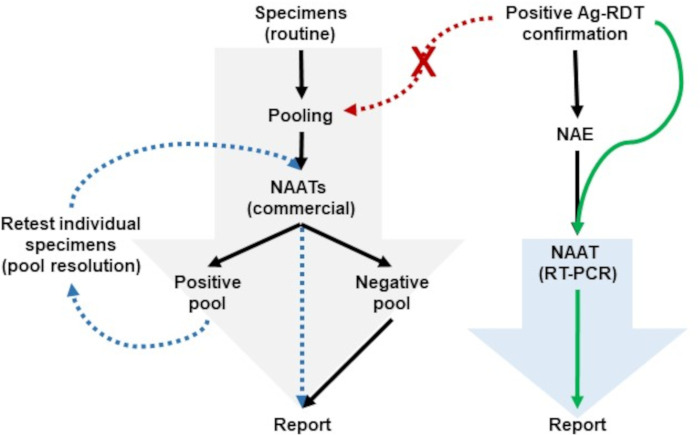
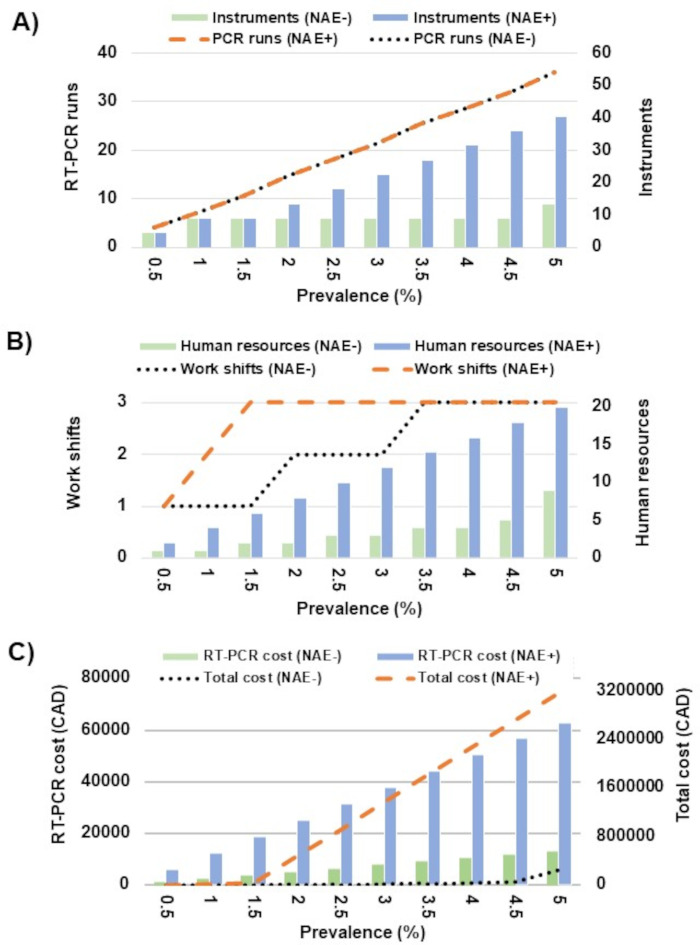
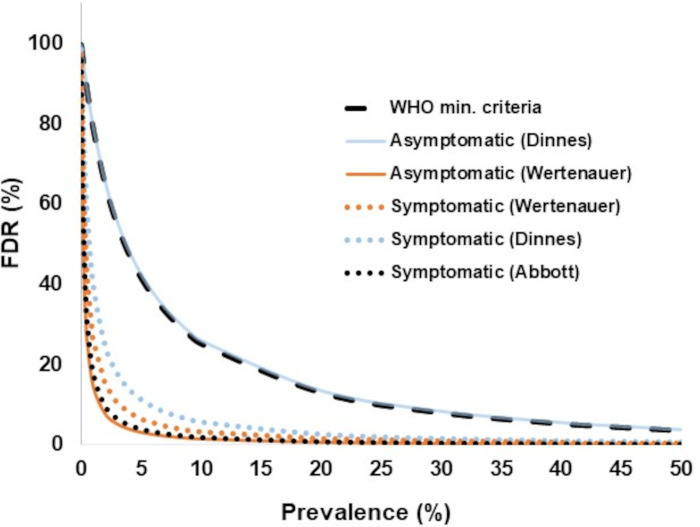
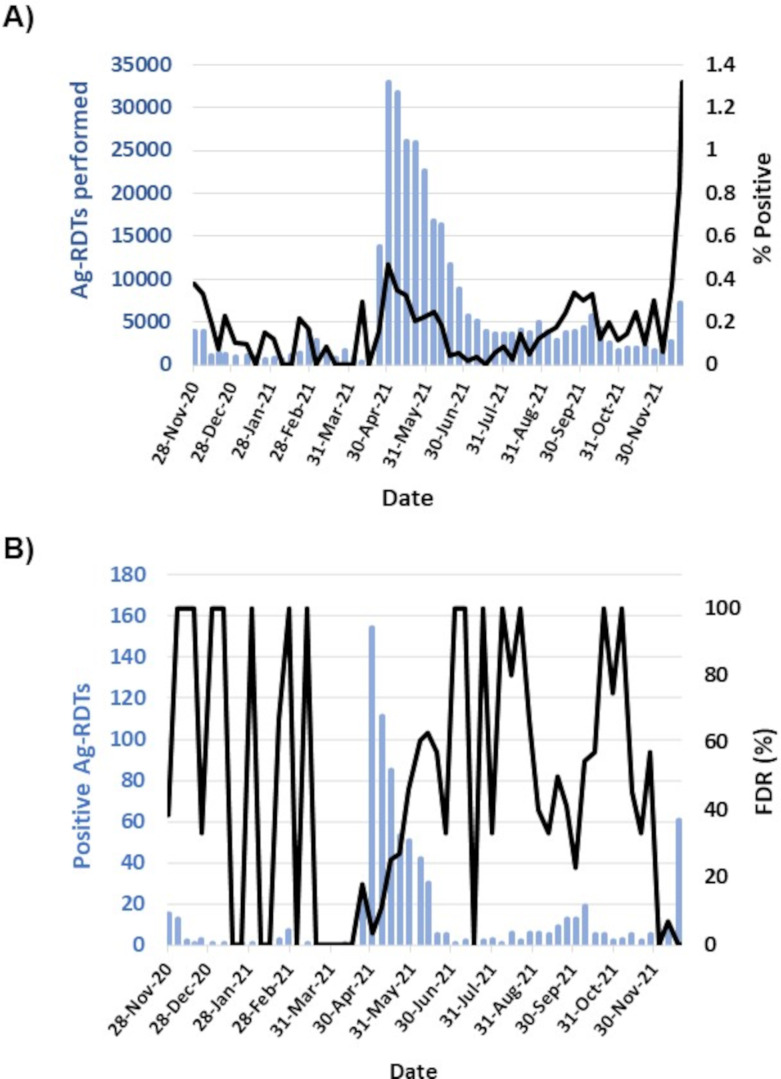
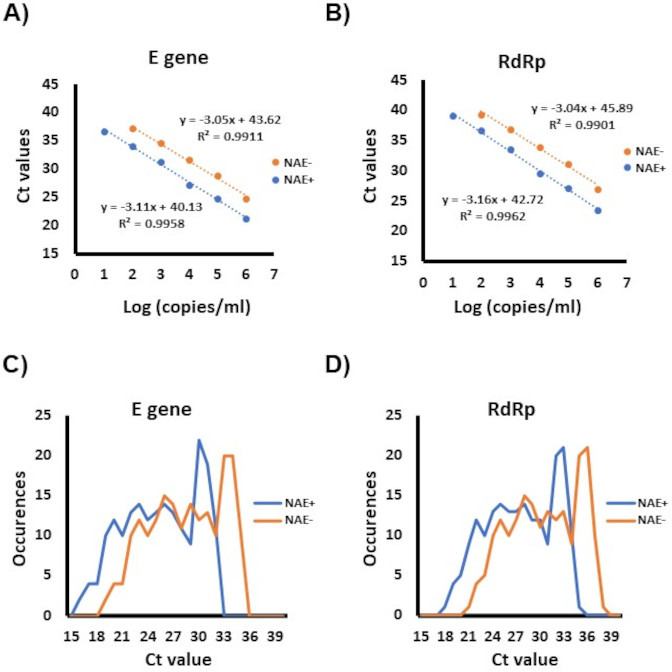
Antigen-based rapid diagnostic tests (Ag-RDTs) were widely deployed to enhance SARS-CoV-2 testing capacity during the COVID-19 pandemic. Consistent with national guidance for low prevalence settings, positive Ag-RDTs were confirmed using nucleic acid amplification tests (NAATs) to avoid false positive results. However, increasing demands for positive Ag-RDT confirmation competed with other testing priorities in clinical laboratories. This work hypothesized that real-time RT-PCR without nucleic acid extraction (NAE) would be sufficiently sensitive to support positive Ag-RDT confirmation. Ag-RDT and NAAT results from community-based asymptomatic testing sites prior to the omicron variant wave were compared to calculate the weekly false positive rate (FPR) and false detection rate (FDR). Real-time RT-PCR was compared with and without NAE using 752 specimens previously tested positive for SARS-CoV-2 using commercial NAATs and 344 specimens from Ag-RDT-positive individuals. The impact of SARS-CoV-2 prevalence on laboratory resources required to sustain Ag-RDT confirmation was modeled for the RT-PCR with and without NAE. Overall, FPR was low [0.07% (222/330,763)] in asymptomatic testing sites, but FDR was high [30.7% (222/724)]. When RT-PCR was compared with and without NAE, 100% concordance was obtained with NAAT-positive specimens, including those from Ag-RDT-positive individuals. NAE-free RT-PCR significantly reduced time to results, human resources, and overall costs. A 30.7% FDR reaffirms the need for NAAT-based confirmation of positive Ag-RDT results during low SARS-CoV-2 prevalence. NAE-free RT-PCR was shown to be a simple and cost-sparing NAAT-based solution for positive Ag-RDT confirmation, and its implementation supported data-driven broader Ag-RDT deployment into communities, workplaces, and households.
Rapid antigen testing for SARS-CoV-2 was widely deployed during the COVID-19 pandemic. In settings of low prevalence, national guidance recommends that positive antigen test results be confirmed with molecular testing. Given the high testing burden on clinical laboratories during the COVID-19 pandemic, the high volume of positive antigen tests submitted for confirmatory testing posed challenges for laboratory workflow. This study demonstrated that a simple PCR method without prior nucleic acid purification is an accurate and cost-effective solution for positive rapid antigen test confirmation. Implementing this method allowed molecular confirmatory testing for positive antigen tests to be sustained as antigen testing was expanded into large populations such as workplaces, schools, and households.
在 COVID-19 大流行期间,广泛部署了用于检测 SARS-CoV-2 的抗原快速诊断检测(Ag-RDT)。根据低流行地区的国家指南,使用核酸扩增检测(NAAT)对阳性 Ag-RDT 进行确认,以避免假阳性结果。然而,对阳性 Ag-RDT 确认的需求不断增加,与临床实验室的其他检测重点竞争。这项工作假设实时 RT-PCR 无需核酸提取(NAE)就足够灵敏以支持阳性 Ag-RDT 确认。在 omicron 变体浪潮之前,对社区无症状检测点的 Ag-RDT 和 NAAT 结果进行比较,以计算每周假阳性率(FPR)和假检测率(FDR)。使用 752 份先前使用商业 NAAT 检测为 SARS-CoV-2 阳性的标本和 344 份 Ag-RDT 阳性个体的标本,比较了有和没有 NAE 的实时 RT-PCR。为了在有和没有 NAE 的情况下维持 Ag-RDT 确认所需的实验室资源,对 SARS-CoV-2 流行率进行了建模。总体而言,无症状检测点的 FPR 较低[0.07%(222/330763)],但 FDR 较高[30.7%(222/724)]。当 RT-PCR 与有和没有 NAE 进行比较时,与 NAAT 阳性标本(包括 Ag-RDT 阳性个体)的 100%一致性。无 NAE 的 RT-PCR 显著缩短了结果、人力资源和总体成本的时间。30.7%的 FDR 再次证实,在 SARS-CoV-2 低流行率期间,需要基于 NAAT 确认阳性 Ag-RDT 结果。无 NAE 的 RT-PCR 被证明是一种简单且节省成本的基于 NAAT 的阳性 Ag-RDT 确认解决方案,其实施支持了基于数据的更广泛的 Ag-RDT 在社区、工作场所和家庭中的部署。
在 COVID-19 大流行期间,SARS-CoV-2 的快速抗原检测得到了广泛应用。在低流行地区,国家指南建议对阳性抗原检测结果进行分子检测确认。鉴于 COVID-19 大流行期间临床实验室的检测负担很重,大量提交进行确认检测的阳性抗原检测对实验室工作流程构成了挑战。这项研究表明,一种无需核酸纯化的简单 PCR 方法是阳性快速抗原检测确认的准确且具有成本效益的解决方案。实施这种方法允许随着抗原检测扩展到工作场所、学校和家庭等大型人群,对阳性抗原检测进行分子确认检测。