Graduate School, Tianjin Medical University, No. 22 Qixiangtai Road, Heping District, Tianjin, 300070, China.
Department of Spine Surgery, Tianjin Hospital, Tianjin University, No.406, Jiefang South Road, Hexi District, Tianjin, 300210, China.
BMC Musculoskelet Disord. 2024 Apr 3;25(1):263. doi: 10.1186/s12891-024-07329-w.
Patients with idiopathic scoliosis commonly present with an imbalance of the paraspinal muscles. However, it is unclear whether this muscle imbalance is an underlying cause or a result of idiopathic scoliosis. This study aimed to investigate the role of paraspinal muscles in the development of idiopathic scoliosis based on surface electromyography (sEMG) and radiographic analyses.
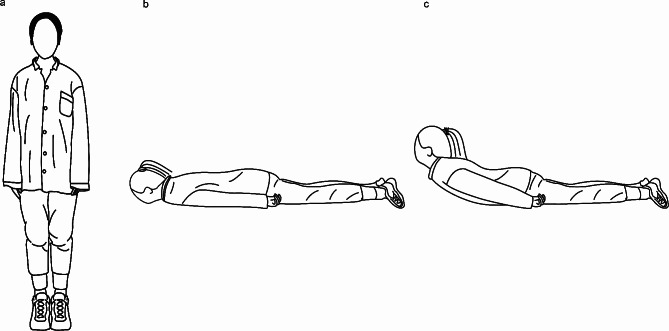
This was a single-center prospective study of 27 patients with single-curve idiopathic scoliosis. Posteroanterior whole-spine radiographs and sEMG activity of the erector spinae muscles were obtained for all patients in the habitual standing position (HSP), relaxed prone position (RPP), and prone extension position (PEP). The Cobb angle, symmetrical index (SI) of the sEMG activity (convex/concave), and correlation between the two factors were analyzed.
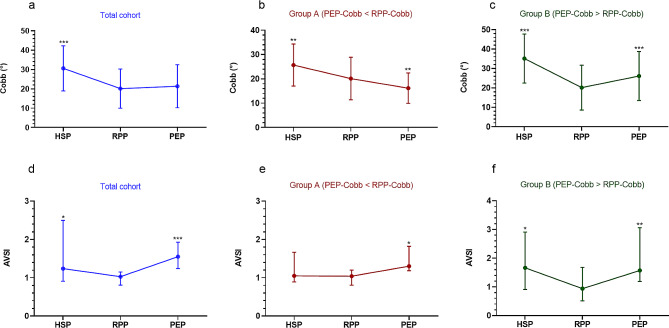
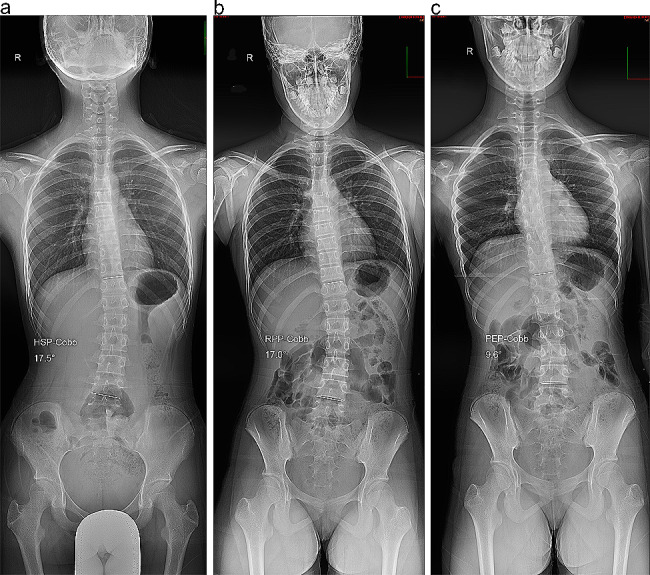
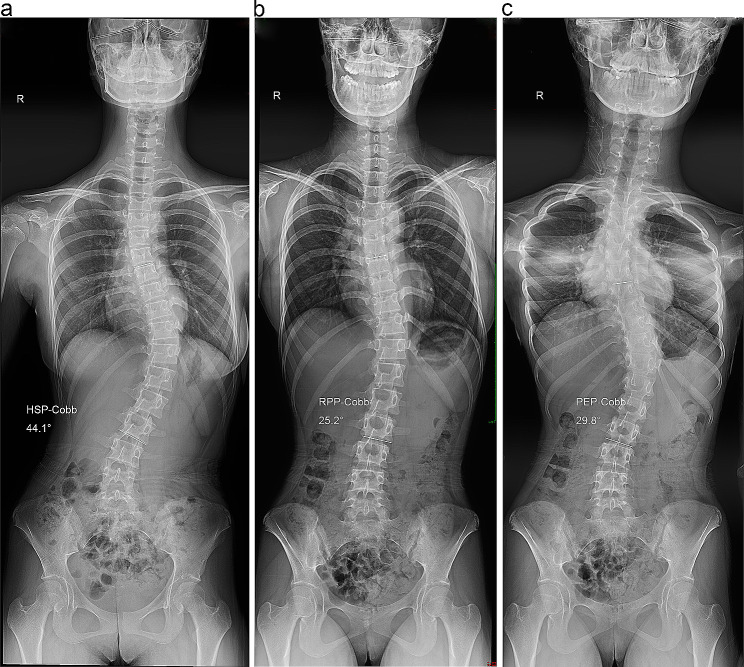
In the total cohort, the mean Cobb angle in the HSP was significantly greater than the mean Cobb angle in the RPP (RPP-Cobb) (p < 0.001), whereas the mean Cobb angle in the PEP (PEP-Cobb) did not differ from the RPP-Cobb. Thirteen patients had a PEP-Cobb that was significantly smaller than their RPP-Cobb (p = 0.007), while 14 patients had a PEP-Cobb that was significantly larger than their RPP-Cobb (p < 0.001). In the total cohort and two subgroups, the SI of sEMG activity at the apex vertebra (AVSI) in the PEP was significantly greater than 1, revealing significant asymmetry, and was also significantly larger than the AVSI in the RPP. In the RPP, the AVSI was close to 1 in the total cohort and two subgroups, revealing no significant asymmetry.
The coronal Cobb angle and the SI of paraspinal muscle activity in AIS patients vary with posture changes. Asymmetrical sEMG activity of the paraspinal muscles may be not an inherent feature of AIS patients, but is evident in the challenging tasks. The potential significance of asymmetric paraspinal muscle activity need to be explored in further research.
特发性脊柱侧凸患者常表现出椎旁肌肉的不平衡。然而,这种肌肉不平衡是特发性脊柱侧凸的根本原因还是结果尚不清楚。本研究旨在通过表面肌电图(sEMG)和影像学分析来探讨椎旁肌肉在特发性脊柱侧凸发展中的作用。
这是一项单中心前瞻性研究,纳入了 27 例单曲线特发性脊柱侧凸患者。所有患者在习惯性站立位(HSP)、放松俯卧位(RPP)和俯卧伸展位(PEP)下均获得全脊柱正侧位片和竖脊肌 sEMG 活动。分析 Cobb 角、sEMG 活动的对称指数(SI)(凸/凹)以及这两个因素之间的相关性。
在总队列中,HSP 的平均 Cobb 角明显大于 RPP 的平均 Cobb 角(RPP-Cobb)(p<0.001),而 PEP 的平均 Cobb 角(PEP-Cobb)与 RPP-Cobb 无差异。13 例患者的 PEP-Cobb 明显小于其 RPP-Cobb(p=0.007),而 14 例患者的 PEP-Cobb 明显大于其 RPP-Cobb(p<0.001)。在总队列和两个亚组中,PEP 顶椎(AVSI)的 sEMG 活动 SI 明显大于 1,显示出明显的不对称性,并且明显大于 RPP 的 AVSI。在 RPP 中,总队列和两个亚组的 AVSI 接近 1,无明显不对称性。
AIS 患者的冠状位 Cobb 角和椎旁肌肉活动的 SI 随体位变化而变化。椎旁肌肉的不对称 sEMG 活动可能不是 AIS 患者的固有特征,而是在挑战性任务中明显存在。不对称性椎旁肌肉活动的潜在意义需要在进一步的研究中探索。