Institute of Cardiovascular Regeneration, Goethe University Frankfurt, Theodor-Stern-Kai 7, 60590 Frankfurt am Main, Germany.
German Centre for Cardiovascular Research (DZHK), 60590 Frankfurt am Main, Germany.
Gigascience. 2024 Jan 2;13. doi: 10.1093/gigascience/giae011.
Cardiovascular research heavily relies on mouse (Mus musculus) models to study disease mechanisms and to test novel biomarkers and medications. Yet, applying these results to patients remains a major challenge and often results in noneffective drugs. Therefore, it is an open challenge of translational science to develop models with high similarities and predictive value. This requires a comparison of disease models in mice with diseased tissue derived from humans.
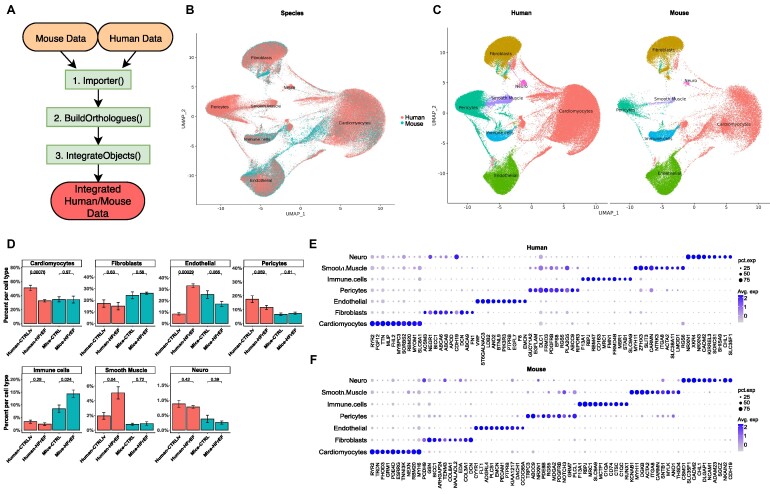
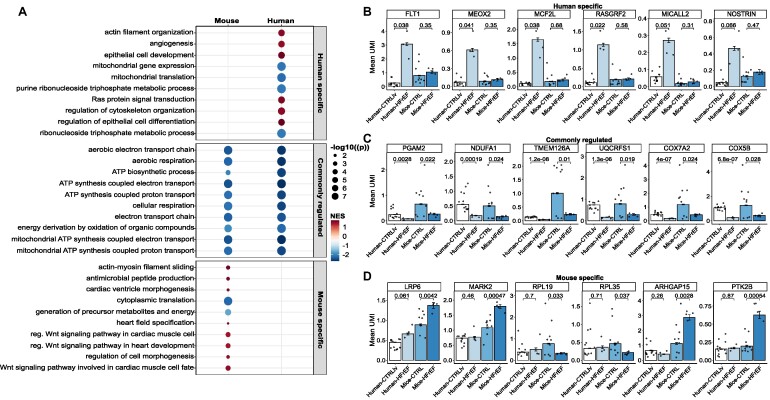
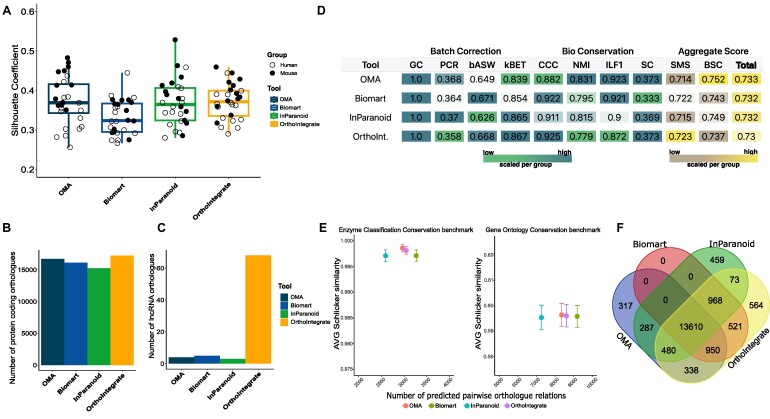
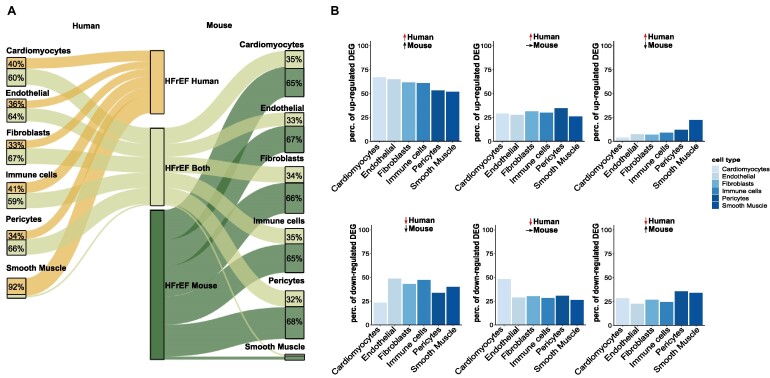
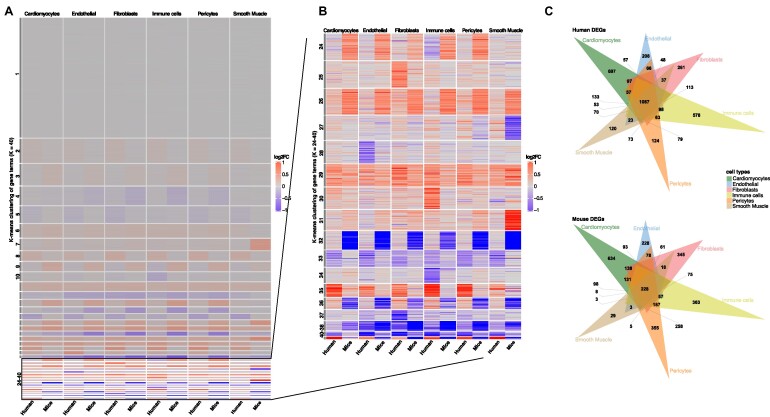
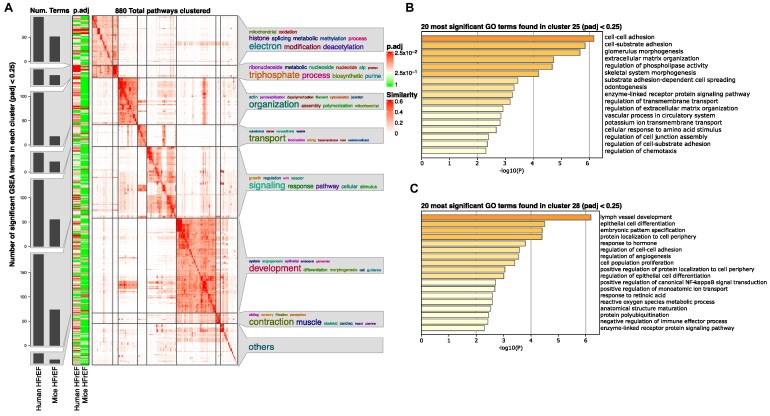
To compare the transcriptional signatures at single-cell resolution, we implemented an integration pipeline called OrthoIntegrate, which uniquely assigns orthologs and therewith merges single-cell RNA sequencing (scRNA-seq) RNA of different species. The pipeline has been designed to be as easy to use and is fully integrable in the standard Seurat workflow.We applied OrthoIntegrate on scRNA-seq from cardiac tissue of heart failure patients with reduced ejection fraction (HFrEF) and scRNA-seq from the mice after chronic infarction, which is a commonly used mouse model to mimic HFrEF. We discovered shared and distinct regulatory pathways between human HFrEF patients and the corresponding mouse model. Overall, 54% of genes were commonly regulated, including major changes in cardiomyocyte energy metabolism. However, several regulatory pathways (e.g., angiogenesis) were specifically regulated in humans.
The demonstration of unique pathways occurring in humans indicates limitations on the comparability between mice models and human HFrEF and shows that results from the mice model should be validated carefully. OrthoIntegrate is publicly accessible (https://github.com/MarianoRuzJurado/OrthoIntegrate) and can be used to integrate other large datasets to provide a general comparison of models with patient data.
心血管研究严重依赖于小鼠(Mus musculus)模型来研究疾病机制,并测试新的生物标志物和药物。然而,将这些结果应用于患者仍然是一个主要挑战,并且经常导致无效的药物。因此,开发具有高度相似性和预测价值的模型是转化科学的一个开放性挑战。这需要将小鼠疾病模型与源自人类的患病组织进行比较。
为了在单细胞分辨率下比较转录特征,我们实施了一个名为 OrthoIntegrate 的整合管道,该管道独特地分配同源物,并合并不同物种的单细胞 RNA 测序(scRNA-seq)RNA。该管道旨在易于使用,并完全集成到标准 Seurat 工作流程中。我们将 OrthoIntegrate 应用于心力衰竭患者射血分数降低(HFrEF)的心脏组织的 scRNA-seq 和慢性梗塞后的小鼠的 scRNA-seq,这是一种常用的模拟 HFrEF 的小鼠模型。我们发现人类 HFrEF 患者和相应的小鼠模型之间存在共享和独特的调节途径。总体而言,有 54%的基因受到共同调节,包括心肌细胞能量代谢的主要变化。然而,一些调节途径(例如血管生成)在人类中特异性调节。
在人类中发生的独特途径的证明表明了小鼠模型与人类 HFrEF 之间的可比性存在局限性,并表明应该仔细验证小鼠模型的结果。OrthoIntegrate 是公开可访问的(https://github.com/MarianoRuzJurado/OrthoIntegrate),可用于整合其他大型数据集,以提供模型与患者数据的一般比较。