Munroe-Meyer Institute for Genetics and Rehabilitation, University of Nebraska Medical Center, Omaha, NE, 68106, USA.
Department of Pediatrics, University of Nebraska Medical Center, Omaha, NE, 68198, USA.
Sci Rep. 2024 Apr 4;14(1):7924. doi: 10.1038/s41598-024-58579-6.
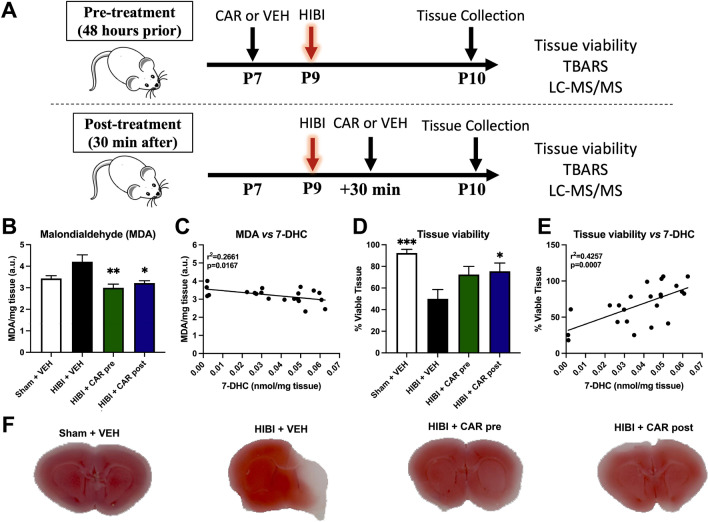
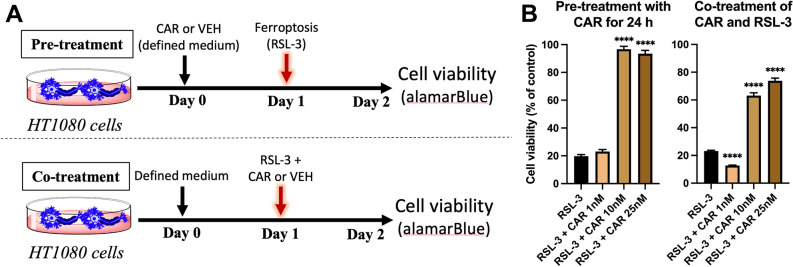
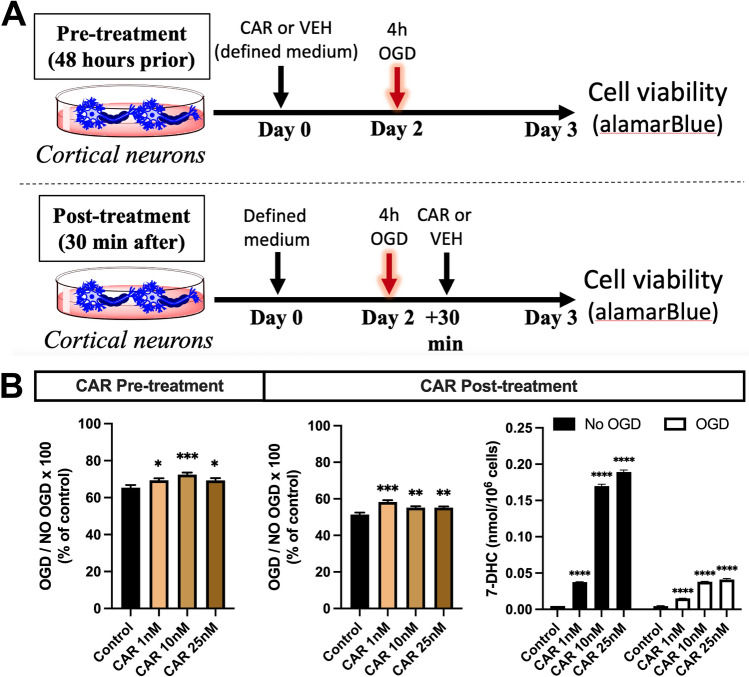
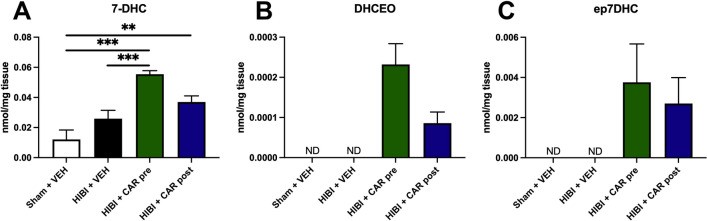
Neonatal hypoxic-ischemic brain injury (HIBI) results in part from excess reactive oxygen species and iron-dependent lipid peroxidation (i.e. ferroptosis). The vitamin D precursor 7-dehydrocholesterol (7-DHC) may inhibit iron-dependent lipid peroxidation. Primary neurons underwent oxygen and glucose deprivation (OGD) injury and treatment with 7-DHC-elevating medications such as cariprazine (CAR) or vehicle. Postnatal day 9 mice underwent sham surgery or carotid artery ligation and hypoxia and received intraperitoneal CAR. In neurons, CAR administration resulted in significantly increased cell survival compared to vehicle controls, whether administered 48 h prior to or 30 min after OGD, and was associated with increased 7-DHC. In the mouse model, malondialdehyde and infarct area significantly increased after HIBI in the vehicle group, which were attenuated by post-treatment with CAR and were negatively correlated with tissue 7-DHC concentrations. Elevating 7-DHC concentrations with CAR was associated with improved cellular and tissue viability after hypoxic-ischemic injury, suggesting a novel therapeutic avenue.
新生儿缺氧缺血性脑损伤 (HIBI) 的部分原因是活性氧和铁依赖性脂质过氧化过多(即铁死亡)。维生素 D 前体 7-脱氢胆固醇 (7-DHC) 可能抑制铁依赖性脂质过氧化。原代神经元经历缺氧和葡萄糖剥夺 (OGD) 损伤,并接受 7-DHC 升高药物(如卡利拉嗪 (CAR) 或载体)的治疗。出生后第 9 天的小鼠接受假手术或颈总动脉结扎和缺氧,并接受腹腔内 CAR 治疗。在神经元中,与载体对照相比,CAR 给药在 OGD 前 48 小时或 OGD 后 30 分钟给予时,均显著增加细胞存活率,并且与 7-DHC 增加相关。在小鼠模型中,载体组在 HIBI 后丙二醛和梗死面积显著增加,CAR 后处理可减轻这种增加,并且与组织 7-DHC 浓度呈负相关。用 CAR 升高 7-DHC 浓度与缺氧缺血性损伤后的细胞和组织活力改善相关,提示了一种新的治疗途径。