Nelson Thomas, Cobos Santiago F, Gandhi Vaibhav, Katechia Bina, Yadav Sumit, Tadinada Aditya
School of Dentistry, University of Connecticut Health, Farmington, USA.
Oral and Maxillofacial Radiology, University of Connecticut Health, Farmington, USA.
Cureus. 2024 Apr 4;16(4):e57602. doi: 10.7759/cureus.57602. eCollection 2024 Apr.
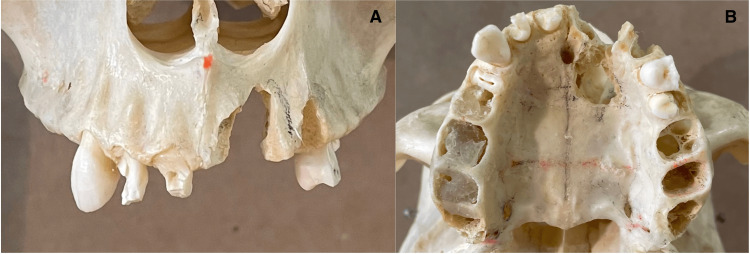
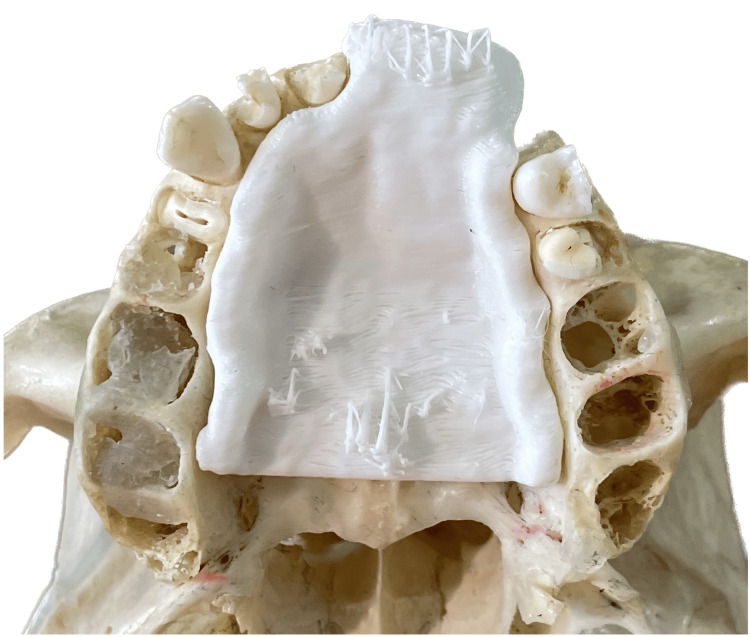
Cone beam computed tomography (CBCT) technology is increasingly utilized in the head and neck region and is valuable in treatment planning for cleft palate patients, potentially enabling the creation of 3D-printed obturators to assist with feeding and speech. This technical report investigates the feasibility of using data from a 360-degree CBCT scan to accurately produce a cleft palate obturator and assesses whether a lower-dose 180-degree CBCT scan can achieve a comparable result. A simulated cleft palate was crafted on a dehydrated human skull, which was then scanned using both 360-degree and 180-degree CBCT scanning protocols. Two obturators were digitally designed based on the segmented images from each scan and subsequently 3D printed. Evaluation of the segmented images and 3D-printed obturators from both protocols demonstrated clear visualization of anatomical landmarks and identical scores across all parameters, suggesting that the 180-degree CBCT scan can produce an obturator of comparable quality to that of the 360-degree scan, with the added benefit of reduced radiation exposure.
锥形束计算机断层扫描(CBCT)技术在头颈部区域的应用越来越广泛,对腭裂患者的治疗规划具有重要价值,有可能制作出3D打印的阻塞器以辅助进食和言语功能。本技术报告研究了使用360度CBCT扫描数据精确制作腭裂阻塞器的可行性,并评估低剂量180度CBCT扫描是否能取得可比结果。在一个脱水的人类颅骨上制作了模拟腭裂,然后分别使用360度和180度CBCT扫描协议进行扫描。根据每次扫描的分割图像进行了两个阻塞器的数字化设计,随后进行3D打印。对两种扫描协议的分割图像和3D打印阻塞器的评估表明,解剖标志清晰可见,所有参数的得分相同,这表明180度CBCT扫描能够制作出与360度扫描质量相当的阻塞器,且具有减少辐射暴露的额外优势。