Department of Obstetrics and Gynecology, Orotta College of Medicine and Health Sciences, Orotta National Referral Maternity Hospital, Ministry of Health, Asmara, Eritrea.
Microbiology Department, National Health Laboratory, Ministry of Health, Asmara, Eritrea.
Biomed Res Int. 2024 Mar 28;2024:7193490. doi: 10.1155/2024/7193490. eCollection 2024.
Antimicrobial resistance poses a significant global threat to the treatment of bacterial infections, particularly in low- and middle-income regions such as Africa. This study is aimed at analyzing antimicrobial resistance patterns in vaginal swab samples from patients at the National Health Laboratory from 2019 to 2022.
This retrospective study examined patient records from vaginal swab analyses performed at the National Health Laboratory between January 1, 2019, and December 31, 2022. Ethical approval was obtained from the Ministry of Health Research Ethical Approval and Clearance Committee on 15/02/2023.
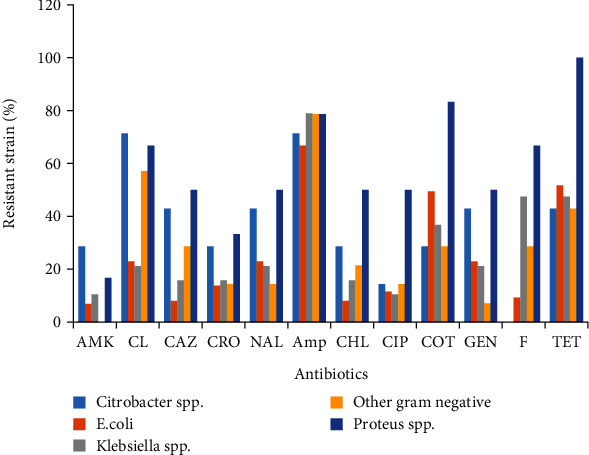
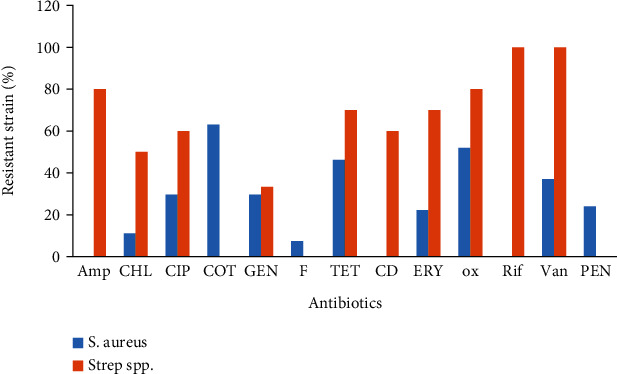
Of the 622 samples, 83% underwent microbial isolation and identification. spp. exhibited high resistance (>43%) to antibiotics such as cephalexin, ceftazidime, nalidixic acid, ampicillin, gentamicin, and tetracycline. showed resistance rates of more than 50% to ampicillin, trimethoprim-sulfamethoxazole, and tetracycline. spp. and Proteus spp. exhibited resistance rates that exceeded 47% to specific antibiotics. Gram-positive bacteria have resistance rates of more than 49% with ampicillin, trimethoprim-sulfamethoxazole, tetracycline, oxacillin, vancomycin, and penicillin G. In particular, demonstrated no resistance to rifampicin or clindamycin, while spp. showed 100% resistance to rifampicin and vancomycin. Several species, including species, spp., , and spp. exhibited multidrug resistance.
Most gram-negative bacteria displayed higher resistance of >45% to ampicillin, trimethoprim-sulfamethoxazole, and tetracycline. Among gram-positive bacteria, a higher resistance rate with ampicillin, trimethoprim-sulfamethoxazole, tetracycline, oxacillin, vancomycin, and penicillin G was recorded. showed no resistance to rifampicin and clindamycin, and spp. indicated 100% resistance to rifampicin and vancomycin. This study highlights critical gaps and areas for further exploration. Expanding the spectrum of antibiotics tested and investigating underlying multidrug resistance mechanisms would provide a more comprehensive understanding of resistance patterns.
抗菌药物耐药性对细菌性感染的治疗构成了重大的全球性威胁,尤其是在非洲等中低收入地区。本研究旨在分析 2019 年至 2022 年期间来自国家卫生实验室的阴道拭子样本中抗菌药物耐药模式。
本回顾性研究检查了 2019 年 1 月 1 日至 2022 年 12 月 31 日期间在国家卫生实验室进行的阴道拭子分析患者的病历。伦理批准于 2023 年 2 月 15 日获得卫生部研究伦理批准和清除委员会的批准。
在 622 个样本中,83%进行了微生物分离和鉴定。 spp.对头孢氨苄、头孢他啶、萘啶酸、氨苄西林、庆大霉素和四环素等抗生素表现出高度耐药(>43%)。 对氨苄西林、复方磺胺甲噁唑和四环素的耐药率超过 50%。 spp.和普罗维登斯菌属对特定抗生素的耐药率超过 47%。革兰氏阳性菌对氨苄西林、复方磺胺甲噁唑、四环素、苯唑西林、万古霉素和青霉素 G 的耐药率超过 49%。特别是 对利福平或克林霉素没有耐药性,而 spp.对利福平、万古霉素 100%耐药。包括 种、 spp.、 、 和 spp.在内的几种物种表现出多重耐药性。
大多数革兰氏阴性菌对氨苄西林、复方磺胺甲噁唑和四环素的耐药率>45%。在革兰氏阳性菌中,氨苄西林、复方磺胺甲噁唑、四环素、苯唑西林、万古霉素和青霉素 G 的耐药率较高。 对利福平、克林霉素无耐药性, spp.对利福平、万古霉素 100%耐药。本研究突出了关键的差距和需要进一步探索的领域。扩大抗生素测试的范围并研究潜在的多药耐药机制,将提供对抗菌药物耐药模式的更全面了解。