Department of Reproductive Immunology and Pathology, Institute of Animal Reproduction and Food Research of Polish Academy of Sciences, Olsztyn, Poland.
Epigenetics Programme, The Babraham Institute, Cambridge, CB22 3AT, UK.
Sci Rep. 2024 Apr 5;14(1):8070. doi: 10.1038/s41598-024-58181-w.
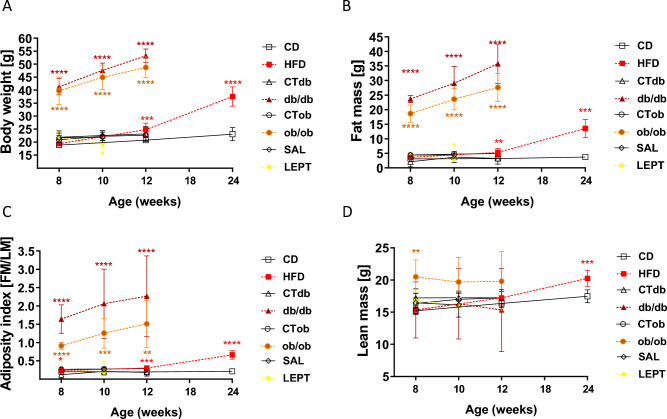
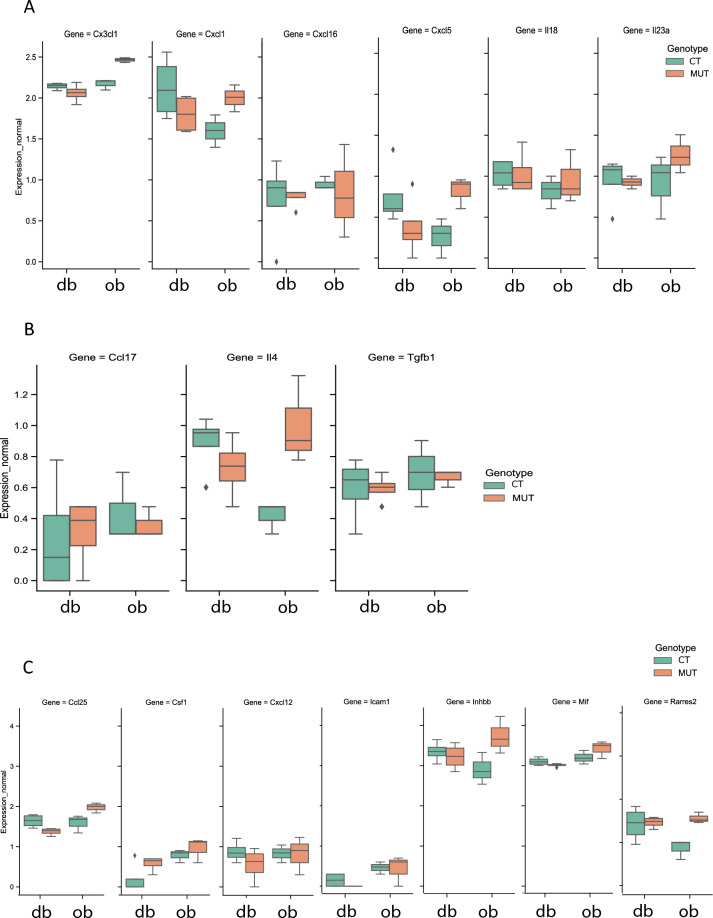
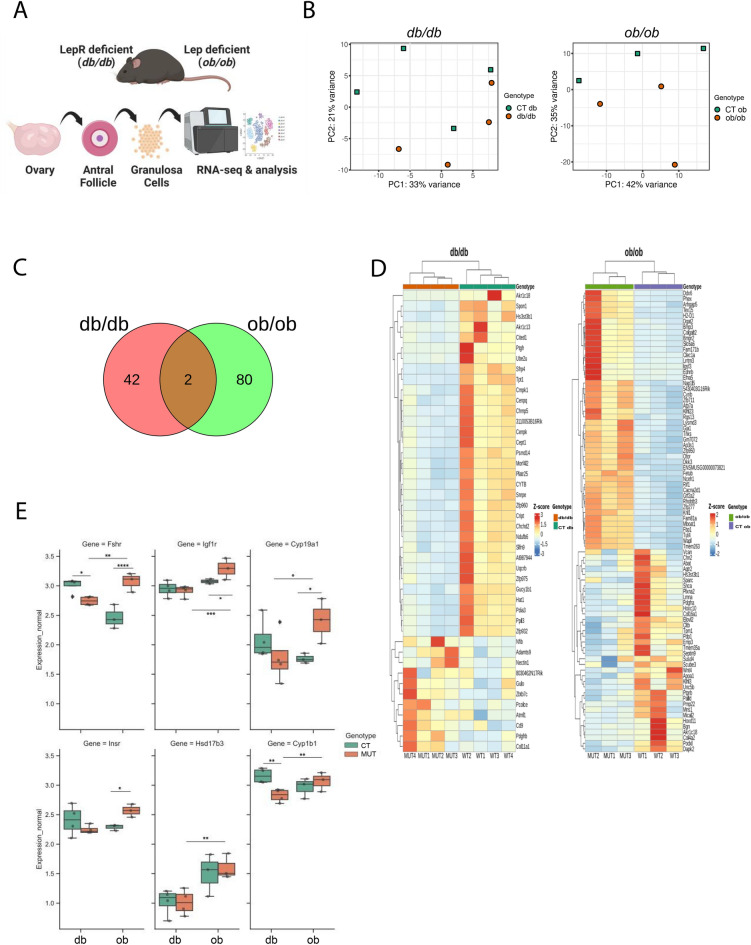
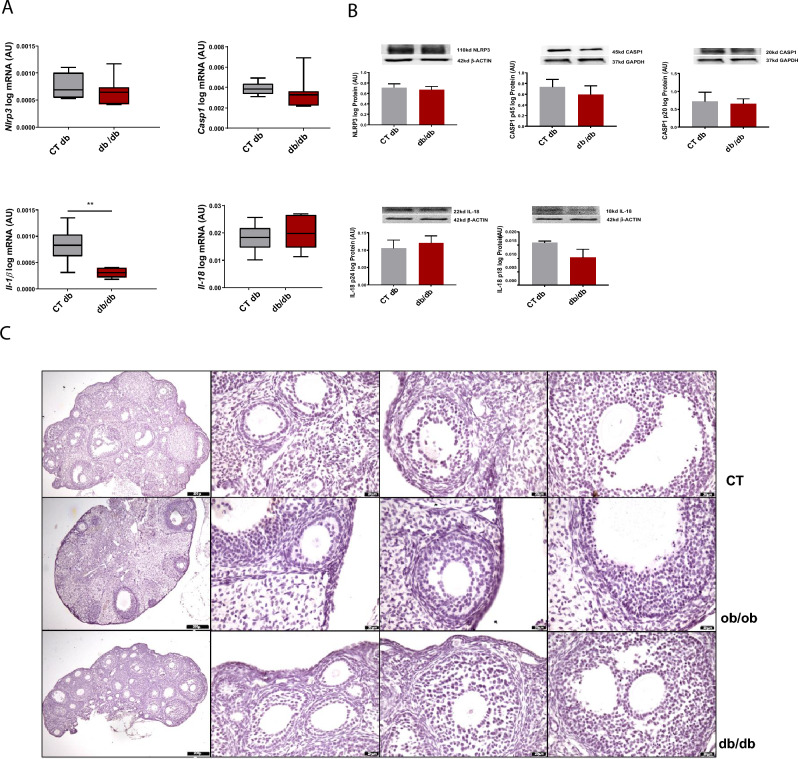
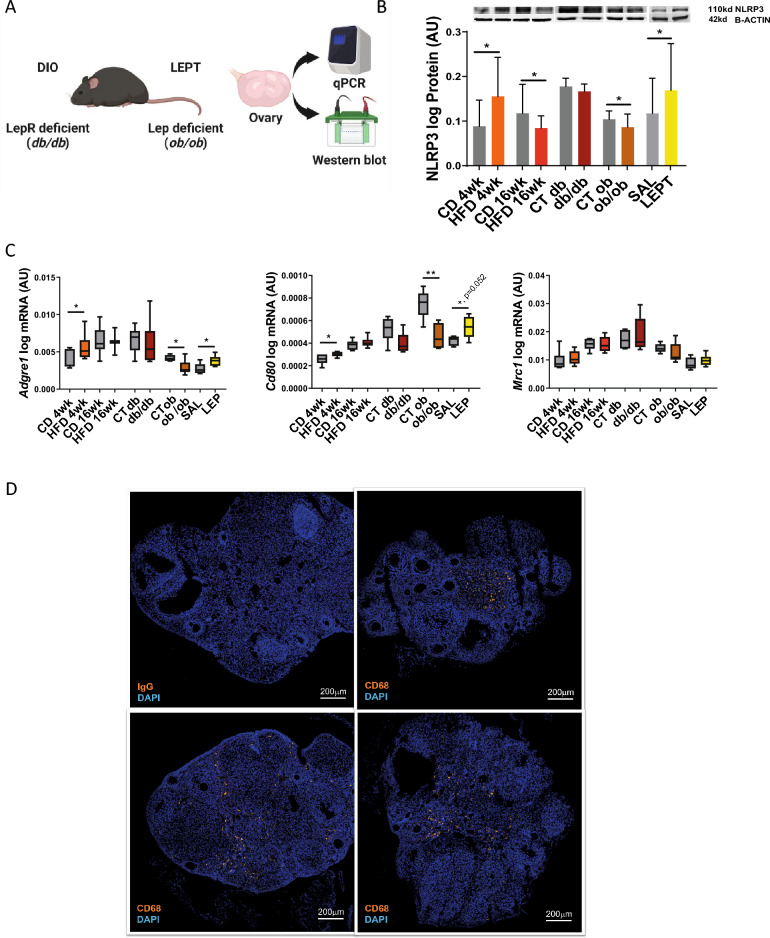
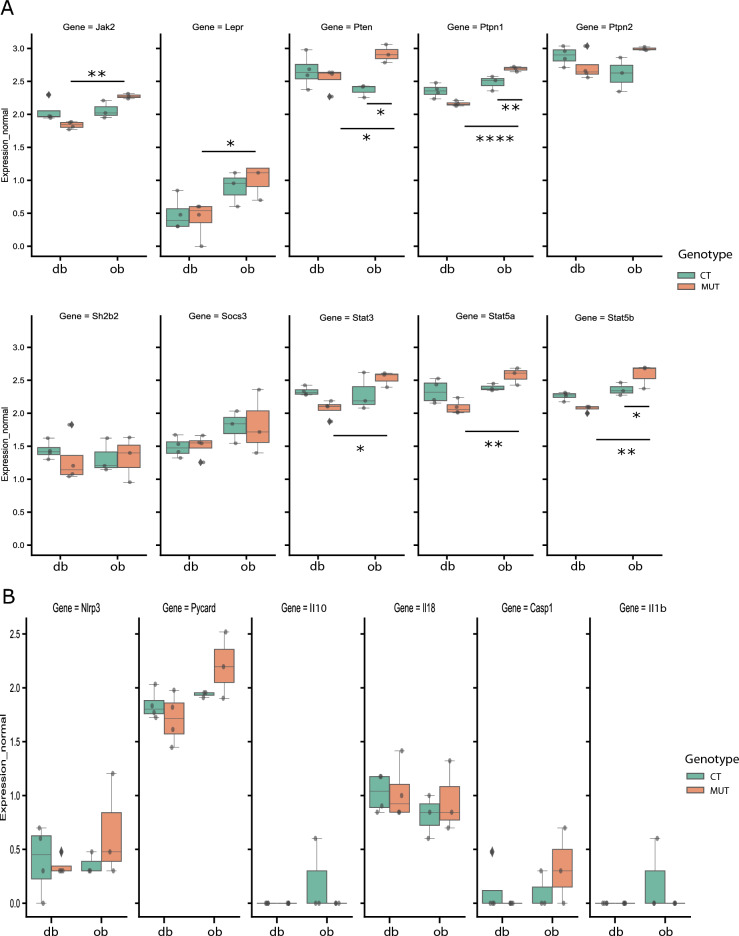
Obesity is associated with increased ovarian inflammation and the establishment of leptin resistance. We presently investigated the role of impaired leptin signalling on transcriptional regulation in granulosa cells (GCs) collected from genetically obese mice. Furthermore, we characterised the association between ovarian leptin signalling, the activation of the NOD-like receptor protein 3 (NLRP3) inflammasome and macrophage infiltration in obese mice. After phenotype characterisation, ovaries were collected from distinct group of animals for protein and mRNA expression analysis: (i) mice subjected to a diet-induced obesity (DIO) protocol, where one group was fed a high-fat diet (HFD) and another a standard chow diet (CD) for durations of 4 or 16 weeks; (ii) mice genetically deficient in the long isoform of the leptin receptor (ObRb; db/db); (iii) mice genetically deficient in leptin (ob/ob); and (iv) mice rendered pharmacologically hyperleptinemic (LEPT). Next, GCs from antral follicles isolated from db/db and ob/ob mice were subjected to transcriptome analysis. Transcriptional analysis revealed opposing profiles in genes associated with steroidogenesis and prostaglandin action between the genetic models, despite the similarities in body weight. Furthermore, we observed no changes in the mRNA and protein levels of NLRP3 inflammasome components in the ovaries of db/db mice or in markers of M1 and M2 macrophage infiltration. This contrasted with the downregulation of NLRP3 inflammasome components and M1 markers in ob/ob and 16-wk HFD-fed mice. We concluded that leptin signalling regulates NLRP3 inflammasome activation and the expression of M1 markers in the ovaries of obese mice in an ObRb-dependent and ObRb-independent manner. Furthermore, we found no changes in the expression of leptin signalling and NLRP3 inflammasome genes in GCs from db/db and ob/ob mice, which was associated with no effects on macrophage infiltration genes, despite the dysregulation of genes associated with steroidogenesis in homozygous obese db/db. Our results suggest that: (i) the crosstalk between leptin signalling, NLRP3 inflammasome and macrophage infiltration takes place in ovarian components other than the GC compartment; and (ii) transcriptional changes in GCs from homozygous obese ob/ob mice suggest structural rearrangement and organisation, whereas in db/db mice the impairment in steroidogenesis and secretory activity.
肥胖与卵巢炎症增加和瘦素抵抗的建立有关。我们目前研究了瘦素信号转导受损对从遗传性肥胖小鼠中收集的颗粒细胞 (GC) 转录调控的作用。此外,我们描述了肥胖小鼠卵巢瘦素信号转导、NOD 样受体蛋白 3 (NLRP3) 炎性小体激活和巨噬细胞浸润之间的关联。表型特征描述后,从不同组的动物中收集卵巢进行蛋白质和 mRNA 表达分析:(i) 进行饮食诱导肥胖 (DIO) 方案的小鼠,其中一组喂食高脂肪饮食 (HFD),另一组喂食标准饮食 (CD) 4 或 16 周;(ii) 瘦素受体长型缺失的基因敲除小鼠 (ObRb; db/db);(iii) 瘦素缺失的基因敲除小鼠 (ob/ob);和 (iv) 药物诱导的高瘦素血症小鼠 (LEPT)。接下来,从 db/db 和 ob/ob 小鼠的窦卵泡中分离 GC,并进行转录组分析。尽管体重相似,但基因敲除模型中与甾体生成和前列腺素作用相关的基因显示出相反的特征。此外,我们观察到 db/db 小鼠卵巢中 NLRP3 炎性小体成分的 mRNA 和蛋白水平没有变化,也没有观察到 M1 和 M2 巨噬细胞浸润标志物的变化。这与 ob/ob 和 16 周 HFD 喂养小鼠中 NLRP3 炎性小体成分和 M1 标志物的下调形成对比。我们得出的结论是,瘦素信号转导以 ObRb 依赖和 ObRb 独立的方式调节肥胖小鼠卵巢中 NLRP3 炎性小体的激活和 M1 标志物的表达。此外,我们没有发现 db/db 和 ob/ob 小鼠 GC 中瘦素信号转导和 NLRP3 炎性小体基因的表达变化,尽管与甾体生成相关的基因失调,但与巨噬细胞浸润基因无关。我们的结果表明:(i) 瘦素信号转导、NLRP3 炎性小体和巨噬细胞浸润之间的串扰发生在卵巢成分中,而不仅仅是 GC 隔室;(ii) 同源肥胖 db/db 小鼠 GC 中的转录变化表明结构重排和组织,而在 ob/ob 小鼠中,甾体生成和分泌活性受损。