Department of Internal Medicine-Molecular Medicine, Wake Forest School of Medicine, Winston-Salem, NC 27101, USA.
Department of Microbiology and Immunology, Wake Forest School of Medicine, Winston-Salem, NC 27101, USA.
Int J Mol Sci. 2020 May 13;21(10):3434. doi: 10.3390/ijms21103434.
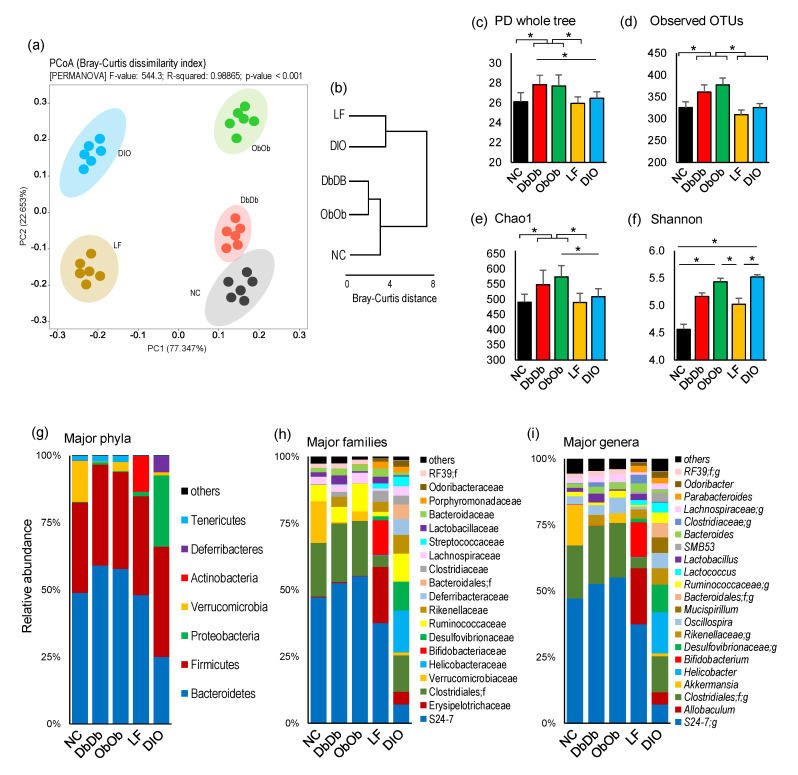
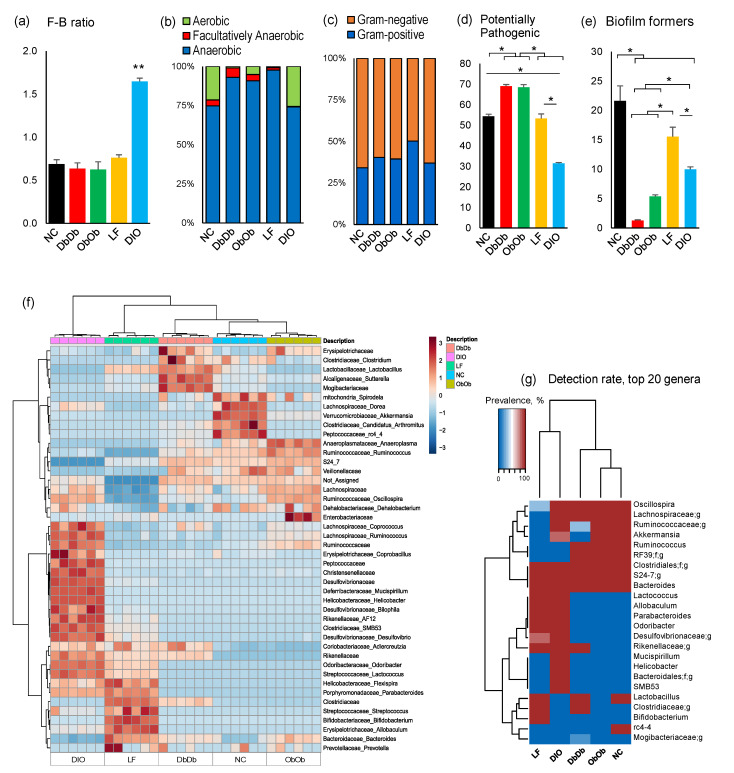
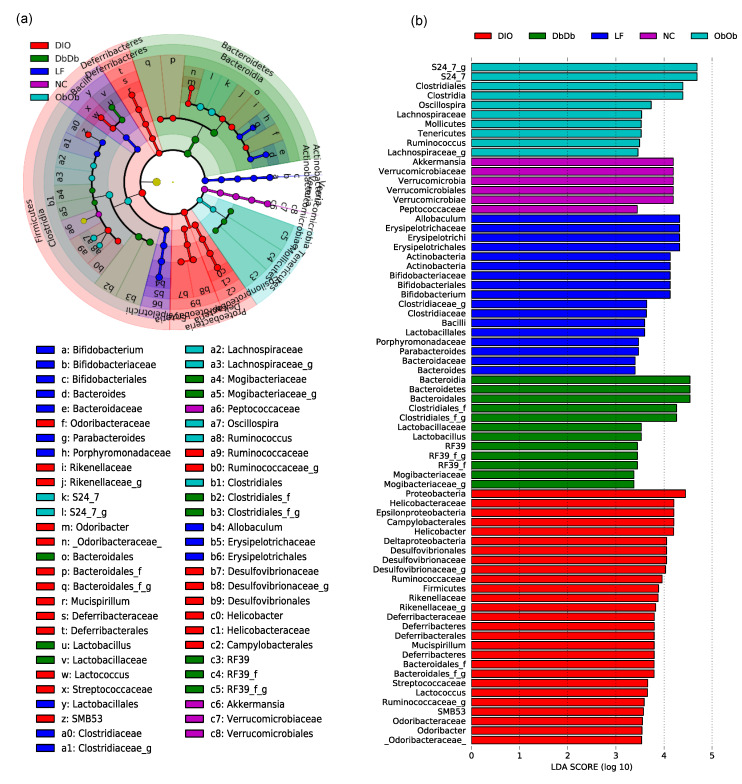
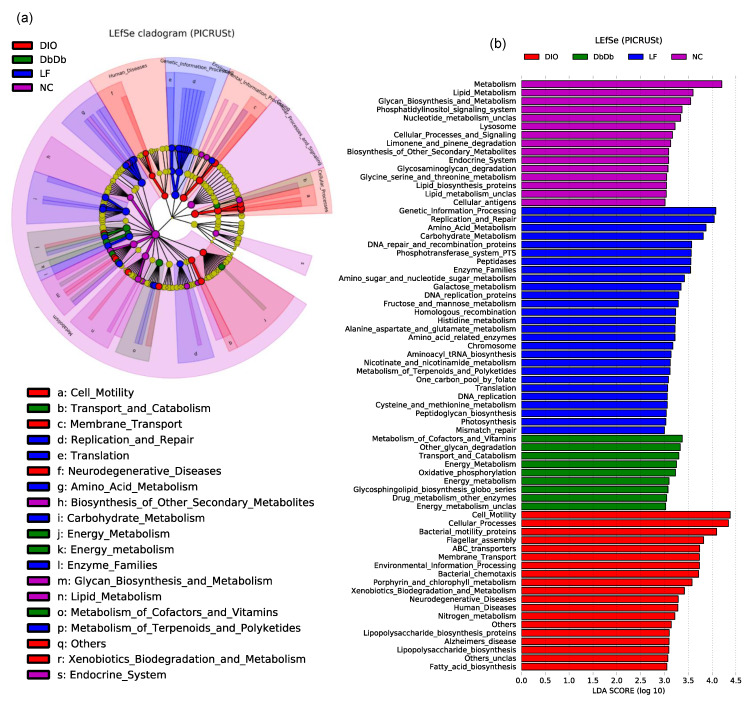
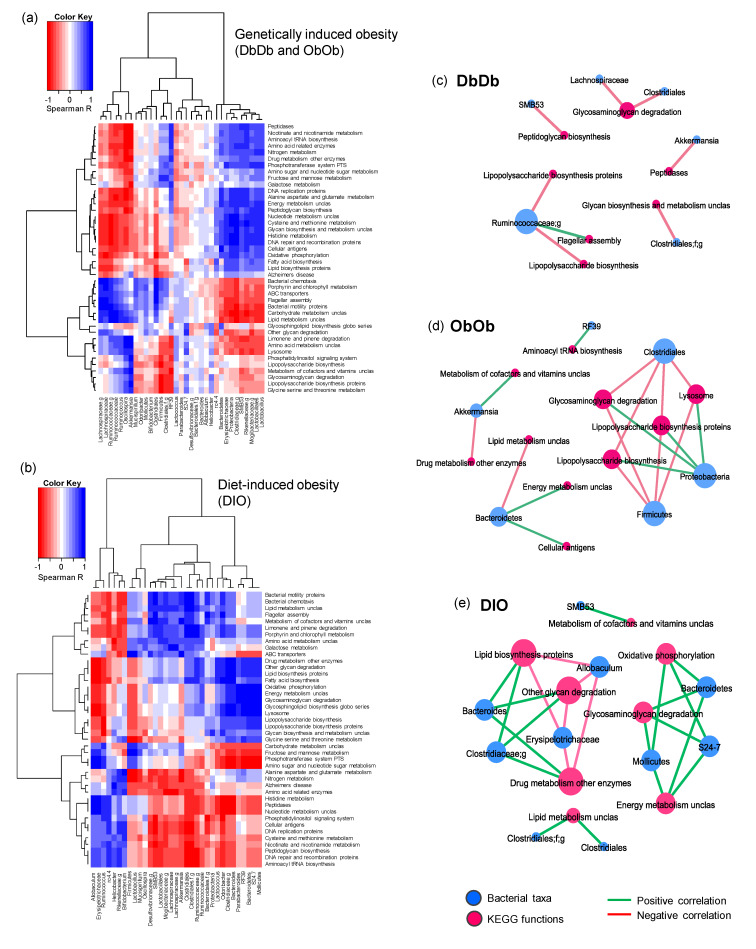
The gut microbiome plays an important role in obesity and Type 2 diabetes (T2D); however, it remains unclear whether the gut microbiome could clarify the dietary versus genetic origin of these ailments. Moreover, studies examining the gut microbiome in diet- versus genetically induced obesity/T2D in the same experimental set-up are lacking. We herein characterized the gut microbiomes in three of the most widely used mouse models of obesity/T2D, i.e., genetically induced (leptin-deficient i.e., Lep; and leptin-receptor-deficient i.e., Lep) and high-fat diet (HFD)-induced obese (DIO)/T2D mice, with reference to their normal chow-fed (NC) and low-fat-diet-fed (LF) control counterparts. In terms of β-diversity, Lep and Lep mice showed similarity to NC mice, whereas DIO and LF mice appeared as distinct clusters. The phylum- and genus-level compositions were relatively similar in NC, Lep, and Lep mice, whereas DIO and LF mice demonstrated distinct compositions. Further analyses revealed several unique bacterial taxa, metagenomic functional features, and their correlation patterns in these models. The data revealed that obesity/T2D driven by diet as opposed to genetics presents distinct gut microbiome signatures enriched with distinct functional capacities, and indicated that these signatures can distinguish diet- versus genetically induced obesity/T2D and, if extrapolated to humans, might offer translational potential in devising dietary and/or genetics-based therapies against these maladies.
肠道微生物群在肥胖和 2 型糖尿病(T2D)中起着重要作用;然而,目前尚不清楚肠道微生物群是否可以阐明这些疾病的饮食与遗传起源。此外,缺乏在相同实验设置中研究饮食与遗传诱导肥胖/T2D 相关的肠道微生物组的研究。在此,我们对三种最常用的肥胖/T2D 小鼠模型(即遗传诱导的(瘦素缺乏型,即 Lep;瘦素受体缺陷型,即 Lep)和高脂肪饮食(HFD)诱导肥胖/T2D 型,Lep 和 Lep 小鼠与正常饲料喂养(NC)和低脂饮食喂养(LF)的对照小鼠进行了肠道微生物组特征分析。就β多样性而言,Lep 和 Lep 小鼠与 NC 小鼠相似,而 DIO 和 LF 小鼠则形成明显的聚类。NC、Lep 和 Lep 小鼠的门和属水平组成相对相似,而 DIO 和 LF 小鼠表现出不同的组成。进一步的分析揭示了这些模型中几个独特的细菌分类群、宏基因组功能特征及其相关模式。这些数据表明,由饮食而非遗传引起的肥胖/T2D 呈现出独特的肠道微生物组特征,这些特征与独特的功能能力有关,并表明这些特征可以区分饮食与遗传诱导的肥胖/T2D,如果外推到人类,可能在设计针对这些疾病的饮食和/或基于遗传学的治疗方法方面具有转化潜力。