Department of Molecular Biology and Microbiology, Case Western Reserve University School of Medicine, Cleveland, OH, 44106, USA.
Retrovirology. 2024 Apr 5;21(1):6. doi: 10.1186/s12977-024-00639-w.
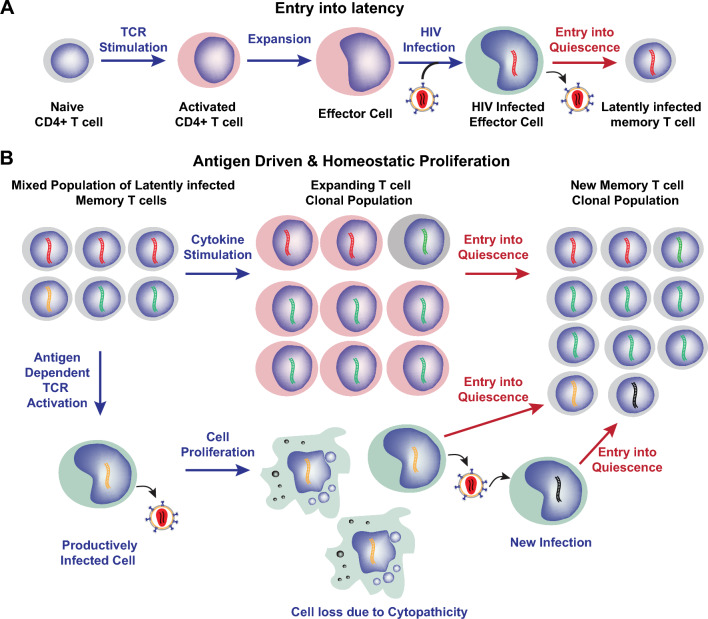
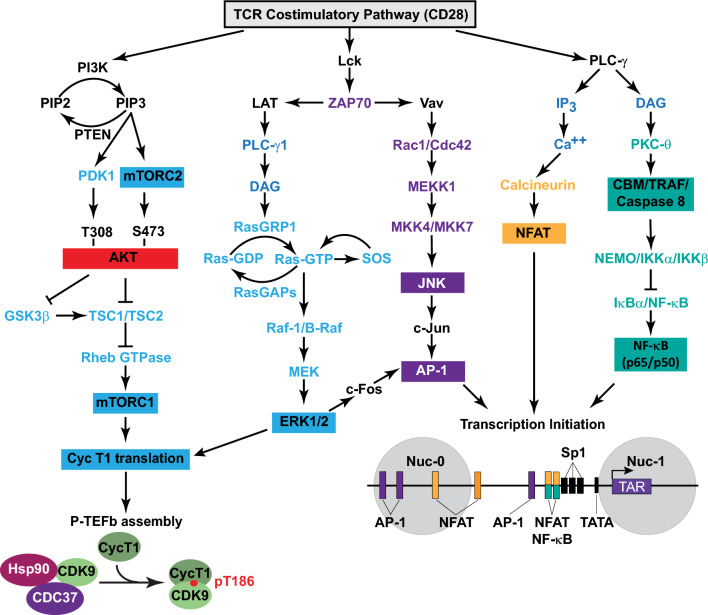
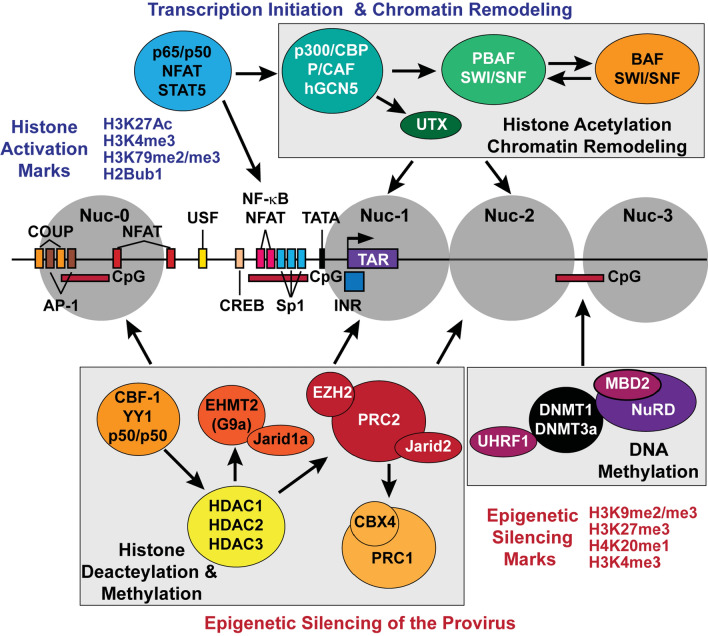
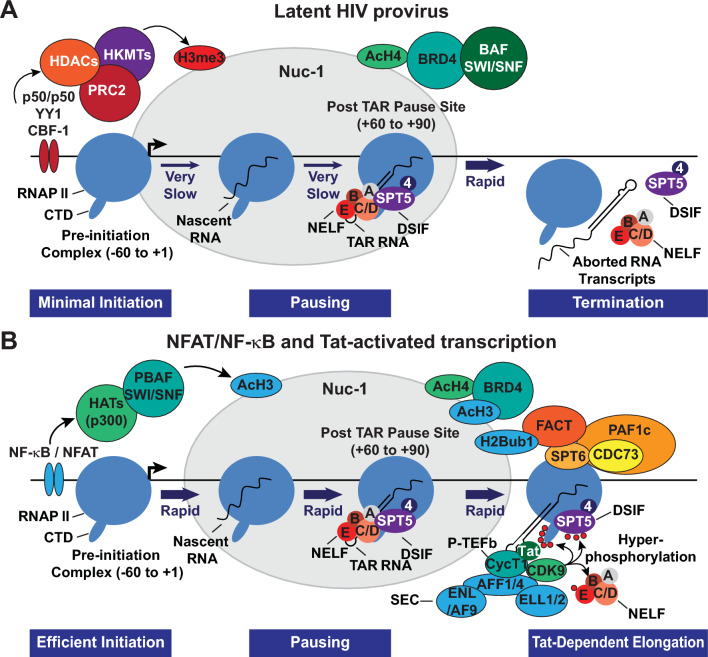
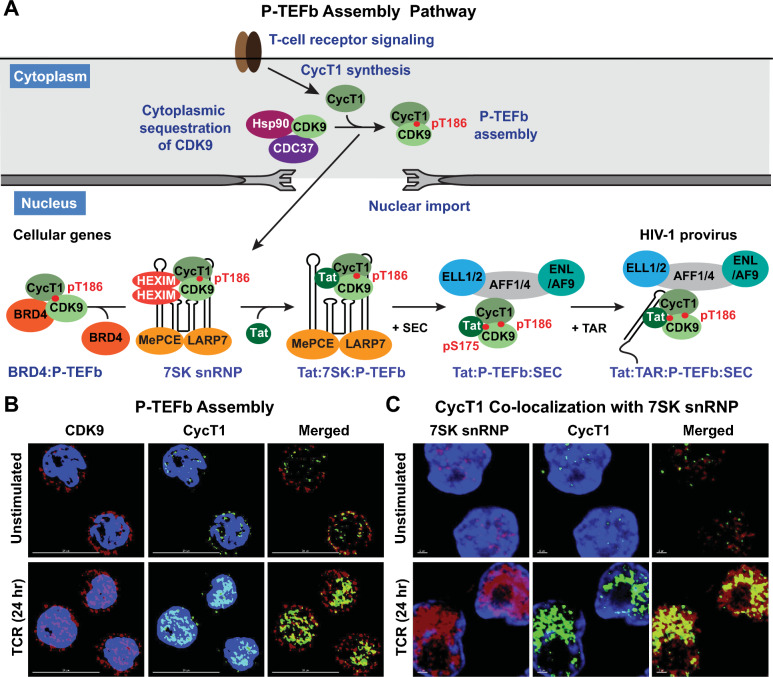
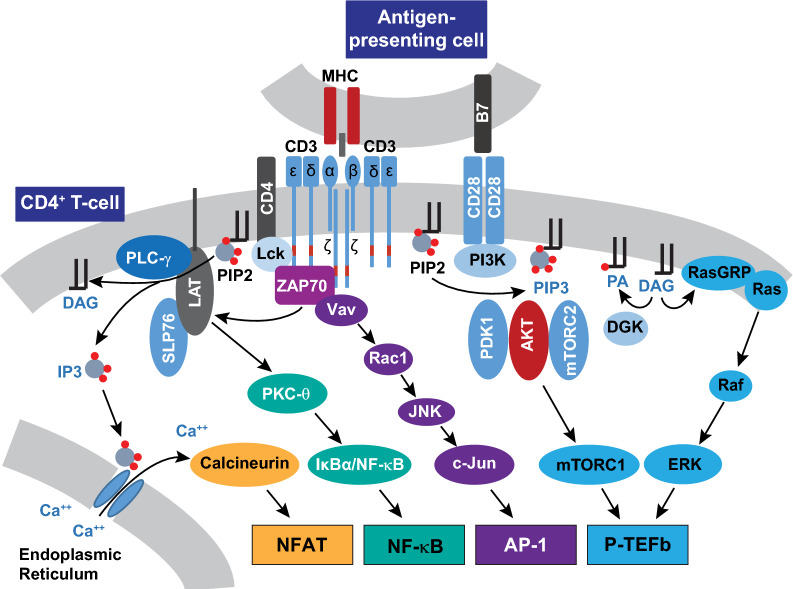
Transcriptionally latent forms of replication-competent proviruses, present primarily in a small subset of memory CD4 T cells, pose the primary barrier to a cure for HIV-1 infection because they are the source of the viral rebound that almost inevitably follows the interruption of antiretroviral therapy. Over the last 30 years, many of the factors essential for initiating HIV-1 transcription have been identified in studies performed using transformed cell lines, such as the Jurkat T-cell model. However, as highlighted in this review, several poorly understood mechanisms still need to be elucidated, including the molecular basis for promoter-proximal pausing of the transcribing complex and the detailed mechanism of the delivery of P-TEFb from 7SK snRNP. Furthermore, the central paradox of HIV-1 transcription remains unsolved: how are the initial rounds of transcription achieved in the absence of Tat? A critical limitation of the transformed cell models is that they do not recapitulate the transitions between active effector cells and quiescent memory T cells. Therefore, investigation of the molecular mechanisms of HIV-1 latency reversal and LRA efficacy in a proper physiological context requires the utilization of primary cell models. Recent mechanistic studies of HIV-1 transcription using latently infected cells recovered from donors and ex vivo cellular models of viral latency have demonstrated that the primary blocks to HIV-1 transcription in memory CD4 T cells are restrictive epigenetic features at the proviral promoter, the cytoplasmic sequestration of key transcription initiation factors such as NFAT and NF-κB, and the vanishingly low expression of the cellular transcription elongation factor P-TEFb. One of the foremost schemes to eliminate the residual reservoir is to deliberately reactivate latent HIV-1 proviruses to enable clearance of persisting latently infected cells-the "Shock and Kill" strategy. For "Shock and Kill" to become efficient, effective, non-toxic latency-reversing agents (LRAs) must be discovered. Since multiple restrictions limit viral reactivation in primary cells, understanding the T-cell signaling mechanisms that are essential for stimulating P-TEFb biogenesis, initiation factor activation, and reversing the proviral epigenetic restrictions have become a prerequisite for the development of more effective LRAs.
转录潜伏形式的复制型前病毒主要存在于一小部分记忆 CD4 T 细胞中,是 HIV-1 感染治愈的主要障碍,因为它们是抗逆转录病毒治疗中断后几乎不可避免的病毒反弹的源头。在过去的 30 年中,在使用转化细胞系(如 Jurkat T 细胞模型)进行的研究中,已经确定了许多启动 HIV-1 转录所必需的因素。然而,正如本文综述所强调的,仍有几个尚未被充分了解的机制需要阐明,包括转录复合物启动子近端暂停的分子基础和 P-TEFb 从 7SK snRNP 传递的详细机制。此外,HIV-1 转录的核心悖论仍然没有解决:在没有 Tat 的情况下,初始转录是如何实现的?转化细胞模型的一个关键局限性是它们不能再现活跃效应细胞和静止记忆 T 细胞之间的转变。因此,在适当的生理环境中研究 HIV-1 潜伏期逆转和 LRA 疗效的分子机制需要利用原代细胞模型。最近使用从供体中恢复的潜伏感染细胞和病毒潜伏的体外细胞模型进行的 HIV-1 转录机制研究表明,在记忆 CD4 T 细胞中 HIV-1 转录的主要障碍是前病毒启动子的限制性表观遗传特征、关键转录起始因子(如 NFAT 和 NF-κB)的细胞质隔离以及细胞转录延伸因子 P-TEFb 的表达极低。消除残留储库的首要方案之一是故意重新激活潜伏的 HIV-1 前病毒,以清除持续潜伏感染的细胞,即“冲击和杀伤”策略。为了使“冲击和杀伤”变得有效、有效且无毒,必须发现有效的潜伏逆转剂(LRAs)。由于多种限制限制了原代细胞中的病毒再激活,因此了解刺激 P-TEFb 生物发生、起始因子激活和逆转前病毒表观遗传限制所必需的 T 细胞信号转导机制已成为开发更有效的 LRAs 的前提条件。