Drake Alison L, Jiang Wenwen, Kitao Peninah, Farid Shiza, Richardson Barbra A, Katz David A, Wagner Anjuli D, Johnson Cheryl C, Matemo Daniel, Stewart Grace-John, Kinuthia John
Department of Global Health, University of Washington, Seattle, WA, USA.
Department of Epidemiology, University of Washington, Seattle, WA, USA.
medRxiv. 2024 Mar 30:2024.03.28.24305050. doi: 10.1101/2024.03.28.24305050.
To compare preferences, uptake, and cofactors for unassisted home-based oral self-testing (HB-HIVST) versus clinic-based rapid diagnostic blood tests (CB-RDT) for maternal HIV retesting.
Prospective cohort.
Between November 2017 and June 2019, HIV-negative pregnant Kenyan women receiving antenatal care were enrolled and given a choice to retest with HB-HIVST or CB-RDT. Women were asked to retest between 36 weeks gestation and 1 week post-delivery if the last HIV test was <24 weeks gestation or at 6 weeks postpartum if ≥24 weeks gestation, and self-report on retesting at a 14 week postpartum.
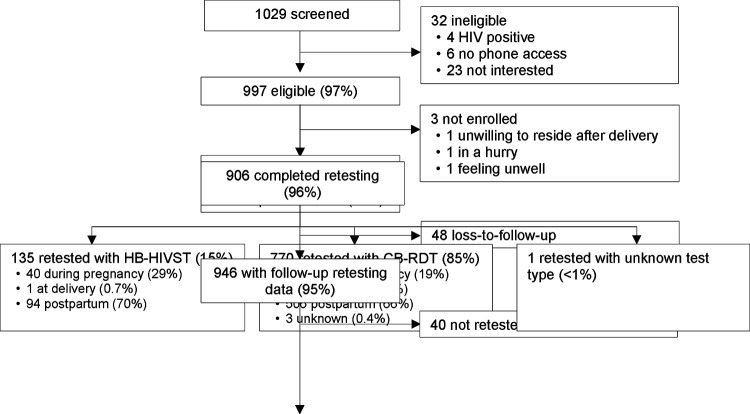
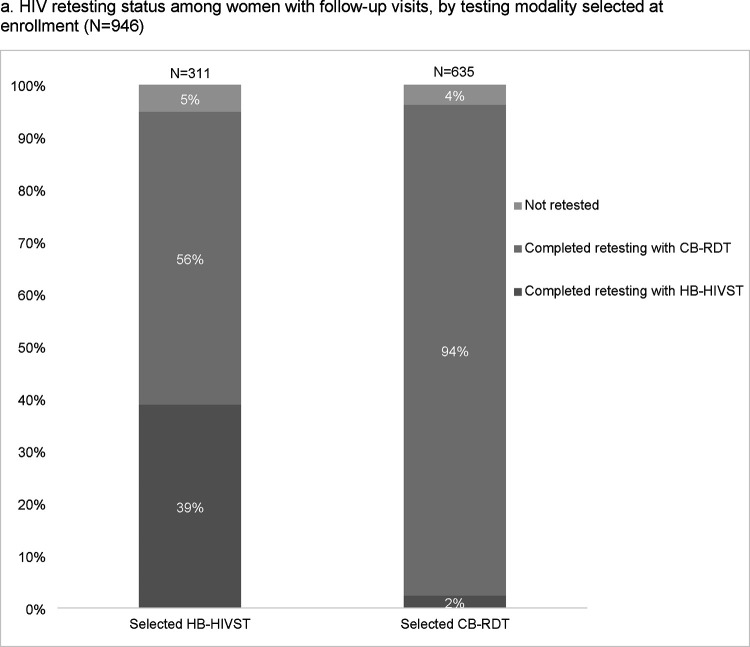
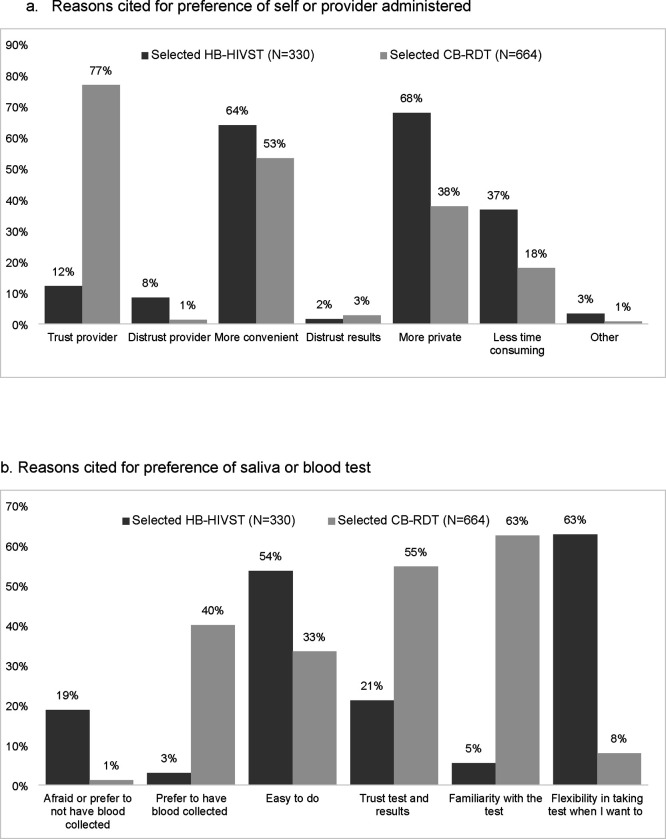
Overall, 994 women enrolled and 33% (n=330) selected HB-HIVST. HB-HIVST was selected because it was private (68%), convenient (63%), and offered flexibility in timing of retesting (63%), whereas CB-RDT was selected due to trust of providers to administer the test (77%) and convenience of clinic testing (64%). Among 905 women who reported retesting at follow-up, 135 (15%) used HB-HIVST. Most (94%) who selected CB-RDT retested with this strategy, compared to 39% who selected HB-HIVST retesting with HB-HIVST. HB-HIVST retesting was more common among women with higher household income and those who may have been unable to test during pregnancy (both retested postpartum and delivered <37 weeks gestation) and less common among women who were depressed. Most women said they would retest in the future using the test selected at enrollment (99% HB-HIVST; 93% CB-RDT-RDT).
While most women preferred CB-RDT for maternal retesting, HB-HIVST was acceptable and feasible and may increase retesting coverage and partner testing.
比较孕产妇艾滋病毒复测时,无辅助家庭口服自我检测(HB-HIVST)与基于诊所的快速诊断血液检测(CB-RDT)的偏好、接受情况和辅助因素。
前瞻性队列研究。
2017年11月至2019年6月期间,招募接受产前护理的肯尼亚艾滋病毒阴性孕妇,让她们选择使用HB-HIVST或CB-RDT进行复测。如果最后一次艾滋病毒检测是在妊娠<24周时进行的,要求妇女在妊娠36周和分娩后1周之间进行复测;如果≥24周,则在产后6周进行复测,并在产后14周自我报告复测情况。
总体而言,994名妇女入组,33%(n=330)选择了HB-HIVST。选择HB-HIVST是因为其具有隐私性(68%)、便利性(63%)以及复测时间灵活(63%),而选择CB-RDT是因为信任医护人员进行检测(77%)以及诊所检测的便利性(64%)。在905名报告在随访时进行复测的妇女中,135名(15%)使用了HB-HIVST。选择CB-RDT的大多数人(94%)采用该策略进行复测,而选择HB-HIVST的人中只有39%使用HB-HIVST进行复测。HB-HIVST复测在家庭收入较高的妇女以及那些可能在孕期无法进行检测的妇女(产后复测且妊娠<37周分娩)中更为常见,而在抑郁的妇女中较少见。大多数妇女表示她们未来会使用入组时选择的检测方法进行复测(99%选择HB-HIVST;93%选择CB-RDT)。
虽然大多数妇女更喜欢CB-RDT进行孕产妇复测,但HB-HIVST是可接受且可行的,可能会提高复测覆盖率和性伴侣检测率。