Department of Biochemistry, Faculty of Science, Alexandria University, Alexandria, 21511, Egypt.
Department of Pharmaceutical Chemistry, Faculty of Pharmacy, Cairo University, Kasr El‑Aini Street, Cairo, 11562, Egypt.
Naunyn Schmiedebergs Arch Pharmacol. 2024 Sep;397(9):6941-6962. doi: 10.1007/s00210-024-03068-w. Epub 2024 Apr 9.
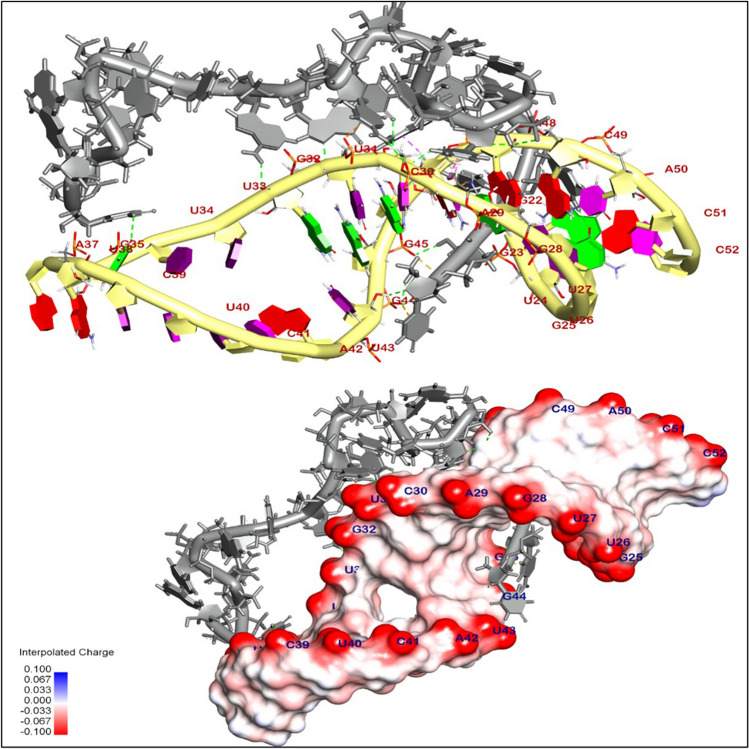
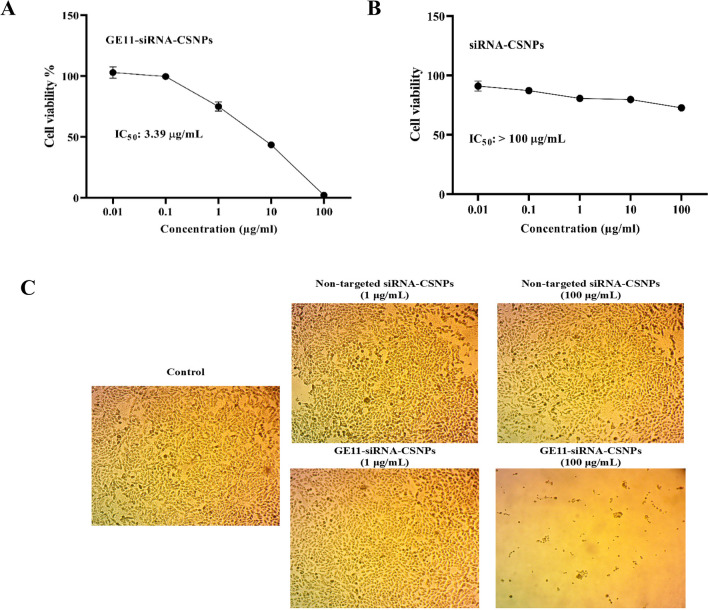
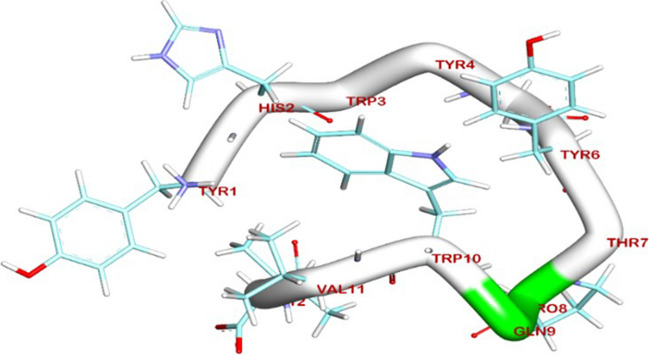
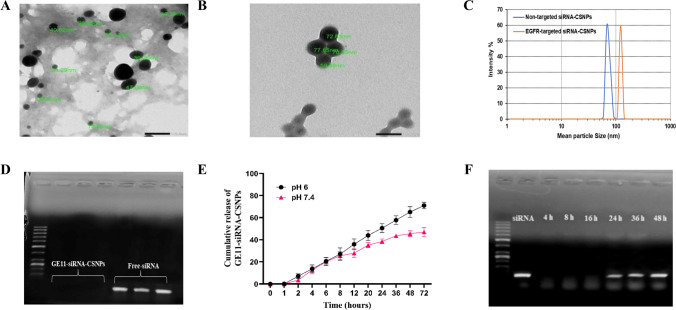
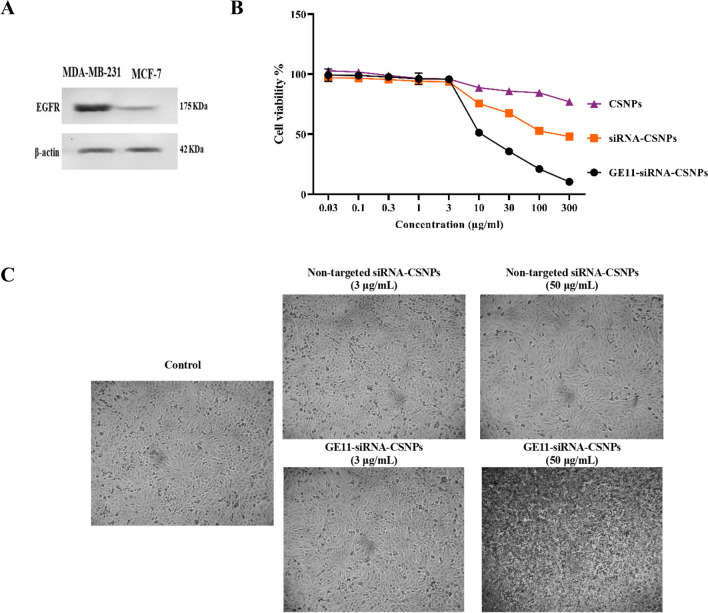
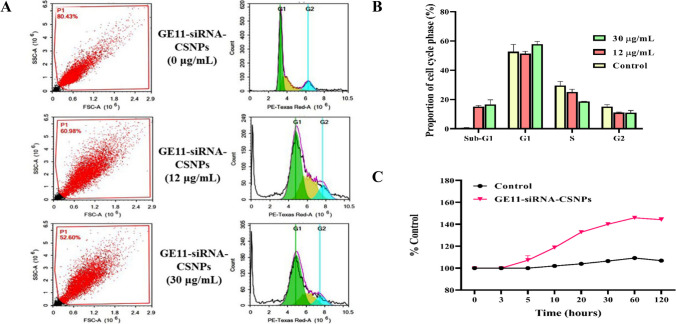
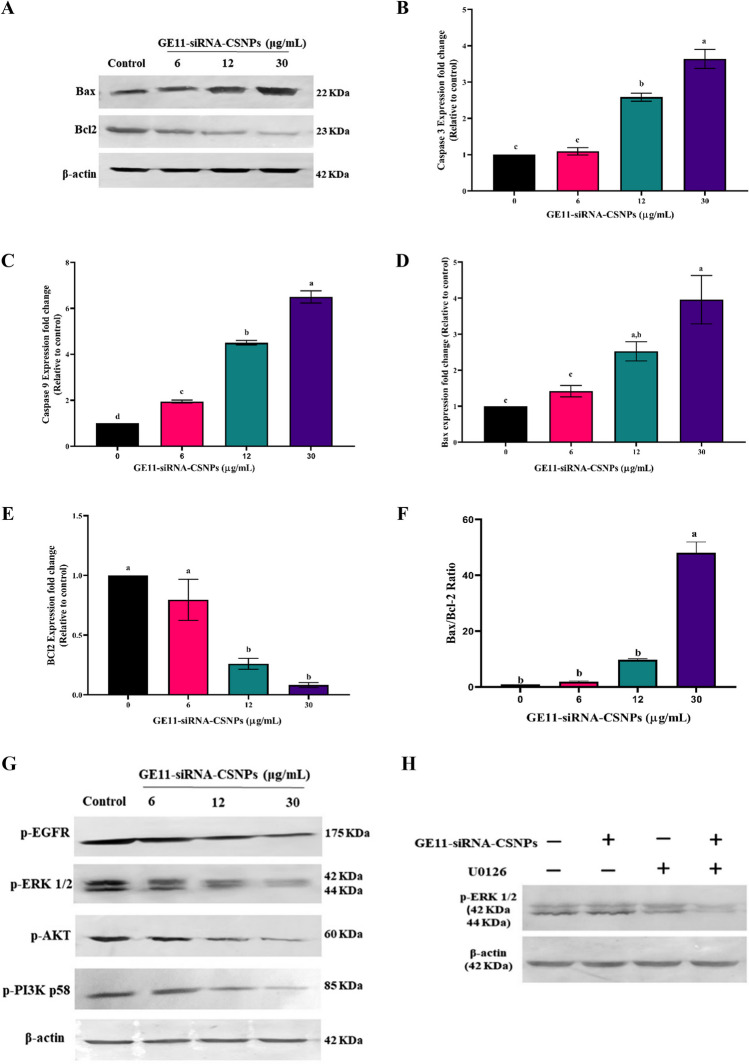
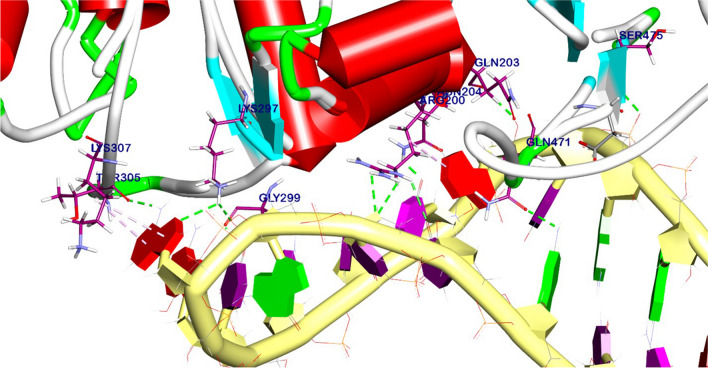
Oncogenic microRNA (miRNA), especially miRNA-21 upregulation in triple-negative breast cancer (TNBC), suggests a new class of therapeutic targets. In this study, we aimed to create GE11 peptide-conjugated small interfering RNA-loaded chitosan nanoparticles (GE11-siRNA-CSNPs) for the targeting of EGFR overexpressed TNBC and selectively inhibit miRNA-21 expression. A variety of in-silico and in vitro cellular and molecular studies were conducted to investigate the binding affinities of specific targets used as well as the anticancer efficacies and mechanisms of GE11-siRNA-CSNPs in TNBC cells. An in-silico assessment reveals a distinct binding affinity of miRNA-21 with siRNA as well as between the extracellular domain of EGFR and synthesized peptides. Notably, the in vitro results showed that GE11-siRNA-CSNPs were revealed to have better cytotoxicity against TNBC cells. It significantly inhibits miRNA-21 expression, cell migration, and colony formation. The results also indicated that GE11-siRNA-CSNPs impeded cell cycle progression. It induces cell death by reducing the expression of the antiapoptotic gene Bcl-2 and increasing the expression of the proapoptotic genes Bax, Caspase 3, and Caspase 9. Additionally, the docking analysis and immunoblot investigations verified that GE1-siRNA-CSNPs, which specifically target TNBC cells and suppress miRNA-21, can prevent the effects of miRNA-21 on the proliferation of TNBC cells via controlling EGFR and subsequently inhibiting the PI3K/AKT and ERK1/2 signaling axis. The GE11-siRNA-CSNPs design, which specifically targets TNBC cells, offers a novel approach for the treatment of breast cancer with improved effectiveness. This study suggests that GE11-siRNA-CSNPs could be a promising candidate for further assessment as an additional strategy in the treatment of TNBC.
致癌 microRNA(miRNA),特别是三阴性乳腺癌(TNBC)中 miRNA-21 的上调,提示了一类新的治疗靶点。本研究旨在构建 GE11 肽偶联的负载小干扰 RNA 的壳聚糖纳米粒(GE11-siRNA-CSNPs),用于靶向 EGFR 过表达的 TNBC 并选择性抑制 miRNA-21 的表达。进行了多种计算机模拟和体外细胞和分子研究,以研究用作特定靶标的结合亲和力以及 GE11-siRNA-CSNPs 在 TNBC 细胞中的抗癌功效和机制。计算机评估显示 miRNA-21 与 siRNA 以及 EGFR 细胞外结构域和合成肽之间具有明显的结合亲和力。值得注意的是,体外结果表明,GE11-siRNA-CSNPs 对 TNBC 细胞具有更好的细胞毒性。它显著抑制 miRNA-21 的表达、细胞迁移和集落形成。结果还表明,GE11-siRNA-CSNPs 阻碍细胞周期进程。它通过降低抗凋亡基因 Bcl-2 的表达和增加促凋亡基因 Bax、Caspase 3 和 Caspase 9 的表达来诱导细胞死亡。此外,对接分析和免疫印迹研究验证了,GE1-siRNA-CSNPs 特异性靶向 TNBC 细胞并抑制 miRNA-21,可通过控制 EGFR 抑制 PI3K/AKT 和 ERK1/2 信号通路,从而防止 miRNA-21 对 TNBC 细胞增殖的影响。特异性靶向 TNBC 细胞的 GE11-siRNA-CSNPs 设计为乳腺癌的治疗提供了一种新方法,提高了疗效。本研究表明,GE11-siRNA-CSNPs 可能成为进一步评估的有前途的候选物,作为治疗 TNBC 的附加策略。