Division of Infectious Disease, City of Hope National Medical Center, Duarte, CA.
Department of Hematology, University of Kansas Medical Center, Kansas City, KS.
Blood Adv. 2024 Sep 10;8(17):4740-4750. doi: 10.1182/bloodadvances.2023011562.
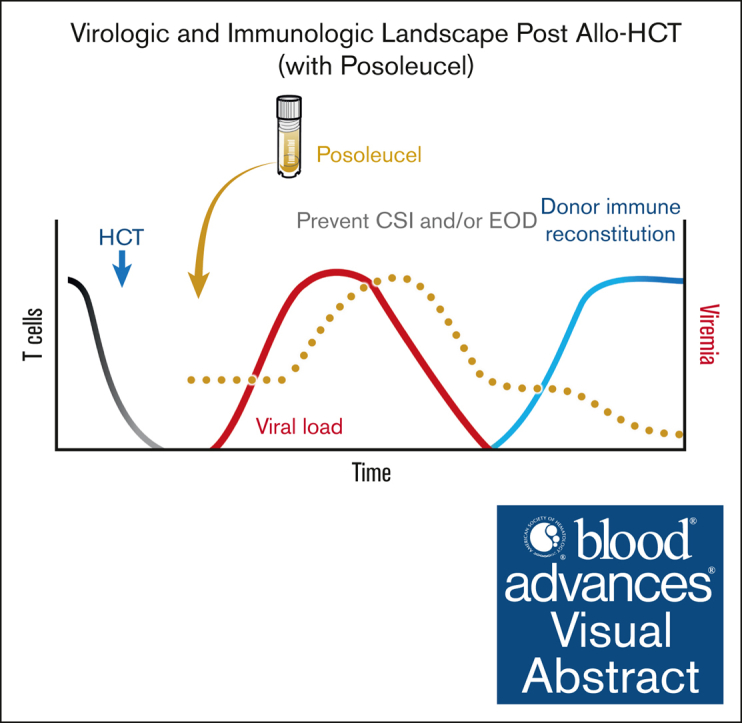
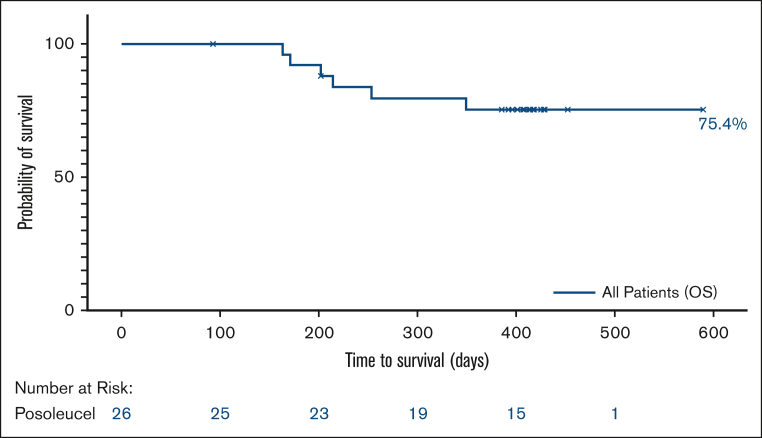
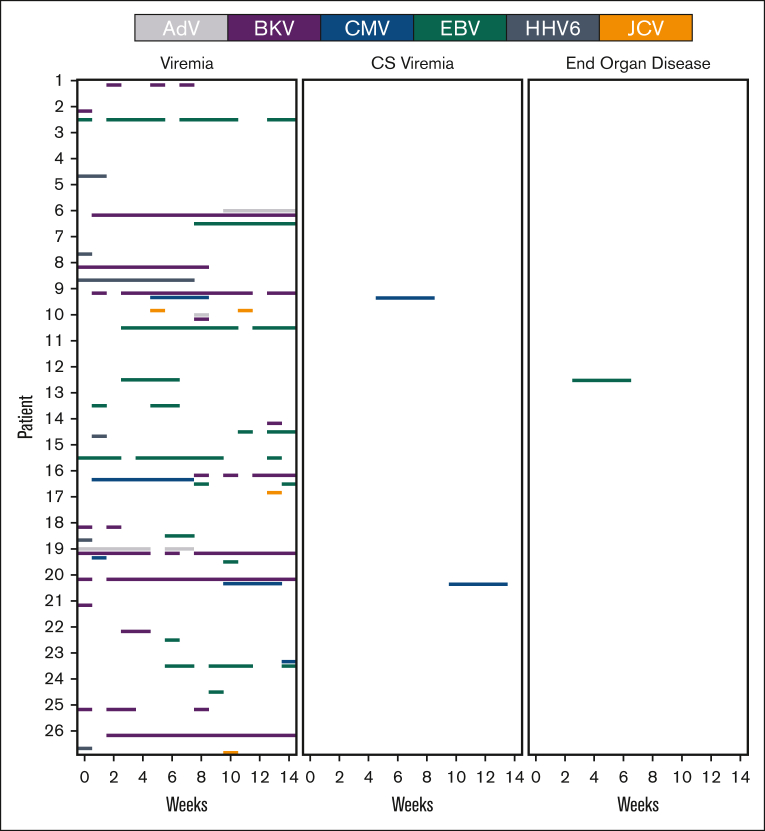
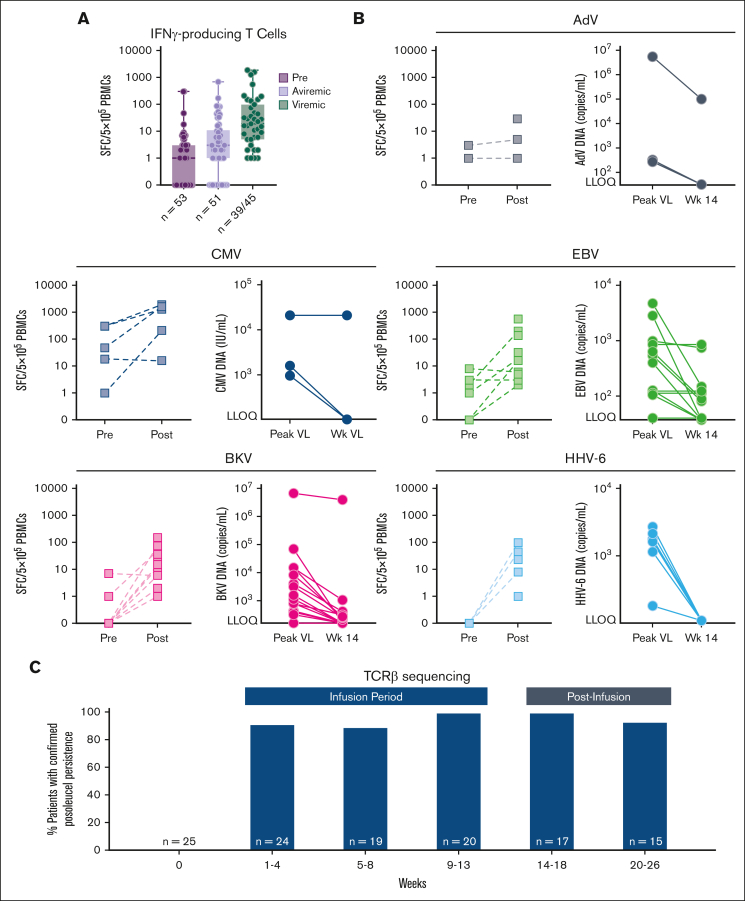
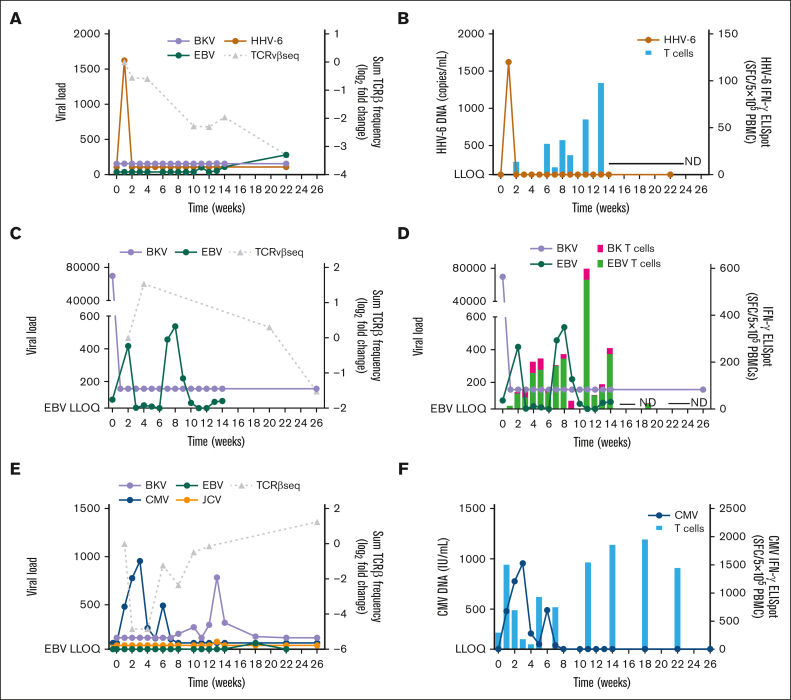
Allogeneic hematopoietic cell transplantation (allo-HCT) recipients are susceptible to viral infections. We conducted a phase 2 trial evaluating the safety and rate of clinically significant infections (CSIs; viremia requiring treatment or end-organ disease) after infusion of posoleucel, a partially HLA-matched, allogeneic, off-the-shelf, multivirus-specific T-cell investigational product for preventing CSIs with adenovirus, BK virus, cytomegalovirus, Epstein-Barr virus, human herpesvirus-6, or JC virus. This open-label trial enrolled allo-HCT recipients at high risk based on receiving grafts from umbilical cord blood, haploidentical, mismatched, or matched unrelated donors; post-HCT lymphocytes of <180/mm3; or use of T-cell depletion. Posoleucel dosing was initiated within 15 to 49 days of allo-HCT and subsequently every 14 days for up to 7 doses. The primary end point was the number of CSIs due to the 6 target viruses by week 14. Of the 26 patients enrolled, only 3 (12%) had a CSI by week 14, each with a single target virus. In vivo expansion of functional virus-specific T cells detected via interferon-γ enzyme-linked immunosorbent spot assay was associated with viral control. Persistence of posoleucel-derived T-cell clones for up to 14 weeks after the last infusion was confirmed by T-cell-receptor deep sequencing. Five patients (19%) had acute graft-versus-host disease grade 2 to 4. No patient experienced cytokine release syndrome. All 6 deaths were due to relapse or disease progression. allo-HCT recipients at high risk who received posoleucel had low rates of CSIs from 6 targeted viruses. Repeat posoleucel dosing was generally safe and well tolerated and associated with functional immune reconstitution. This trial was registered at www.ClinicalTrials.gov as #NCT04693637.
异基因造血细胞移植(allo-HCT)受者易发生病毒感染。我们开展了一项 2 期临床试验,评估了输注 posoleucel 后的安全性和临床显著感染(CSI;需要治疗的病毒血症或终末器官疾病)发生率,posoleucel 是一种部分 HLA 匹配的、同种异体的即用型、多病毒特异性 T 细胞研究产品,用于预防腺病毒、BK 病毒、巨细胞病毒、EB 病毒、人类疱疹病毒 6 型或 JC 病毒引起的 CSI。这项开放标签试验招募了 allo-HCT 受者,这些受者基于以下风险因素入组:从脐带血、单倍体相合、不合或匹配的无关供者接受移植物;移植后淋巴细胞计数 <180/mm3;或使用 T 细胞耗竭。posoleucel 剂量在 allo-HCT 后 15 至 49 天内开始,随后每 14 天给予一次,最多给予 7 次。主要终点是在第 14 周时,6 种靶病毒引起的 CSI 数量。26 例入组患者中,仅 3 例(12%)在第 14 周时发生 CSI,且每种患者均发生了 1 种靶病毒感染。通过干扰素-γ酶联免疫斑点法检测到的功能性病毒特异性 T 细胞的体内扩增与病毒控制相关。通过 T 细胞受体深度测序证实,在最后一次输注后长达 14 周内,持续存在 posoleucel 衍生的 T 细胞克隆。5 例(19%)患者发生 2 至 4 级急性移植物抗宿主病。无患者发生细胞因子释放综合征。所有 6 例死亡均归因于复发或疾病进展。接受 posoleucel 治疗的高危 allo-HCT 受者,其 6 种靶病毒引起的 CSI 发生率较低。重复 posoleucel 给药通常安全且耐受良好,并与功能性免疫重建相关。本试验在 www.ClinicalTrials.gov 上注册,编号为 #NCT04693637。