Department of Radiation Oncology, Perelman School of Medicine, University of Pennsylvania, Philadelphia, Pennsylvania.
Department of Biology, University of Pennsylvania, Philadelphia, Pennsylvania.
Mol Cancer Ther. 2024 Jun 4;23(6):877-889. doi: 10.1158/1535-7163.MCT-23-0663.
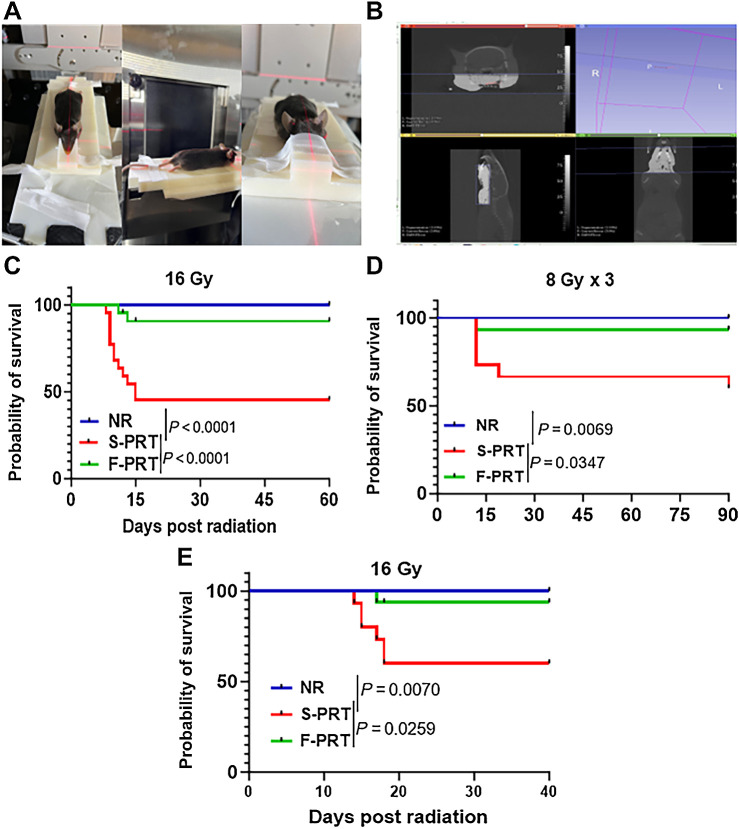
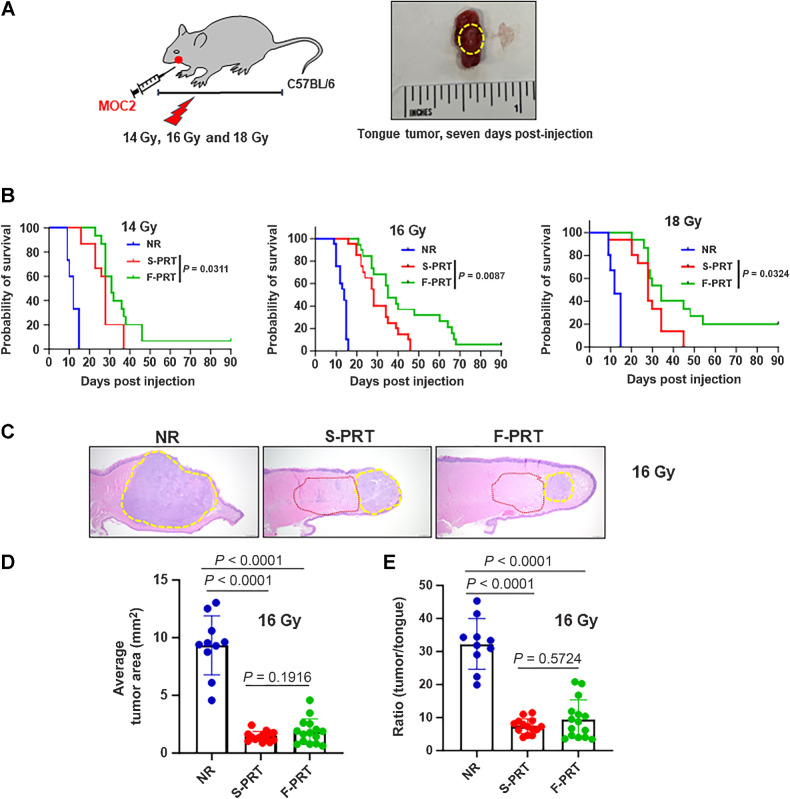
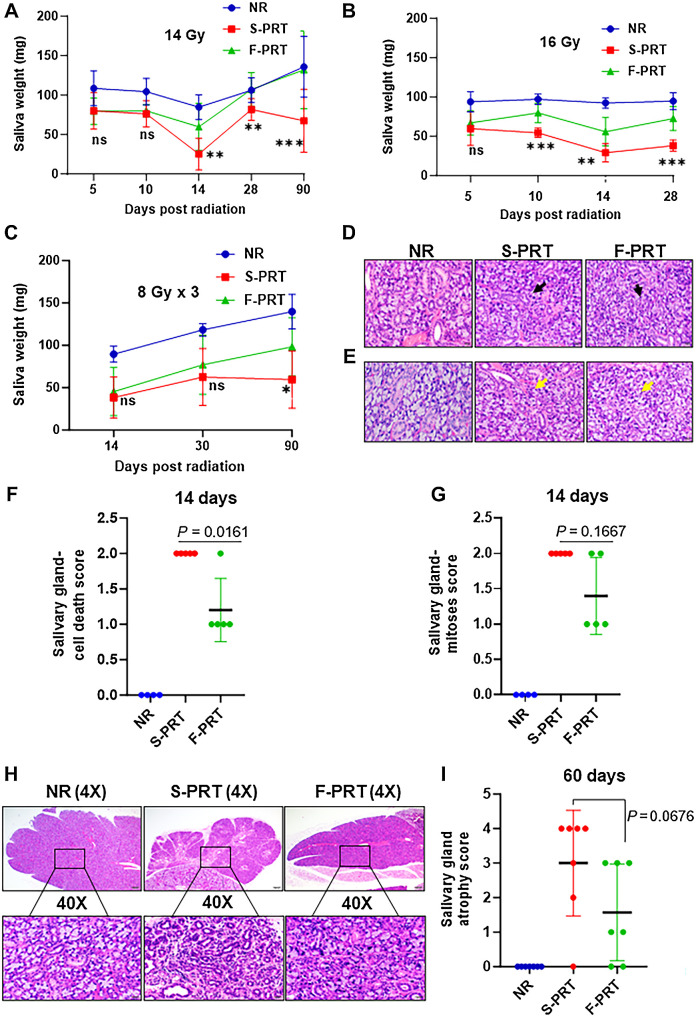
Head and neck cancer radiotherapy often damages salivary glands and oral mucosa, severely negatively impacting patients' quality of life. The ability of FLASH proton radiotherapy (F-PRT) to decrease normal tissue toxicity while maintaining tumor control compared with standard proton radiotherapy (S-PRT) has been previously demonstrated for several tissues. However, its potential in ameliorating radiation-induced salivary gland dysfunction and oral mucositis and controlling orthotopic head and neck tumor growth has not been reported. The head and neck area of C57BL/6 mice was irradiated with a single dose of radiotherapy (ranging from 14-18 Gy) or a fractionated dose of 8 Gy × 3 of F-PRT (128 Gy/second) or S-PRT (0.95 Gy/second). Following irradiation, the mice were studied for radiation-induced xerostomia by measuring their salivary flow. Oral mucositis was analyzed by histopathologic examination. To determine the ability of F-PRT to control orthotopic head and neck tumors, tongue tumors were generated in the mice and then irradiated with either F-PRT or S-PRT. Mice treated with either a single dose or fractionated dose of F-PRT showed significantly improved survival than those irradiated with S-PRT. F-PRT-treated mice showed improvement in their salivary flow. S-PRT-irradiated mice demonstrated increased fibrosis in their tongue epithelium. F-PRT significantly increased the overall survival of the mice with orthotopic tumors compared with the S-PRT-treated mice. The demonstration that F-PRT decreases radiation-induced normal tissue toxicity without compromising tumor control, suggests that this modality could be useful for the clinical management of patients with head and neck cancer.
头颈部癌症放射治疗通常会损伤唾液腺和口腔黏膜,严重影响患者的生活质量。与标准质子放疗(S-PRT)相比,FLASH 质子放疗(F-PRT)在降低几种组织正常组织毒性的同时保持肿瘤控制能力已经得到了证实。然而,它在改善放射性唾液腺功能障碍和口腔黏膜炎以及控制原位头颈部肿瘤生长方面的潜力尚未得到报道。用单次剂量放疗(剂量范围为 14-18Gy)或 8Gy×3 次的 F-PRT(128Gy/秒)或 S-PRT(0.95Gy/秒)对 C57BL/6 小鼠的头颈部进行照射。照射后,通过测量唾液流量来研究小鼠的放射性口干症。通过组织病理学检查分析口腔黏膜炎。为了确定 F-PRT 控制原位头颈部肿瘤的能力,在小鼠中生成舌肿瘤,然后用 F-PRT 或 S-PRT 进行照射。接受单次剂量或分次剂量 F-PRT 治疗的小鼠的存活时间明显长于接受 S-PRT 照射的小鼠。F-PRT 治疗的小鼠唾液流量有所改善。S-PRT 照射的小鼠舌上皮纤维化增加。与 S-PRT 治疗的小鼠相比,F-PRT 显著增加了原位肿瘤小鼠的总生存率。F-PRT 降低放射诱导的正常组织毒性而不影响肿瘤控制的证明表明,这种治疗方式可能对头颈部癌症患者的临床管理有用。