The Laboratory of Molecular Biophysics, Department of Cell and Molecular Biology, Uppsala University, Uppsala, Sweden.
Unit of Foodborne and Neglected Parasitic Diseases, Department of Infectious Diseases, Istituto Superiore di Sanità (ISS), Rome, Italy.
PLoS Pathog. 2024 Apr 10;20(4):e1012140. doi: 10.1371/journal.ppat.1012140. eCollection 2024 Apr.
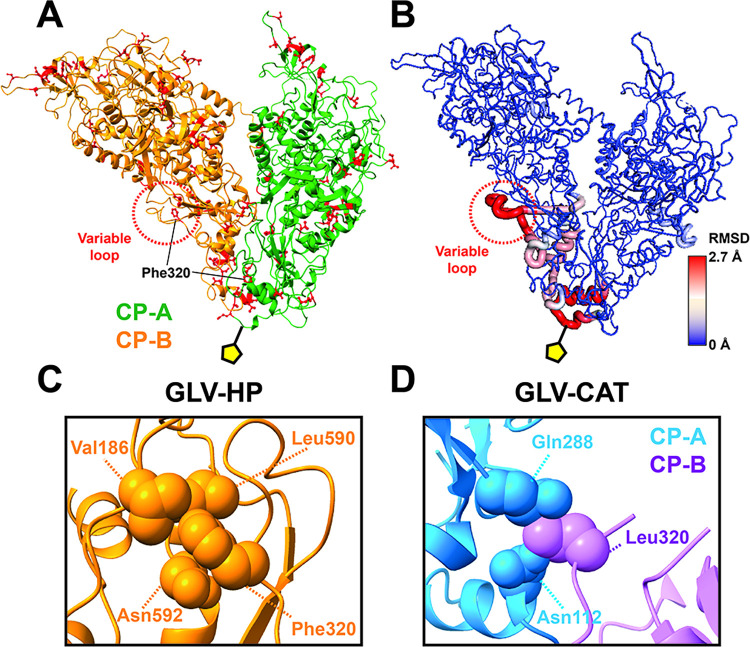
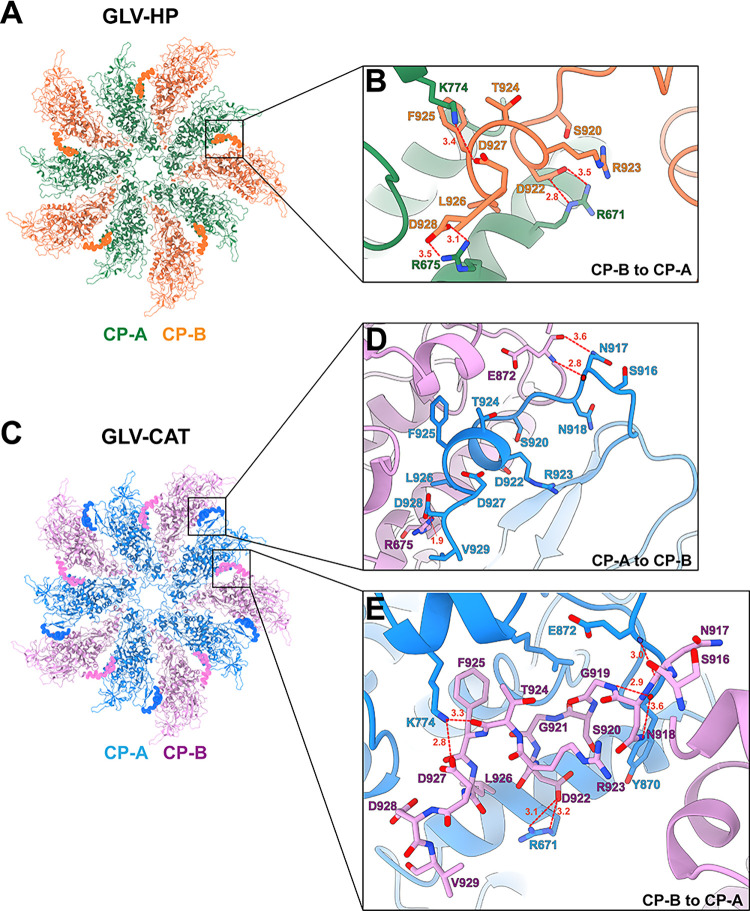
The Giardia lamblia virus (GLV) is a non-enveloped icosahedral dsRNA and endosymbiont virus that infects the zoonotic protozoan parasite Giardia duodenalis (syn. G. lamblia, G. intestinalis), which is a pathogen of mammals, including humans. Elucidating the transmission mechanism of GLV is crucial for gaining an in-depth understanding of the virulence of the virus in G. duodenalis. GLV belongs to the family Totiviridae, which infects yeast and protozoa intracellularly; however, it also transmits extracellularly, similar to the phylogenetically, distantly related toti-like viruses that infect multicellular hosts. The GLV capsid structure is extensively involved in the longstanding discussion concerning extracellular transmission in Totiviridae and toti-like viruses. Hence, this study constructed the first high-resolution comparative atomic models of two GLV strains, namely GLV-HP and GLV-CAT, which showed different intracellular localization and virulence phenotypes, using cryogenic electron microscopy single-particle analysis. The atomic models of the GLV capsids presented swapped C-terminal extensions, extra surface loops, and a lack of cap-snatching pockets, similar to those of toti-like viruses. However, their open pores and absence of the extra crown protein resemble those of other yeast and protozoan Totiviridae viruses, demonstrating the essential structures for extracellular cell-to-cell transmission. The structural comparison between GLV-HP and GLV-CAT indicates the first evidence of critical structural motifs for the transmission and virulence of GLV in G. duodenalis.
蓝氏贾第鞭毛虫病毒(GLV)是一种无包膜的二十面体双链 RNA 内共生病毒,感染动物源原生动物寄生虫蓝氏贾第鞭毛虫(同义词:G. lamblia、G. intestinalis),后者是哺乳动物包括人类的病原体。阐明 GLV 的传播机制对于深入了解该病毒在蓝氏贾第鞭毛虫中的毒力至关重要。GLV 属于 Totiviridae 科,该科病毒感染酵母和原生动物细胞内;然而,它也可以通过细胞外途径传播,类似于在系统发育上相距较远但具有 tot 样病毒特征的病毒,这些病毒感染多细胞宿主。GLV 衣壳结构广泛涉及 Totiviridae 和 tot 样病毒细胞外传播的长期讨论。因此,本研究使用低温电子显微镜单颗粒分析,构建了两种 GLV 株系(GLV-HP 和 GLV-CAT)的首个高分辨率比较原子模型,这两种株系表现出不同的细胞内定位和毒力表型。GLV 衣壳的原子模型显示出交换的 C 末端延伸、额外的表面环和缺乏帽抢夺口袋,类似于 tot 样病毒。然而,它们的开口孔和缺乏额外的冠蛋白类似于其他酵母和原生动物 Totiviridae 病毒,展示了细胞间传播所必需的结构。GLV-HP 和 GLV-CAT 之间的结构比较表明了 GLV 在蓝氏贾第鞭毛虫中传播和毒力的关键结构基序的首个证据。