Sasaki Mayuki, Oba Chisato, Nakamura Kentaro, Takeo Hiroki, Toya Hidemasa, Furuichi Keisuke
Food Microbiology and Function Research Laboratories, R&D Division, Meiji Co., Ltd., Tokyo, Japan, Tokyo, Japan.
Diastep Medical Corporation, Tokyo, Japan.
Front Nutr. 2024 Mar 27;11:1357920. doi: 10.3389/fnut.2024.1357920. eCollection 2024.
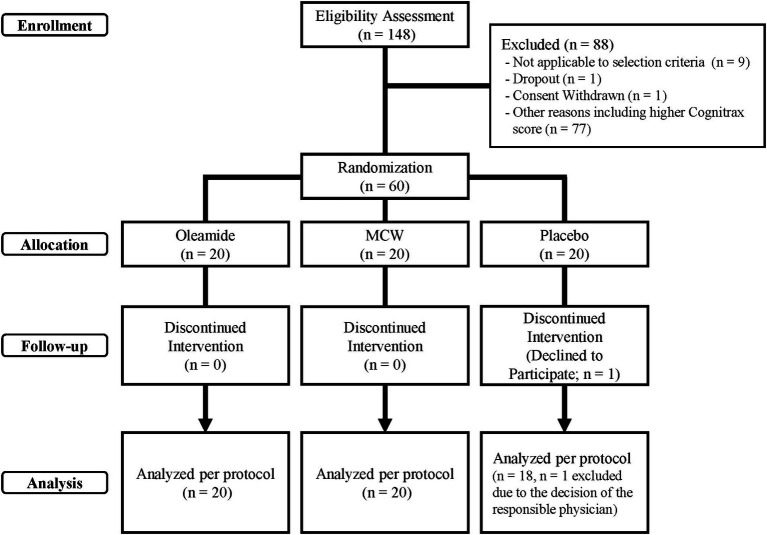
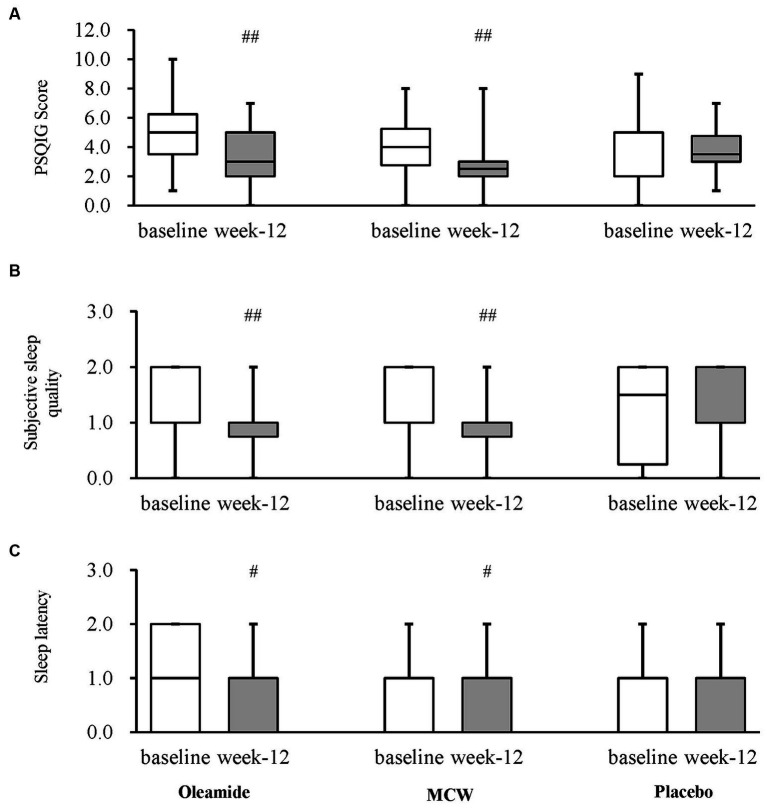
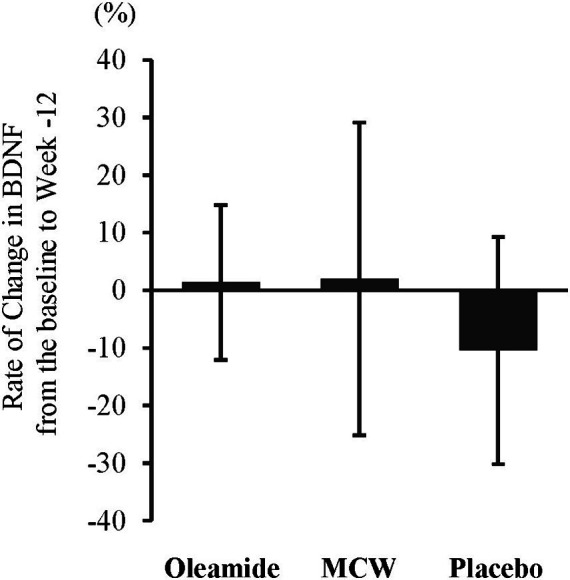
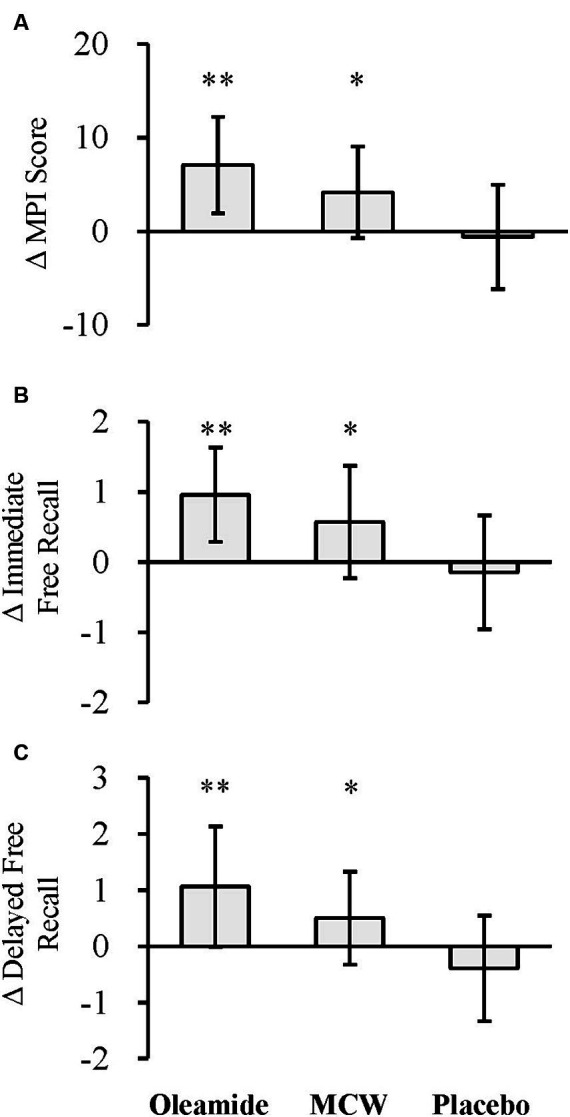
Dairy products and fermented foods have a reported association with maintained cognitive function. Camembert cheese, a dairy product fermented by the white mold , has also been shown to enhance cognitive function . Oleamide, derived from the fermentation of the white mold, is a candidate for an active component, and expected to improve both cognitive function and sleep conditions. Thus, this study investigated whether the milk-based culture of white mold (MCW), and oleamide, could improve cognitive function and sleep state clinically. A multi-arm randomized, double-blind, placebo-controlled trial was conducted in Tokyo, Japan. 60 healthy Japanese individuals aged 50-75 who were aware of their cognitive decline were randomly and equally divided into three groups of 20 participants using computer-generated random numbers. Participants took either MCW (equivalent to 60 μg/day of oleamide), 60 μg/day of oleamide, or placebo capsules for 12 weeks. Serum BDNF, cognitive function by Cognitrax as primary and MCI Screen as secondary outcome, and sleep status using the Japanese version of the Pittsburgh Sleep Quality Index (PSQI-J) were assessed before and after intervention. The participants, outcome assessors and analysts, and research assistants were blinded to the group assignment. Of the 60 participants, 58 completed the study and were analyzed. No adverse events related to test foods were observed. The placebo group showed a negative rate of change in serum BDNF (-10.5% ± 19.7%), whereas the MCW and oleamide groups showed positive changes (2.0% ± 27.1% and 1.3% ± 13.5%, respectively). Cognitrax scores increased after 12 weeks in all groups. Conversely, the MPI score of the MCI Screen demonstrated a significant improvement in the MCW and oleamide groups compared to the placebo group ( = 0.013 and < 0.001, respectively). The subscales, immediate free recall and delayed free recall, also significantly increased in them compared to the placebo group. Although PSQI-J revealed no significant differences among groups, the MCW and oleamide groups showed significant improvement after intervention in overall score, subjective sleep quality, and sleep latency. Our results suggest that MCW and its component, oleamide, are safe and contribute to maintaining cognitive functions, particularly short-term and working memory, and improving sleep state. : https://center6.umin.ac.jp/cgi-open-bin/ctr/ctr_view.cgi?recptno=R000054792, identifier UMIN-CTR UMIN000048084.
据报道,乳制品和发酵食品与维持认知功能有关。卡芒贝尔奶酪是一种由白霉菌发酵制成的乳制品,也已被证明能增强认知功能。源自白霉菌发酵的油酰胺是一种活性成分候选物,有望改善认知功能和睡眠状况。因此,本研究调查了白霉菌乳基培养物(MCW)和油酰胺在临床上是否能改善认知功能和睡眠状态。在日本东京进行了一项多臂随机、双盲、安慰剂对照试验。60名年龄在50 - 75岁、意识到自己认知能力下降的健康日本个体,使用计算机生成的随机数被随机且平均分为三组,每组20名参与者。参与者服用MCW(相当于每天60μg油酰胺)、每天60μg油酰胺或安慰剂胶囊,持续12周。在干预前后评估血清脑源性神经营养因子(BDNF)、以Cognitrax为主要指标、MCI筛查为次要指标的认知功能,以及使用日语版匹兹堡睡眠质量指数(PSQI-J)评估睡眠状况。参与者、结果评估者和分析人员以及研究助手对分组情况均不知情。60名参与者中,58名完成了研究并进行了分析。未观察到与受试食品相关的不良事件。安慰剂组血清BDNF显示出负向变化率(-10.5%±19.7%),而MCW组和油酰胺组显示出正向变化(分别为2.0%±27.1%和1.3%±13.5%)。12周后所有组的Cognitrax评分均有所增加。相反,与安慰剂组相比,MCI筛查的MPI评分在MCW组和油酰胺组有显著改善(分别为=0.013和<0.001)。与安慰剂组相比,它们的子量表即时自由回忆和延迟自由回忆也显著增加。虽然PSQI-J显示各组之间无显著差异,但MCW组和油酰胺组在干预后总体评分、主观睡眠质量和睡眠潜伏期方面有显著改善。我们的结果表明,MCW及其成分油酰胺是安全的,有助于维持认知功能,特别是短期和工作记忆,并改善睡眠状态。:https://center6.umin.ac.jp/cgi-open-bin/ctr/ctr_view.cgi?recptno=R000054792,标识符UMIN-CTR UMIN000048084 。