University Paris-Est Créteil, INSERM, IMRB, F-94010, Créteil, France.
Department of Cell Physiology and Metabolism, Centre Medical Universitaire (CMU), Faculty of Medicine, University of Geneva, Geneva, Switzerland; Diabetes Centre, Faculty of Medicine, University of Geneva, Geneva, Switzerland.
Redox Biol. 2024 Jun;72:103153. doi: 10.1016/j.redox.2024.103153. Epub 2024 Apr 9.
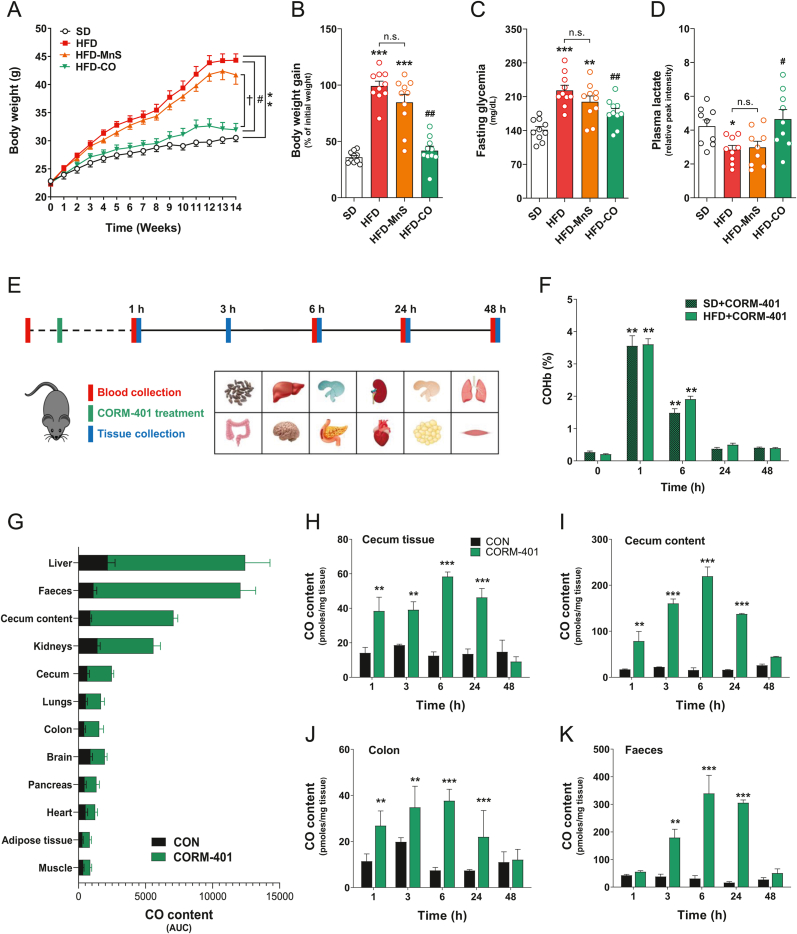
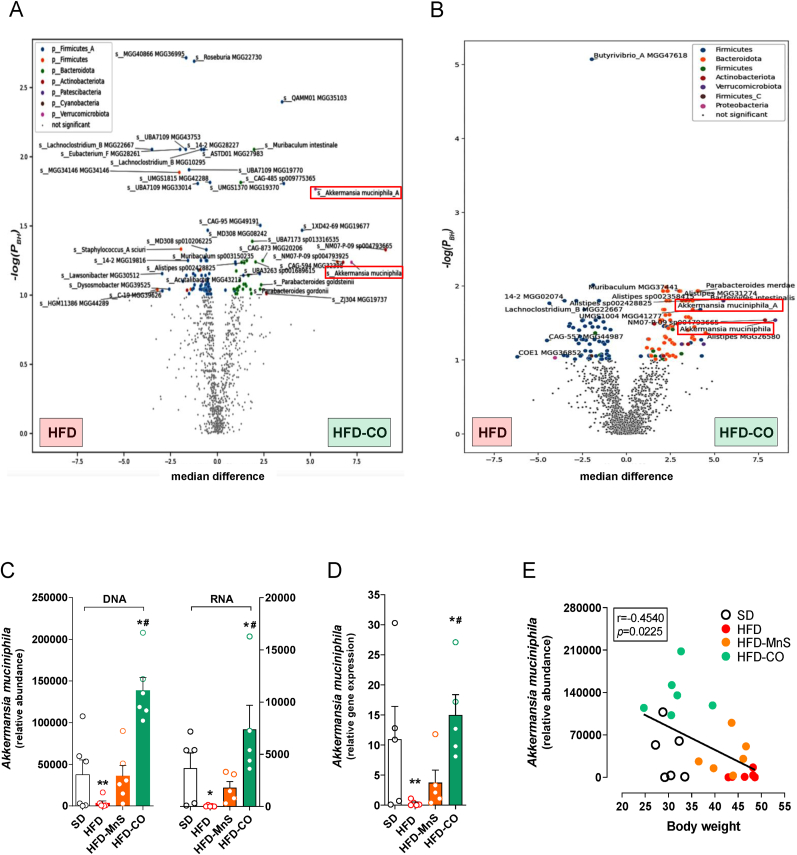
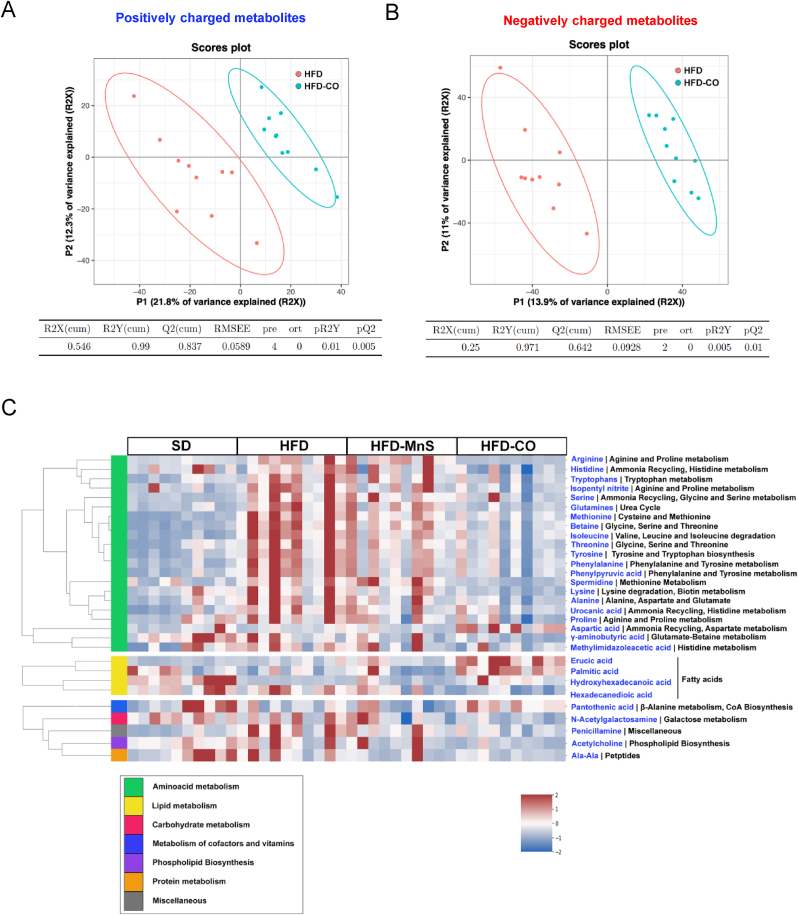
Carbon monoxide (CO), a gaseous signaling molecule, has shown promise in preventing body weight gain and metabolic dysfunction induced by high fat diet (HFD), but the mechanisms underlying these effects are largely unknown. An essential component in response to HFD is the gut microbiome, which is significantly altered during obesity and represents a target for developing new therapeutic interventions to fight metabolic diseases. Here, we show that CO delivered to the gut by oral administration with a CO-releasing molecule (CORM-401) accumulates in faeces and enriches a variety of microbial species that were perturbed by a HFD regimen. Notably, Akkermansia muciniphila, which exerts salutary metabolic effects in mice and humans, was strongly depleted by HFD but was the most abundant gut species detected after CORM-401 treatment. Analysis of bacterial transcripts revealed a restoration of microbial functional activity, with partial or full recovery of the Krebs cycle, β-oxidation, respiratory chain and glycolysis. Mice treated with CORM-401 exhibited normalization of several plasma and fecal metabolites that were disrupted by HFD and are dependent on Akkermansia muciniphila's metabolic activity, including indoles and tryptophan derivatives. Finally, CORM-401 treatment led to an improvement in gut morphology as well as reduction of inflammatory markers in colon and cecum and restoration of metabolic profiles in these tissues. Our findings provide therapeutic insights on the efficacy of CO as a potential prebiotic to combat obesity, identifying the gut microbiota as a crucial target for CO-mediated pharmacological activities against metabolic disorders.
一氧化碳(CO)作为一种气态信号分子,已被证明在预防高脂肪饮食(HFD)引起的体重增加和代谢功能障碍方面具有潜力,但这些作用的机制在很大程度上尚不清楚。对 HFD 反应的一个重要组成部分是肠道微生物组,它在肥胖期间发生显著改变,代表了开发新的治疗干预措施以对抗代谢疾病的目标。在这里,我们表明,通过口服给予 CO 释放分子(CORM-401)将 CO 递送至肠道,会在粪便中积累,并富集多种被 HFD 方案扰乱的微生物物种。值得注意的是,阿克曼氏菌(Akkermansia muciniphila)在小鼠和人类中发挥有益的代谢作用,但被 HFD 强烈消耗,但在 CORM-401 处理后是检测到的最丰富的肠道物种。细菌转录本分析显示微生物功能活性得到恢复,克雷布斯循环、β-氧化、呼吸链和糖酵解部分或完全恢复。用 CORM-401 处理的小鼠表现出几种被 HFD 扰乱的血浆和粪便代谢物的正常化,这些代谢物依赖于阿克曼氏菌的代谢活性,包括吲哚和色氨酸衍生物。最后,CORM-401 处理导致肠道形态得到改善,以及结肠和盲肠中炎症标志物减少,并恢复这些组织中的代谢谱。我们的研究结果为 CO 作为一种潜在的益生元来对抗肥胖的疗效提供了治疗上的见解,确定了肠道微生物组是 CO 介导的针对代谢紊乱的药理学活性的关键靶点。