Bagamoyo Clinical Trial Facility, Ifakara Health Institute, 74, Bagamoyo, Tanzania.
Department of Parasitology, Muhimbili University of Health and Allied Sciences, 65001, Dar es Salaam, Tanzania.
Malar J. 2024 Apr 12;23(1):103. doi: 10.1186/s12936-024-04935-w.
The emergence of resistance to artemisinin-based combination therapy necessitates the search for new, more potent antiplasmodial compounds, including herbal remedies. The whole extract of Maytenus senegalensis has been scientifically investigated for potential biological activities both in vitro and in vivo, demonstrating strong antimalarial activity. However, there is a lack of data on the electrocardiographic effects of M. senegalensis in humans, which is a crucial aspect in the investigation of malaria treatment. Assessing the electrocardiographic effects of M. senegalensis is essential, as many anti-malarial drugs can inadvertently prolong the QT interval on electrocardiograms. Therefore, the study's objective was to evaluate the electrocardiographic effects of M. senegalensis in healthy adult volunteers.
This study is a secondary analysis of an open-label single-arm dose escalation. Twelve healthy eligible Tanzanian males, aged 18 to 45, were enrolled in four study dose groups. A single 12-lead electrocardiogram (ECG) was performed at baseline and on days 3, 7, 14, 28, and 56.
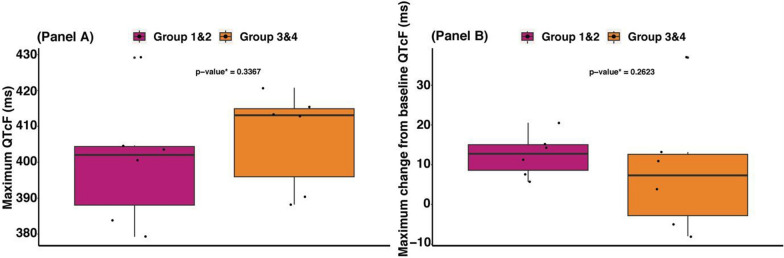
No QTcF adverse events occurred with any drug dose. Only one volunteer who received the highest dose (800 mg) of M. senegalensis experienced a moderate transient change (△QTcF > 30 ms; specifically, the value was 37 ms) from baseline on day 28. There was no difference in maximum QTcF and maximum △QTcF between volunteers in all four study dose groups.
A four-day regimen of 800 mg every 8 h of M. senegalensis did not impact the electrocardiographic parameters in healthy volunteers. This study suggests that M. senegalensis could be a valuable addition to malaria treatment, providing a safer alternative and potentially aiding in the battle against artemisinin-resistant malaria. The results of this study support both the traditional use and the modern therapeutic potential of M. senegalensis. They also set the stage for future research involving larger and more diverse populations to explore the safety profile of M. senegalensis in different demographic groups. This is especially important considering the potential use of M. senegalensis as a therapeutic agent and its widespread utilization as traditional medicine. Trial registration ClinicalTrials.gov, NCT04944966. Registered 30 June 2021-Retrospectively registered, https://clinicaltrials.gov/ct2/show/NCT04944966?term=kamaka&draw=2&rank=1.
抗青蒿素联合疗法的出现需要寻找新的、更有效的抗疟化合物,包括草药。马滕斯·塞内加尔ensis 的全提取物已在体外和体内进行了科学研究,具有很强的抗疟活性。然而,关于马滕斯·塞内加尔ensis 在人体中的心电图效应缺乏数据,这是疟疾治疗研究中的一个关键方面。评估马滕斯·塞内加尔ensis 的心电图效应至关重要,因为许多抗疟药物会无意中延长心电图上的 QT 间隔。因此,本研究的目的是评估马滕斯·塞内加尔ensis 在健康成年志愿者中的心电图效应。
这是一项开放标签、单臂剂量递增的二次分析研究。12 名年龄在 18 至 45 岁之间的健康合格的坦桑尼亚男性被纳入四个研究剂量组。在基线和第 3、7、14、28 和 56 天进行单次 12 导联心电图(ECG)检查。
任何药物剂量均未发生 QTcF 不良事件。只有一名接受马滕斯·塞内加尔ensis 最高剂量(800mg)的志愿者在第 28 天从基线开始出现中度短暂变化(△QTcF>30ms;具体值为 37ms)。在所有四个研究剂量组的志愿者中,最大 QTcF 和最大△QTcF 之间没有差异。
马滕斯·塞内加尔ensis 每 8 小时 800mg 的四天疗程不会影响健康志愿者的心电图参数。本研究表明,马滕斯·塞内加尔ensis 可能成为疟疾治疗的有价值的补充,提供更安全的替代方案,并有可能有助于对抗抗青蒿素的疟疾。该研究的结果支持了马滕斯·塞内加尔ensis 的传统用途和现代治疗潜力。它们还为未来涉及更大和更多样化人群的研究奠定了基础,以探索马滕斯·塞内加尔ensis 在不同人群中的安全性概况。考虑到马滕斯·塞内加尔ensis 作为治疗剂的潜在用途及其作为传统药物的广泛应用,这一点尤其重要。
ClinicalTrials.gov,NCT04944966。2021 年 6 月 30 日注册-回顾性注册,https://clinicaltrials.gov/ct2/show/NCT04944966?term=kamaka&draw=2&rank=1。