Xiao Yuelin, Liu Xianzhi, Xie Kaiduan, Luo Jiajie, Zhang Yiwang, Huang Xiaoli, Luo Jinni, Tan Siwei
Department of Gastroenterology, The Third Affiliated Hospital of Sun Yat-Sen University, Guangzhou, China.
Department of Pathology, The Third Affiliated Hospital of Sun Yat-Sen University, Guangzhou, China.
Clin Transl Med. 2024 Apr;14(4):e1653. doi: 10.1002/ctm2.1653.
Hypoxia is an important characteristic of gastric mucosal diseases, and hypoxia-inducible factor-1α (HIF-1α) contributes to microenvironment disturbance and metabolic spectrum abnormalities. However, the underlying mechanism of HIF-1α and its association with mitochondrial dysfunction in gastric mucosal lesions under hypoxia have not been fully clarified.
To evaluate the effects of hypoxia-induced HIF-1α on the development of gastric mucosal lesions.
Portal hypertensive gastropathy (PHG) and gastric cancer (GC) were selected as representative diseases of benign and malignant gastric lesions, respectively. Gastric tissues from patients diagnosed with the above diseases were collected. Portal hypertension (PHT)-induced mouse models in METTL3 mutant or NLRP3-deficient littermates were established, and nude mouse gastric graft tumour models with relevant inhibitors were generated. The mechanisms underlying hypoxic condition, mitochondrial dysfunction and metabolic alterations in gastric mucosal lesions were further analysed.
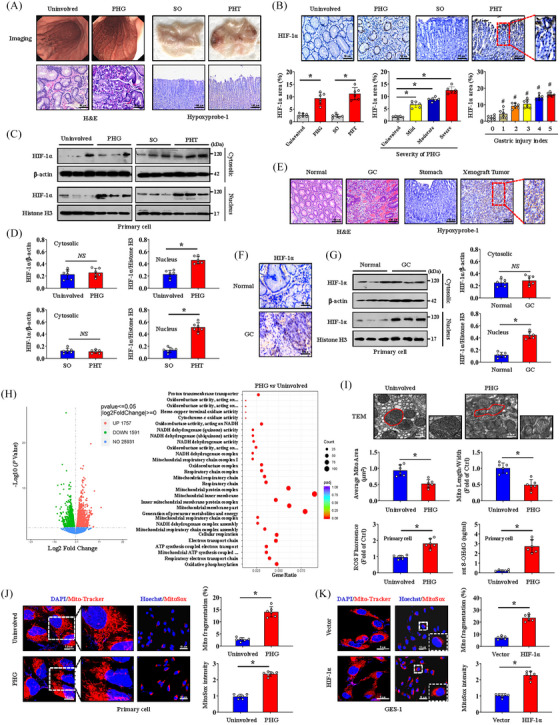
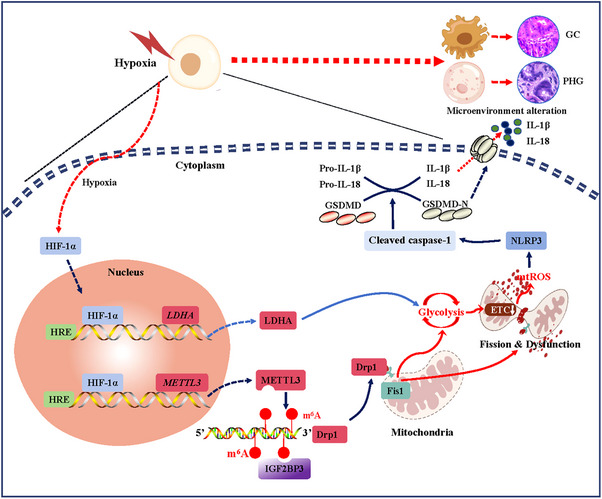
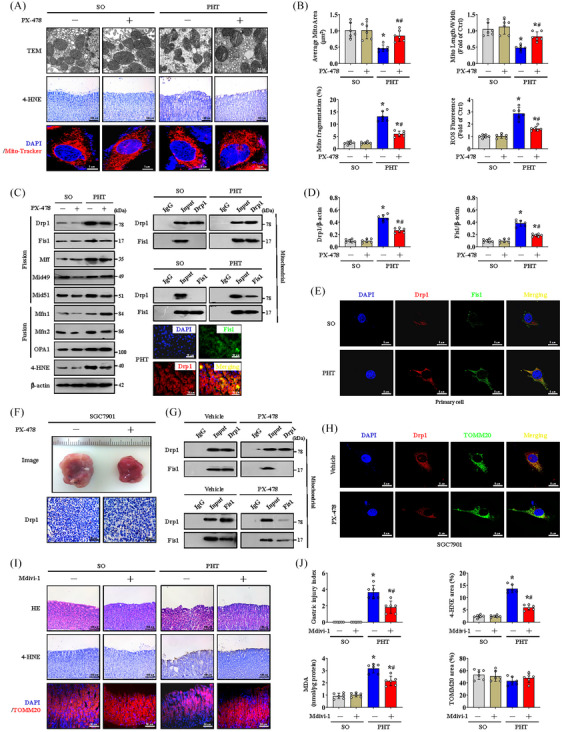
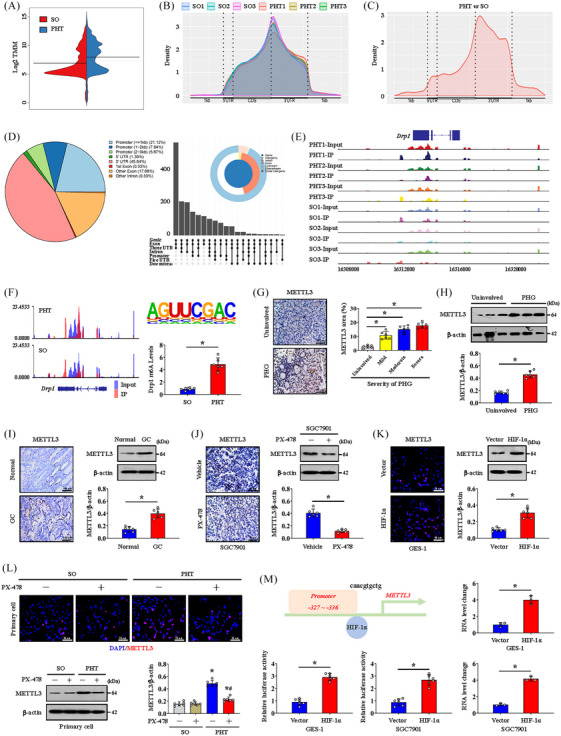
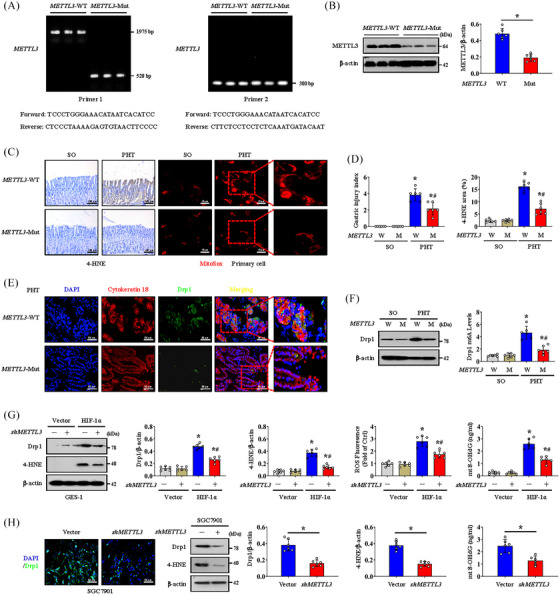
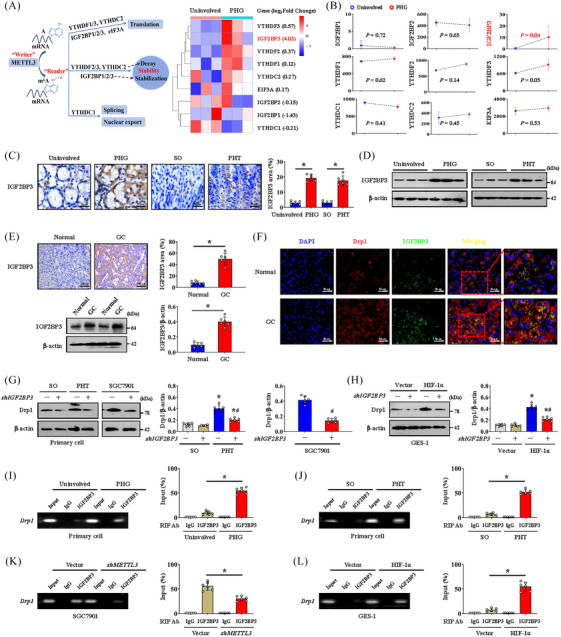
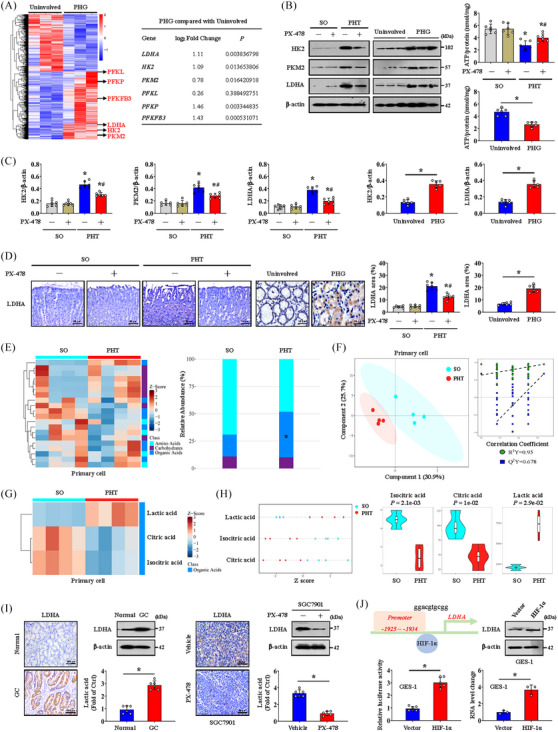
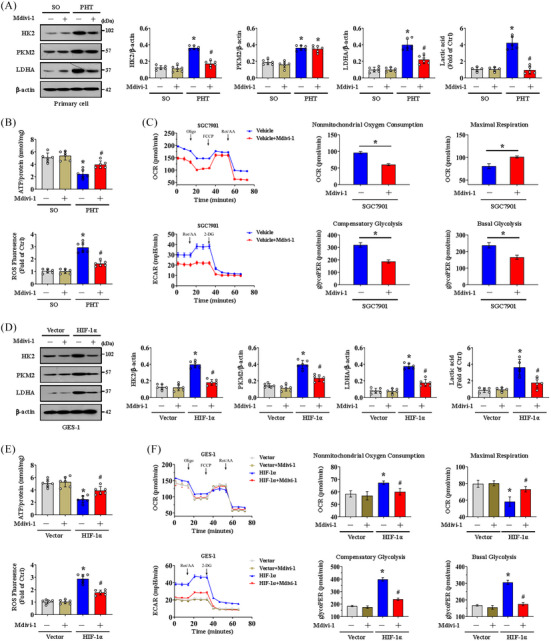
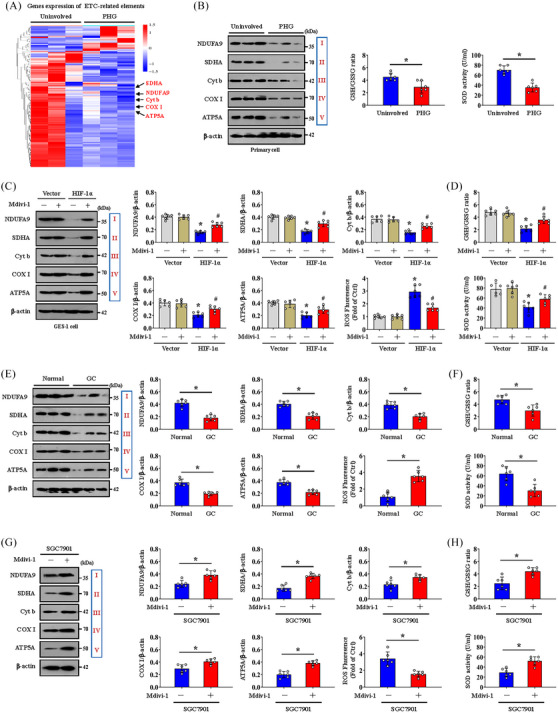
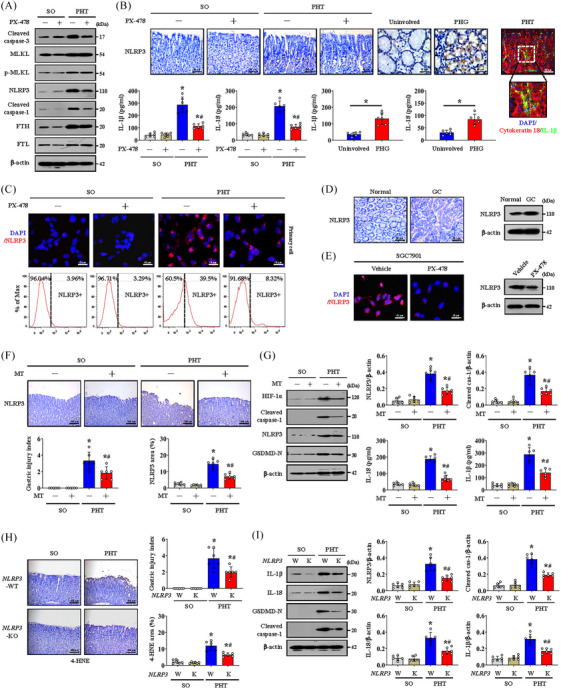
HIF-1α, which can mediate mitochondrial dysfunction via upregulation of METTL3/IGF2BP3-dependent dynamin-related protein 1 (Drp1) N6-methyladenosine modification to increase mitochondrial reactive oxygen species (mtROS) production, was elevated under hypoxic conditions in human and mouse portal hypertensive gastric mucosa and GC tissues. While blocking HIF-1α with PX-478, inhibiting Drp1-dependent mitochondrial fission via mitochondrial division inhibitor 1 (Mdivi-1) treatment or METTL3 mutation alleviated this process. Furthermore, HIF-1α influenced energy metabolism by enhancing glycolysis via lactate dehydrogenase A. In addition, HIF-1α-induced Drp1-dependent mitochondrial fission also enhanced glycolysis. Drp1-dependent mitochondrial fission and enhanced glycolysis were associated with alterations in antioxidant enzyme activity and dysfunction of the mitochondrial electron transport chain, resulting in massive mtROS production, which was needed for activation of NLRP3 inflammasome to aggravate the development of the PHG and GC.
Under hypoxic conditions, HIF-1α enhances mitochondrial dysfunction via Drp1-dependent mitochondrial fission and influences the metabolic profile by altering glycolysis to increase mtROS production, which can trigger NLRP3 inflammasome activation and mucosal microenvironment alterations to contribute to the development of benign and malignant gastric mucosal lesions.
缺氧是胃黏膜疾病的一个重要特征,缺氧诱导因子-1α(HIF-1α)促成微环境紊乱和代谢谱异常。然而,在缺氧情况下胃黏膜病变中HIF-1α的潜在机制及其与线粒体功能障碍的关联尚未完全阐明。
评估缺氧诱导的HIF-1α对胃黏膜病变发展的影响。
分别选取门脉高压性胃病(PHG)和胃癌(GC)作为良性和恶性胃病变的代表性疾病。收集诊断为上述疾病患者的胃组织。建立METTL3突变或NLRP3缺陷同窝小鼠的门脉高压(PHT)诱导模型,并构建使用相关抑制剂的裸鼠胃移植瘤模型。进一步分析胃黏膜病变中缺氧状态、线粒体功能障碍和代谢改变的潜在机制。
在人和小鼠门脉高压性胃黏膜及GC组织的缺氧条件下,HIF-1α升高,其可通过上调METTL3/IGF2BP3依赖的动力相关蛋白1(Drp1)的N6-甲基腺苷修饰来介导线粒体功能障碍,以增加线粒体活性氧(mtROS)生成。而用PX-478阻断HIF-1α、通过线粒体分裂抑制剂1(Mdivi-1)处理抑制Drp1依赖型线粒体分裂或METTL3突变可缓解此过程。此外,HIF-1α通过乳酸脱氢酶A增强糖酵解来影响能量代谢。另外,HIF-1α诱导的Drp1依赖型线粒体分裂也增强了糖酵解。Drp1依赖型线粒体分裂和糖酵解增强与抗氧化酶活性改变及线粒体电子传递链功能障碍相关,导致大量mtROS生成,这是激活NLRP3炎性小体以加重PHG和GC发展所必需的。
在缺氧条件下,HIF-1α通过Drp1依赖型线粒体分裂增强线粒体功能障碍,并通过改变糖酵解来影响代谢谱以增加mtROS生成,这可触发NLRP3炎性小体激活和黏膜微环境改变,从而促成良性和恶性胃黏膜病变的发展。