University of Saskatchewan, Saskatoon, SK, Canada.
Vet Pathol. 2024 Jul;61(4):550-561. doi: 10.1177/03009858241244849. Epub 2024 Apr 15.
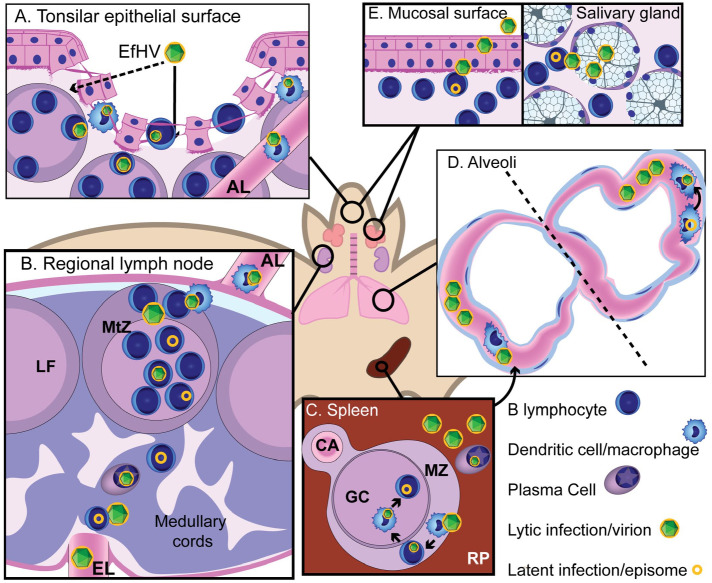
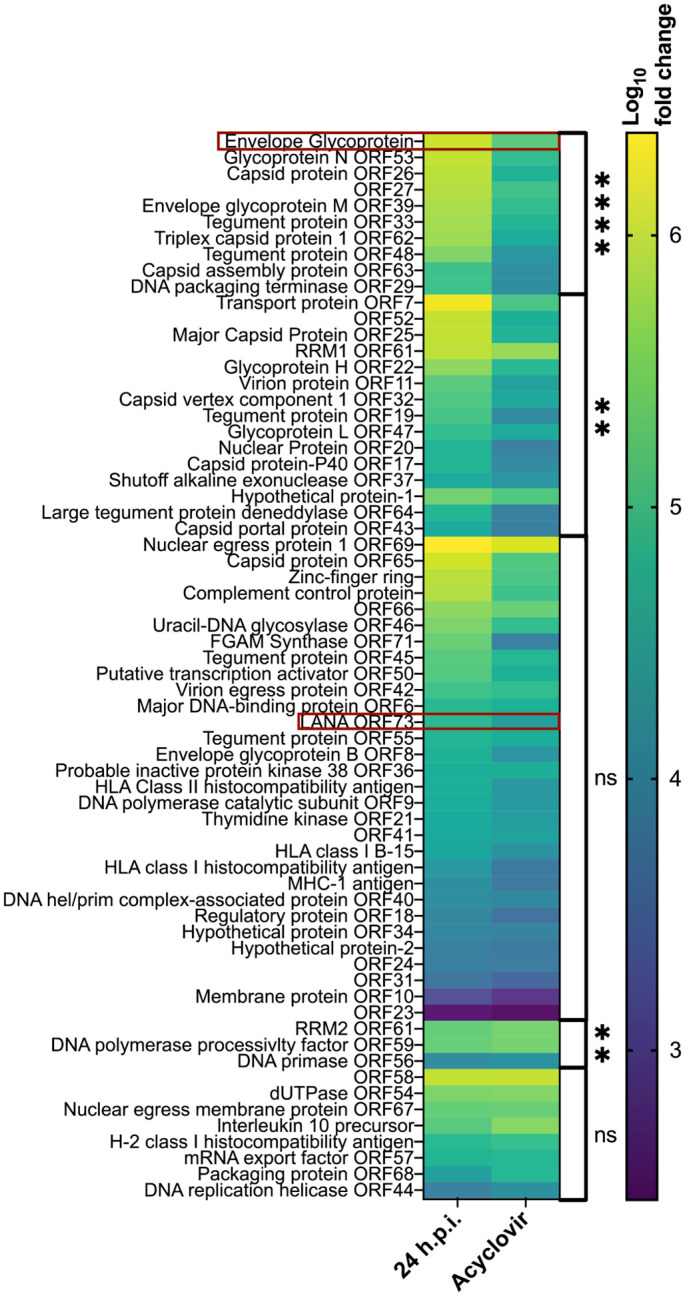
Gammaherpesviruses (γHVs) are recognized as important pathogens in humans but their relationship with other animal hosts, especially wildlife species, is less well characterized. Our objectives were to examine natural (EfHV) infections in their host, the big brown bat (), and determine whether infection is associated with disease. In tissue samples from 132 individual big brown bats, EfHV DNA was detected by polymerase chain reaction in 41 bats. Tissues from 59 of these cases, including 17 from bats with detectable EfHV genomes, were analyzed. An EfHV isolate was obtained from one of the cases, and electron micrographs and whole genome sequencing were used to confirm that this was a unique isolate of EfHV. Although several bats exhibited various lesions, we did not establish EfHV infection as a cause. Latent infection, defined as RNAScope probe binding to viral latency-associated nuclear antigen in the absence of viral envelope glycoprotein probe binding, was found within cells of the lymphoid tissues. These cells also had colocalization of the B-cell probe targeting mRNA. Probe binding for both latency-associated nuclear antigen and a viral glycoprotein was observed in individual cells dispersed throughout the alveolar capillaries of the lung, which had characteristics of pulmonary intravascular macrophages. Cells with a similar distribution in bat lungs expressed major histocompatibility class II, a marker for antigen presenting cells, and the existence of pulmonary intravascular macrophages in bats was confirmed with transmission electron microscopy. The importance of this cell type in γHVs infections warrants further investigation.
γ 疱疹病毒(γHVs)被认为是人类的重要病原体,但它们与其他动物宿主,尤其是野生动物物种的关系还不太清楚。我们的目标是研究其自然感染(EfHV)在其宿主——大褐蝙蝠()中的情况,并确定感染是否与疾病有关。在 132 只大褐蝙蝠的组织样本中,通过聚合酶链反应检测到 41 只蝙蝠中存在 EfHV DNA。对来自 59 例病例的组织进行了分析,其中包括 17 例来自可检测到 EfHV 基因组的蝙蝠。从一个病例中获得了 EfHV 分离株,并通过电子显微镜和全基因组测序来确认这是 EfHV 的一个独特分离株。尽管一些蝙蝠表现出各种病变,但我们并未确定 EfHV 感染是病因。潜伏感染被定义为在没有病毒包膜糖蛋白探针结合的情况下,RNAscope 探针与病毒潜伏相关核抗原结合,在淋巴组织的细胞内发现了潜伏感染。这些细胞还存在针对 mRNA 的 B 细胞探针的共定位。在肺的肺泡毛细血管中,单个细胞中观察到潜伏相关核抗原和病毒糖蛋白的探针结合,这些细胞具有肺血管内巨噬细胞的特征。在蝙蝠肺部具有类似分布的细胞表达主要组织相容性复合体 II,这是抗原呈递细胞的标志物,并且通过透射电子显微镜证实了蝙蝠中存在肺血管内巨噬细胞。这种细胞类型在 γHVs 感染中的重要性值得进一步研究。