Garren Mark R, Ashcraft Morgan, Qian Yun, Douglass Megan, Brisbois Elizabeth J, Handa Hitesh
School of Chemical, Materials, and Biochemical Engineering, College of Engineering, University of Georgia, Athens, GA, USA.
Department of Pharmaceutical and Biomedical Sciences, College of Pharmacy, University of Georgia, Athens, GA, USA.
Appl Mater Today. 2021 Mar;22:100887. doi: 10.1016/j.apmt.2020.100887. Epub 2020 Dec 5.
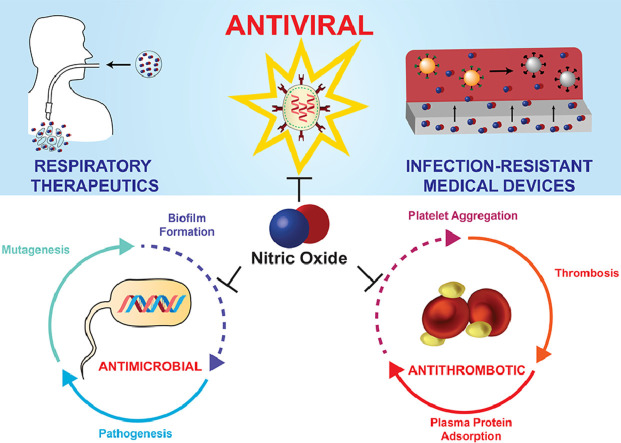
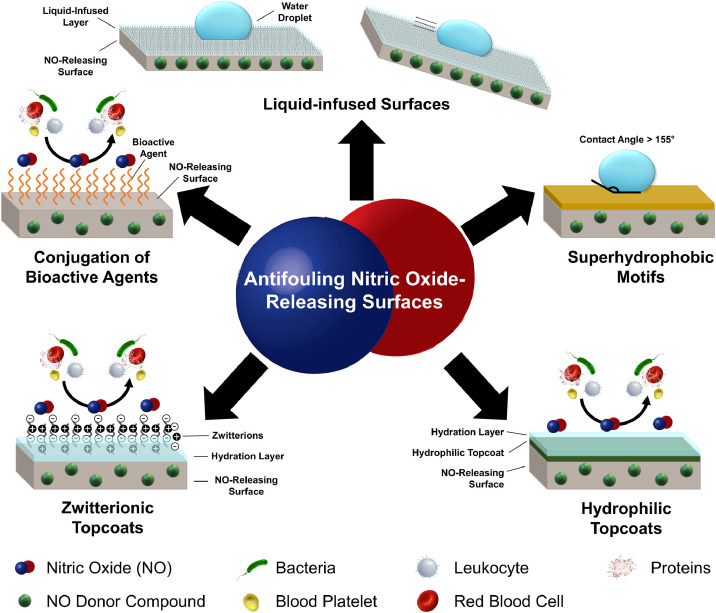
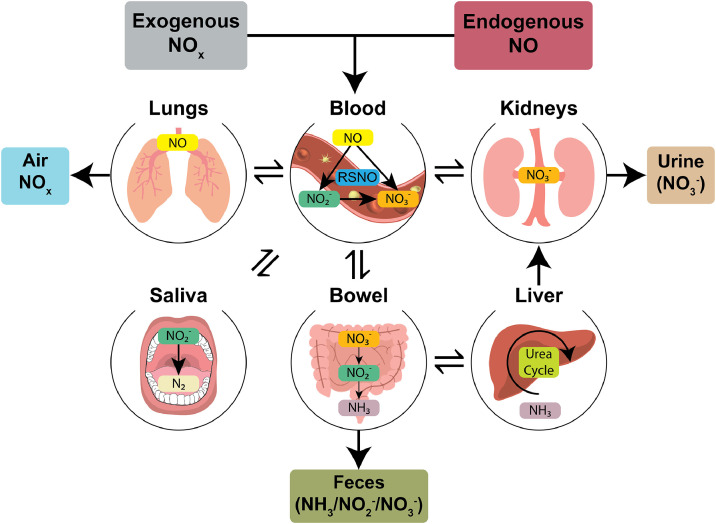
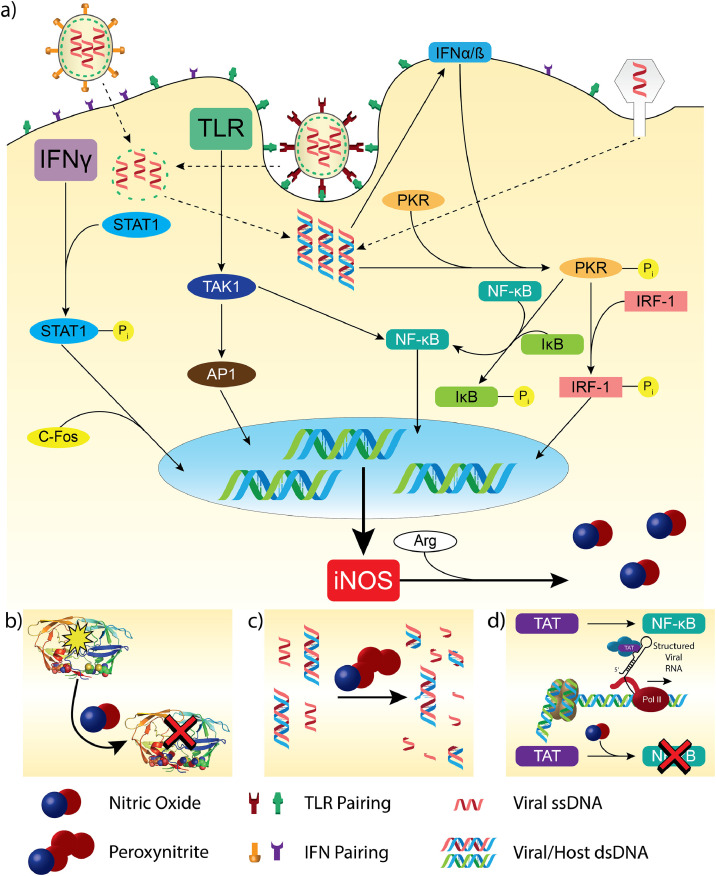
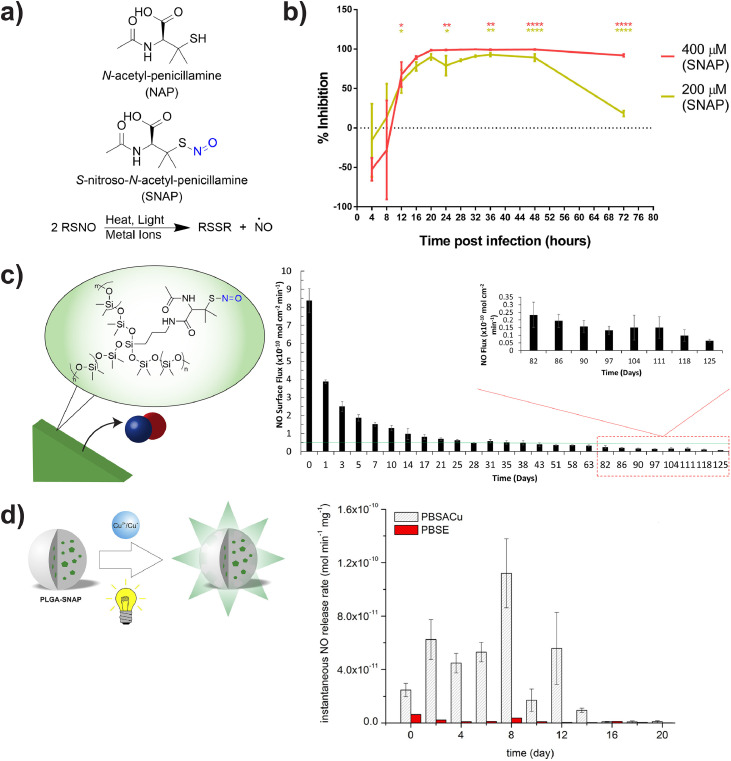
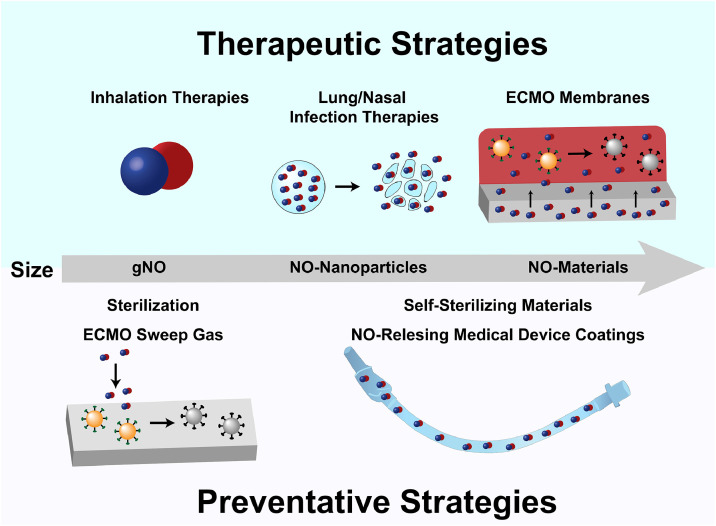
Nitric oxide (NO) is a gasotransmitter of great significance to developing the innate immune response to many bacterial and viral infections, while also modulating vascular physiology. The generation of NO from the upregulation of endogenous nitric oxide synthases serves as an efficacious method for inhibiting viral replication in host defense and warrants investigation for the development of antiviral therapeutics. With increased incidence of global pandemics concerning several respiratory-based viral infections, it is necessary to develop broad therapeutic platforms for inhibiting viral replication and enabling more efficient host clearance, as well as to fabricate new materials for deterring viral transmission from medical devices. Recent developments in creating stabilized NO donor compounds and their incorporation into macromolecular scaffolds and polymeric substrates has created a new paradigm for developing NO-based therapeutics for long-term NO release in applications for bactericidal and blood-contacting surfaces. Despite this abundance of research, there has been little consideration of NO-releasing scaffolds and substrates for reducing passive transmission of viral infections or for treating several respiratory viral infections. The aim of this review is to highlight the recent advances in developing gaseous NO, NO prodrugs, and NO donor compounds for antiviral therapies; discuss the limitations of NO as an antiviral agent; and outline future prospects for guiding materials design of a next generation of NO-releasing antiviral platforms.
一氧化氮(NO)是一种气态递质,对于引发针对多种细菌和病毒感染的先天性免疫反应具有重要意义,同时还能调节血管生理功能。内源性一氧化氮合酶上调产生NO,是宿主防御中抑制病毒复制的有效方法,值得深入研究以开发抗病毒疗法。随着全球几起基于呼吸道的病毒感染大流行的发生率增加,有必要开发广泛的治疗平台来抑制病毒复制并实现更有效的宿主清除,以及制造新材料以阻止病毒从医疗设备传播。在制备稳定的NO供体化合物并将其纳入大分子支架和聚合物基质方面的最新进展,为开发基于NO的疗法创造了新的范例,以便在杀菌和血液接触表面的应用中长期释放NO。尽管有大量此类研究,但对于用于减少病毒感染的被动传播或治疗几种呼吸道病毒感染的NO释放支架和基质却很少有人考虑。本综述的目的是突出在开发气态NO、NO前药和用于抗病毒疗法的NO供体化合物方面的最新进展;讨论NO作为抗病毒剂的局限性;并概述指导下一代NO释放抗病毒平台材料设计的未来前景。