School of Biological Sciences, The University of Western Australia, Crawley, WA, 6009, Australia.
CSIRO Health & Biosecurity, Centre for Environment and Life Sciences, Floreat, WA, 6014, Australia.
Nat Commun. 2024 Apr 15;15(1):3236. doi: 10.1038/s41467-024-47645-2.
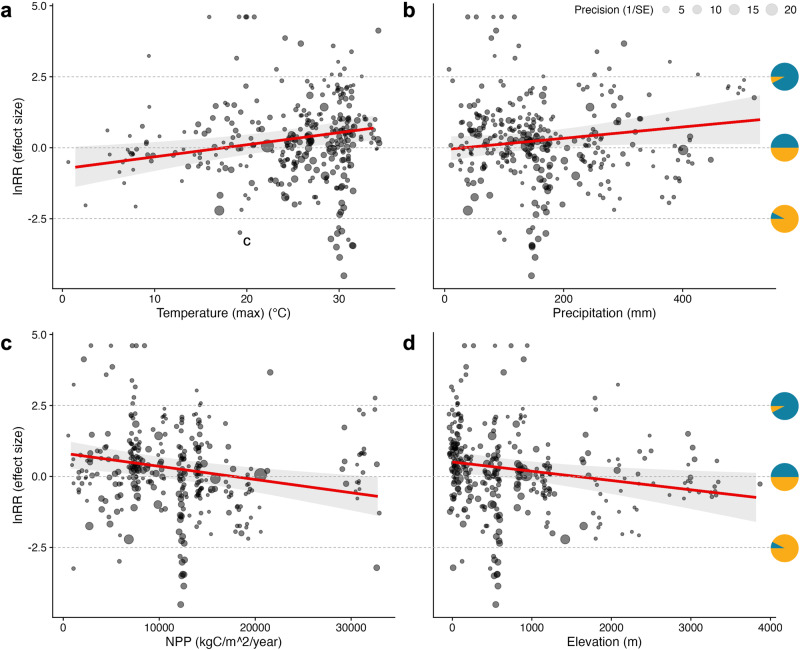
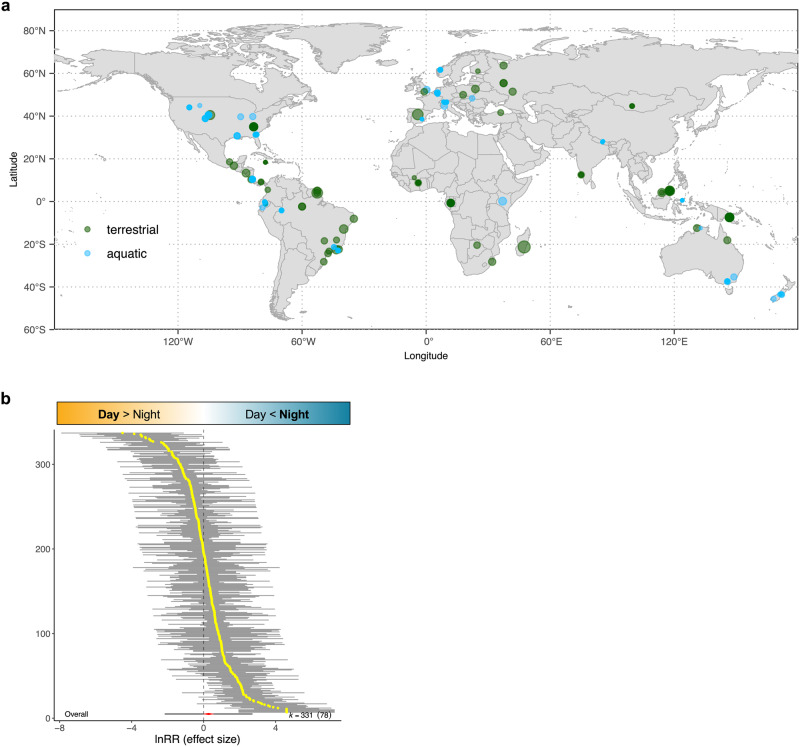
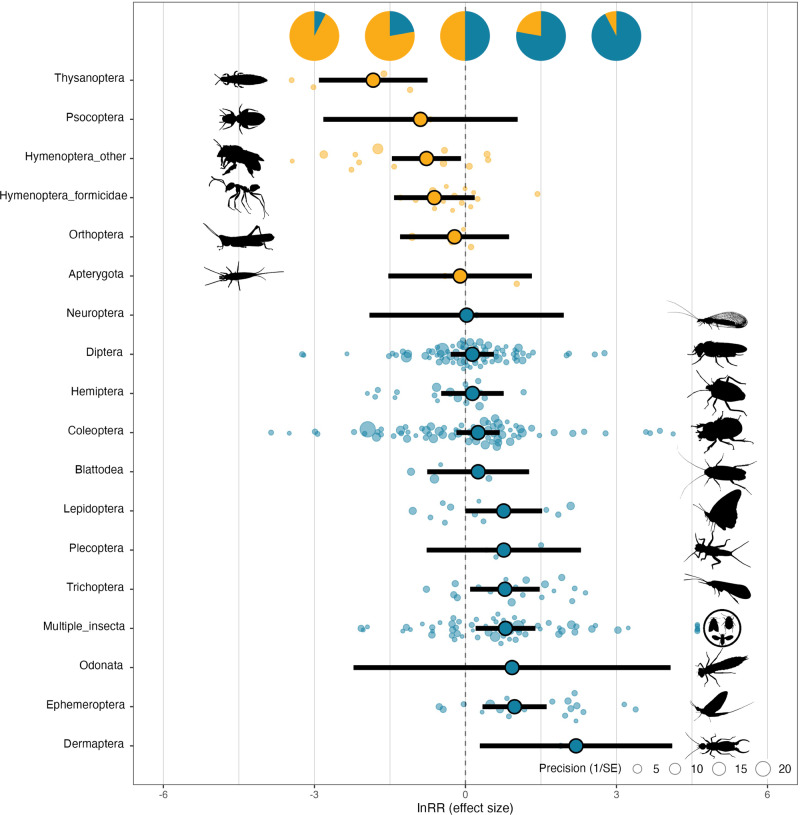
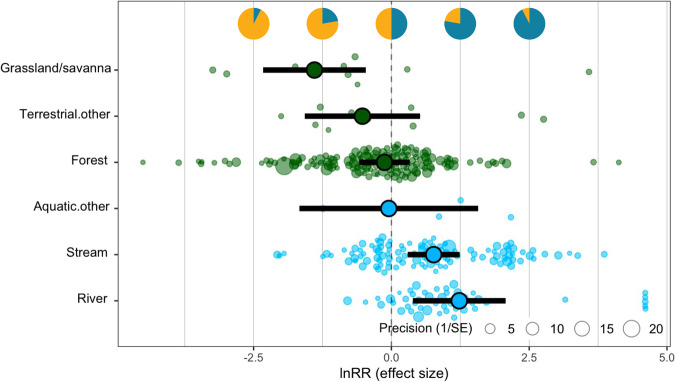
Insects sustain key ecosystem functions, but how their activity varies across the day-night cycle and the underlying drivers are poorly understood. Although entomologists generally expect that more insects are active at night, this notion has not been tested with empirical data at the global scale. Here, we assemble 331 quantitative comparisons of the abundances of insects between day and night periods from 78 studies worldwide and use multi-level meta-analytical models to show that insect activity is on average 31.4% (CI: -6.3%-84.3%) higher at night than in the day. We reveal diel preferences of major insect taxa, and observe higher nocturnal activity in aquatic taxa than in terrestrial ones, as well as in warmer environments. In a separate analysis of the small subset of studies quantifying diel patterns in taxonomic richness (31 comparisons from 13 studies), we detect preliminary evidence of higher nocturnal richness in tropical than temperate communities. The higher overall (but variable) nocturnal activity in insect communities underscores the need to address threats such as light pollution and climate warming that may disproportionately impact nocturnal insects.
昆虫维持着关键的生态系统功能,但它们的活动如何随昼夜周期变化以及潜在的驱动因素仍知之甚少。尽管昆虫学家通常认为夜间活动的昆虫更多,但这一观点尚未在全球范围内通过实证数据进行检验。在这里,我们从全球 78 项研究中汇集了 331 项关于昆虫在白天和夜间数量的定量比较,并使用多层次元分析模型表明,昆虫活动在夜间平均比白天高 31.4%(置信区间:-6.3%至 84.3%)。我们揭示了主要昆虫类群的昼夜偏好,并观察到水生类群比陆生类群以及在温暖环境中的夜间活动更高。在对定量研究昼夜模式的小部分研究(来自 13 项研究的 31 项比较)进行单独分析时,我们初步发现热带社区比温带社区的夜间丰富度更高。昆虫群落中整体(但可变)更高的夜间活动突显了需要解决光污染和气候变暖等威胁,这些威胁可能会不成比例地影响夜间昆虫。