Biology Department, University of Gondar, P.O. Box 196, Gondar, Ethiopia.
J Ethnobiol Ethnomed. 2024 Apr 17;20(1):43. doi: 10.1186/s13002-024-00678-9.
Simien Mountain National Park is a world heritage site with spectacular landscapes and rich in floral diversity. Exploring the plethora of conventional wisdom regarding therapeutic flora for sustainable use and drug development is a timely endeavor. Thus, the present study was aimed at investigating therapeutic plant uses and conservation practices by the local communities dwelling in the vicinity of the Park.
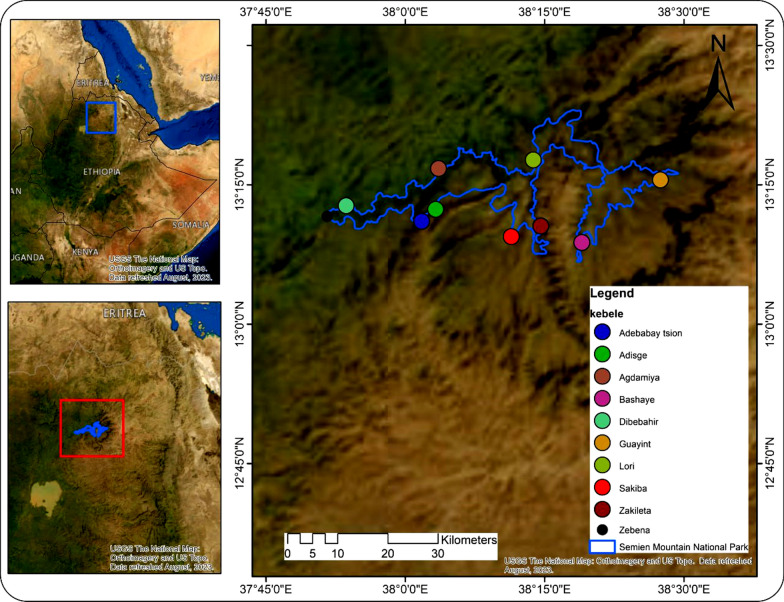
Eighty randomly selected general informants and 20 purposefully selected key informants were used to collect the traditional lore from 10 purposefully selected kebeles that border the Park. Data were collected using face-to-face interviews, guided field walks, group discussions and market surveys. Descriptive statistics were used to analyze the basic information collected from the informants. An independent sample t test was computed to compare the knowledge variations among different informant groups. Clustering and ranking techniques were employed to validate traditional wisdom of informants.
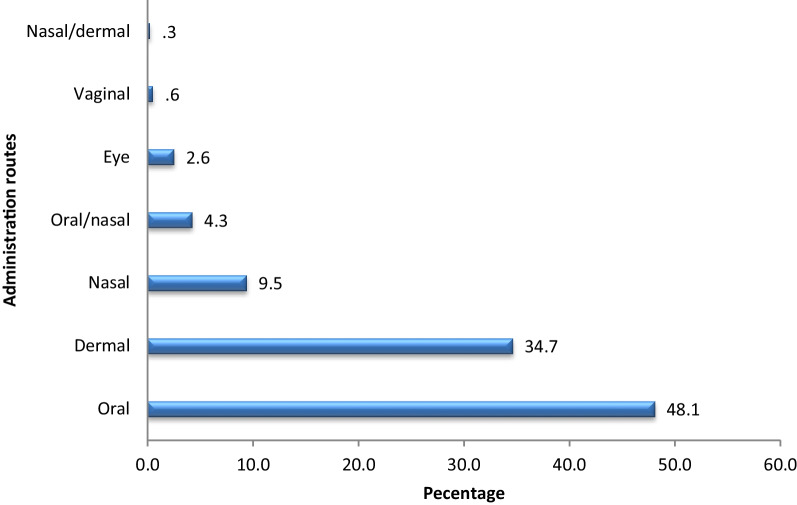
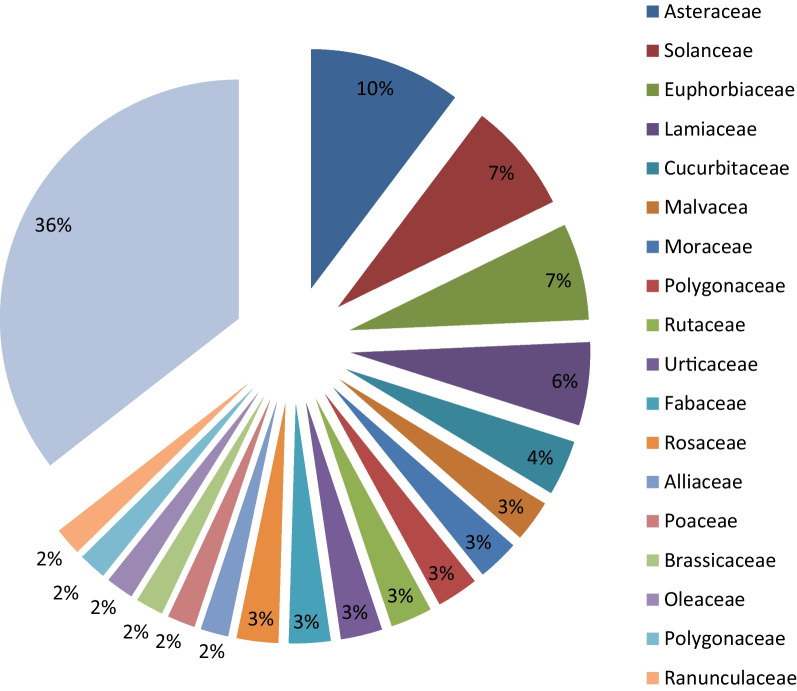
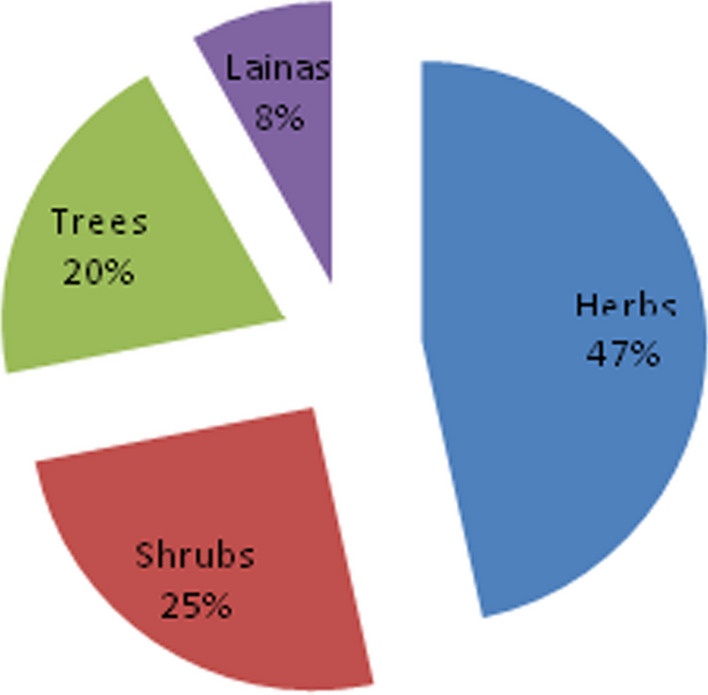
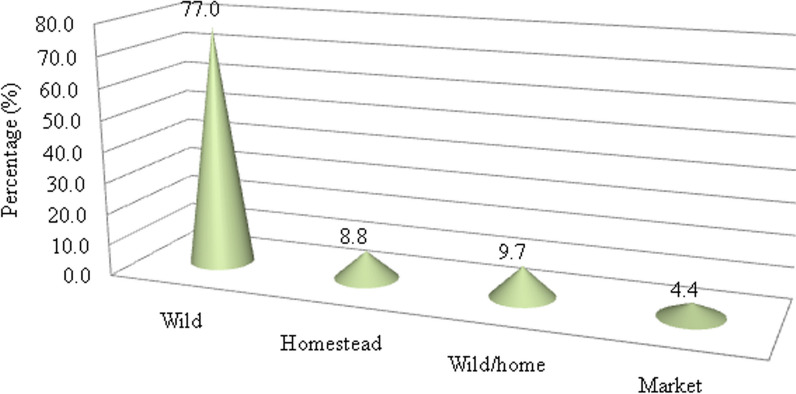
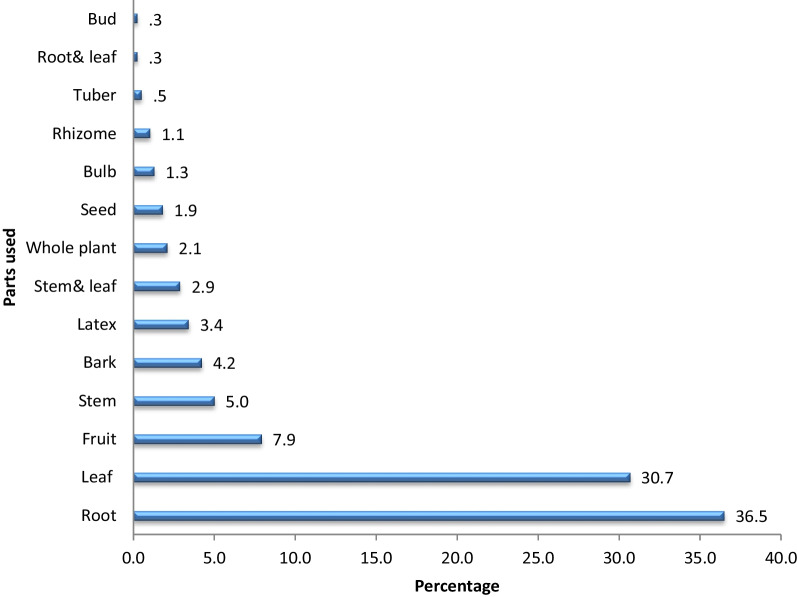
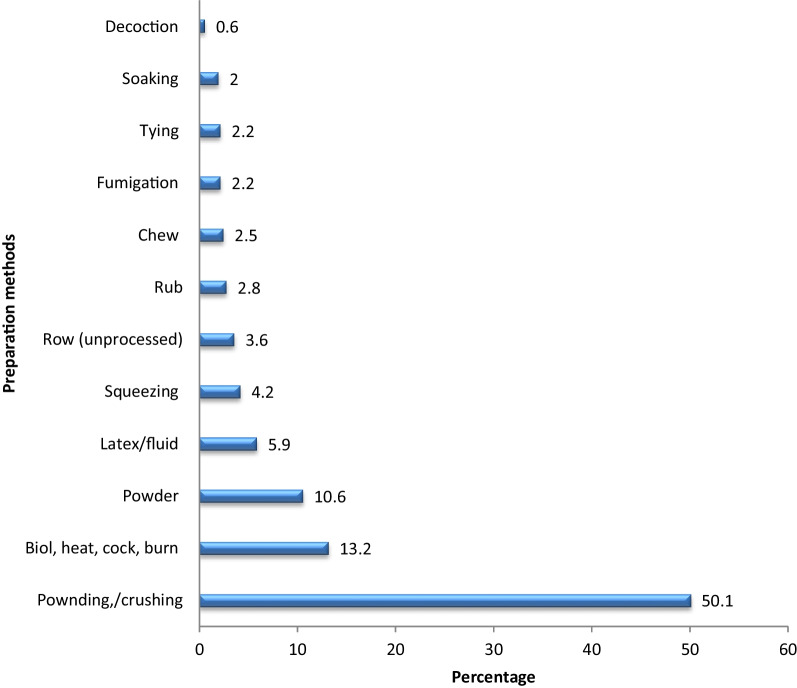
Significant differences in traditional wisdom (P < 0.05) were observed only between general and key informants. Hundred thirteen therapeutic plant species belonging to 56 families were recorded. Asteraceae was the most species-rich family (10%). The majority of therapeutic species were collected from the wild (77%). Herbs and roots were the most preferred habit (47%) and plant parts (37%) for remedy preparation, respectively. Pounding was the most common preparation method (50.1%). The most frequently practiced route of administration was the oral route (48.1%). The highest Informant Consensus Factor (ICF) value (84%) was recorded for respiratory and febrile illnesses. Rumex nepalensis was the most preferred for the treatment of wounds, and Olea europaea subsp cuspidata was the first-ranked multipurpose plant.
The Park is rich in therapeutic species serving as a refuge for many endemic and endangered species associated with the local community rich medicinal traditional lore. Erosion of therapeutic plants, verbal transfer of the traditional wisdom and young generation negligence in acquiring traditional lore led to the deterioration of the long tradition of using therapeutic plants for health care. Endangered multipurpose therapeutic plants like Echinops kebericho should get conservation priority. Therapeutic plants with the highest ICF and fidelity level could be candidates for drug development.
西缅山国家公园是一处世界遗产地,拥有壮观的景观和丰富的花卉多样性。探索有关治疗植物的大量传统智慧,以实现可持续利用和药物开发,是一项及时的努力。因此,本研究旨在调查居住在公园附近的当地社区对治疗植物的使用和保护做法。
从公园周边的 10 个有目的选择的 kebeles 中,使用 80 名随机选择的一般信息提供者和 20 名有目的选择的关键信息提供者收集传统知识。使用面对面访谈、实地引导行走、小组讨论和市场调查收集数据。使用描述性统计来分析从信息提供者那里收集的基本信息。计算独立样本 t 检验以比较不同信息提供者群体之间的知识差异。使用聚类和排名技术来验证信息提供者的传统智慧。
仅在一般信息提供者和关键信息提供者之间观察到传统智慧(P<0.05)存在显著差异。记录了 113 种属于 56 科的治疗植物物种。菊科是物种最丰富的科(10%)。大多数治疗物种是从野外采集的(77%)。草药和根是最受欢迎的治疗植物部分(47%)和植物部分(37%)。最常见的制备方法是捣碎(50.1%)。最常使用的给药途径是口服途径(48.1%)。记录的最高信息提供者共识因子(ICF)值(84%)是用于治疗呼吸道和发热疾病。尼泊尔酸模用于治疗伤口,而油橄榄亚种 cuspidata 是首选的多用途植物。
该公园富含治疗物种,是许多与当地社区丰富的药用传统知识相关的特有和濒危物种的避难所。治疗植物的侵蚀、传统智慧的口头传承以及年轻一代对传统知识的忽视,导致了长期使用治疗植物进行保健的传统恶化。像 Echinops kebericho 这样濒危的多用途治疗植物应该得到保护优先。具有最高 ICF 和保真度水平的治疗植物可能是药物开发的候选者。