Mai Yong-Xin, Li Zhi-Peng, Pang Feng-Xiang, Zhou Shu-Ting, Li Nan, Wang Yu-Yan, Zhang Jin-Fang
Cancer Center, Shenzhen Hospital (Futian) of Guangzhou University of Chinese Medicine, Shenzhen 518000, Guangdong, China.
Lingnan Medical Research Center, Guangzhou University of Chinese Medicine, Guangzhou 510405, China.
Stem Cells Int. 2024 Apr 9;2024:5388064. doi: 10.1155/2024/5388064. eCollection 2024.
Traditional Chinese medicine has been used to treat bone fracture for hundreds of years, which exerts a significant improvement in fracture healing. Aucubin, a derivative isolated from , has been demonstrated to possess anti-inflammatory, immunoregulatory, and antioxidative potential. In the present study, our aim was to explore its function in bone regeneration and elucidate the underlying mechanism.
The effects of Aucubin on osteoblast and osteoclast were examined in mouse bone marrow-derived mesenchymal stem cells (BM-MSCs) and RAW 264.7 cells, respectively. Moreover, the lncRNA H19 and Wnt/-catenin signaling were detected by qPCR examination, western blotting, and luciferase activity assays. Using the femur fracture mice model, the effect of Aucubin on bone formation was monitored by X-ray, micro-CT, histomorphometry, and immunohistochemistry staining.
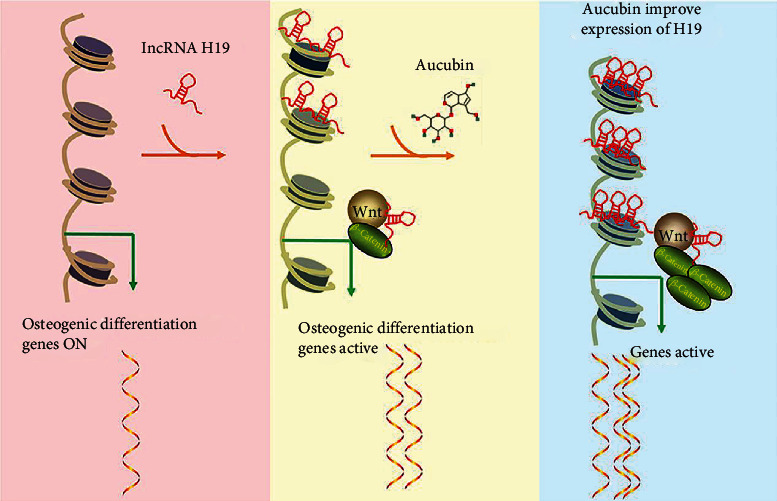
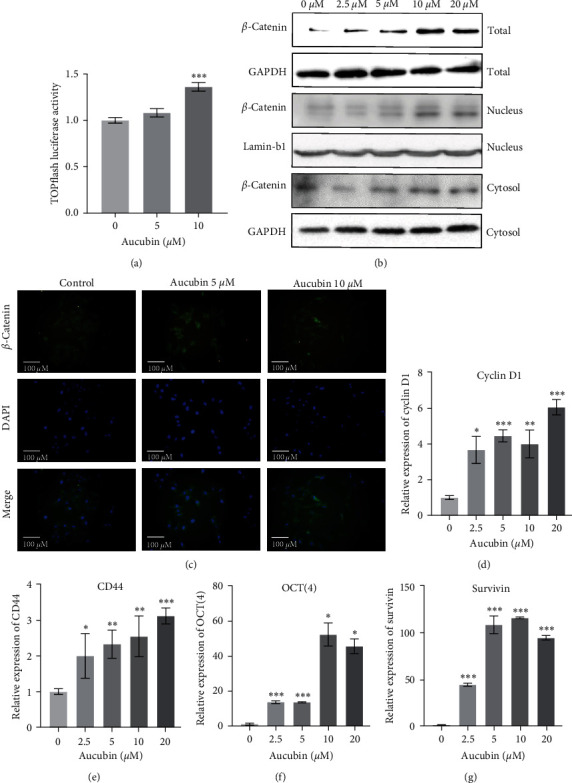
In the present study, Aucubin was found to significantly promote osteogenic differentiation and stimulated bone formation . Regarding to the underlying mechanism, H19 was found to be obviously upregulated by Aucubin in MSCs and thus induced the activation of Wnt/-catenin signaling. Moreover, H19 knockdown partially reversed the Aucubin-induced osteogenic differentiation and successfully suppressed the activation of Wnt/-catenin signaling. We therefore suggested that Aucubin induced the activation of Wnt/-catenin signaling through promoting H19 expression.
Our results demonstrated that Aucubin promoted osteogenesis and facilitated fracture healing through the H19-Wnt/-catenin regulatory axis.
中医用于治疗骨折已有数百年历史,对骨折愈合有显著改善作用。桃叶珊瑚苷是从[具体植物]中分离出的一种衍生物,已被证明具有抗炎、免疫调节和抗氧化潜力。在本研究中,我们旨在探索其在骨再生中的作用并阐明潜在机制。
分别在小鼠骨髓间充质干细胞(BM-MSCs)和RAW 264.7细胞中检测桃叶珊瑚苷对成骨细胞和破骨细胞的影响。此外,通过qPCR检测、蛋白质免疫印迹法和荧光素酶活性测定来检测长链非编码RNA H19和Wnt/β-连环蛋白信号通路。使用股骨骨折小鼠模型,通过X射线、显微CT、组织形态计量学和免疫组织化学染色监测桃叶珊瑚苷对骨形成的影响。
在本研究中,发现桃叶珊瑚苷能显著促进成骨分化并刺激骨形成。关于潜在机制,发现桃叶珊瑚苷在间充质干细胞中明显上调H19,从而诱导Wnt/β-连环蛋白信号通路的激活。此外,H19基因敲低部分逆转了桃叶珊瑚苷诱导的成骨分化,并成功抑制了Wnt/β-连环蛋白信号通路的激活。因此,我们认为桃叶珊瑚苷通过促进H19表达诱导Wnt/β-连环蛋白信号通路的激活。
我们的结果表明,桃叶珊瑚苷通过H19-Wnt/β-连环蛋白调节轴促进成骨并促进骨折愈合。