Wang Qin, Kline Enos C, Gilligan-Steinberg Shane D, Lai James J, Hull Ian T, Olanrewaju Ayokunle O, Panpradist Nuttada, Lutz Barry R
Department of Bioengineering, University of Washington, Seattle, WA, USA.
Department of Materials Science and Engineering, National Taiwan University of Science and Technology, Taipei, Taiwan.
medRxiv. 2024 Apr 1:2024.03.29.24305085. doi: 10.1101/2024.03.29.24305085.
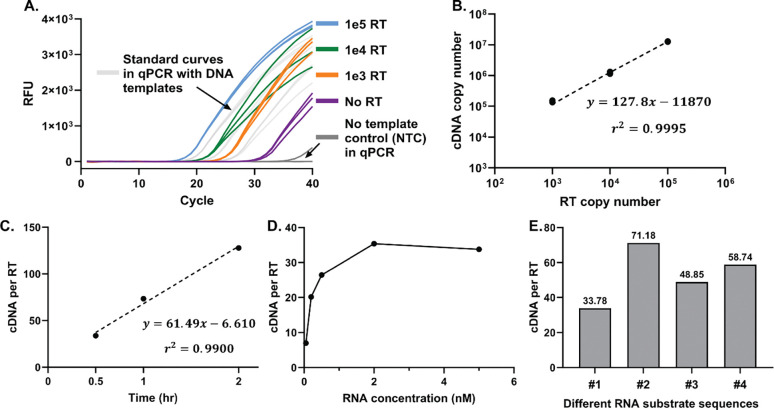
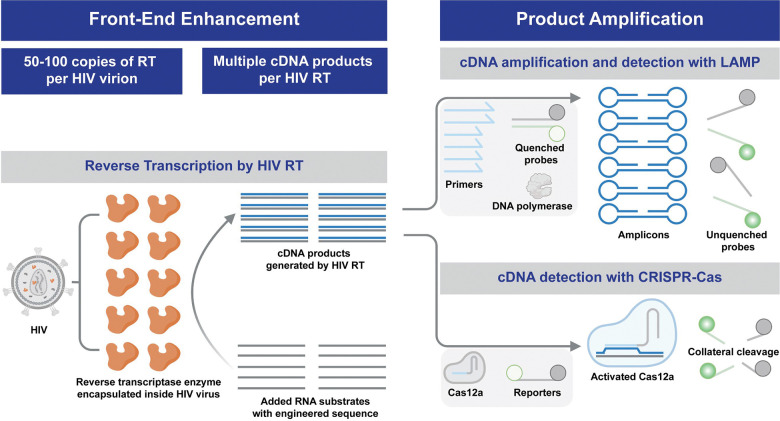
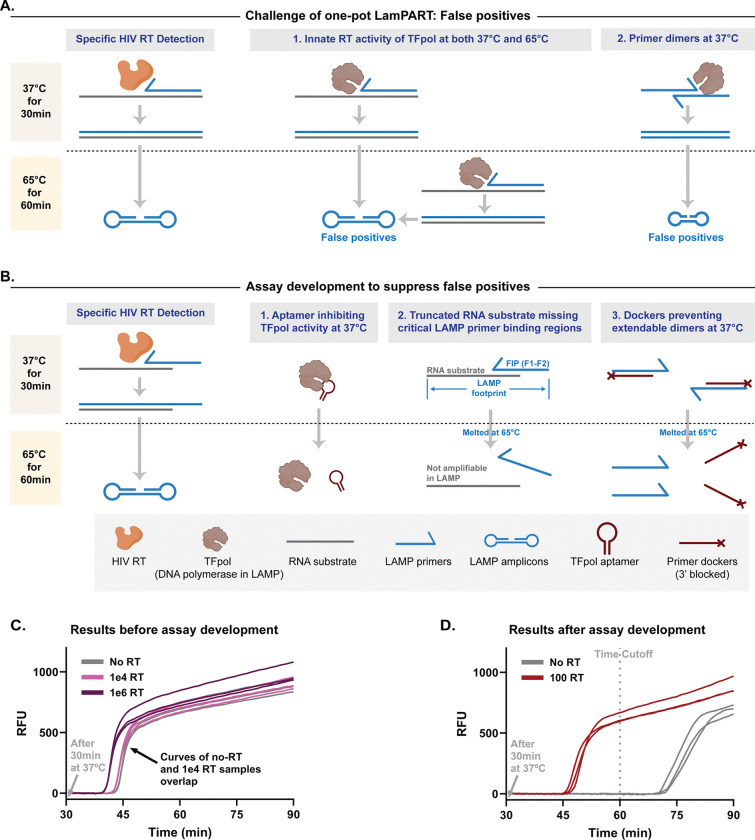
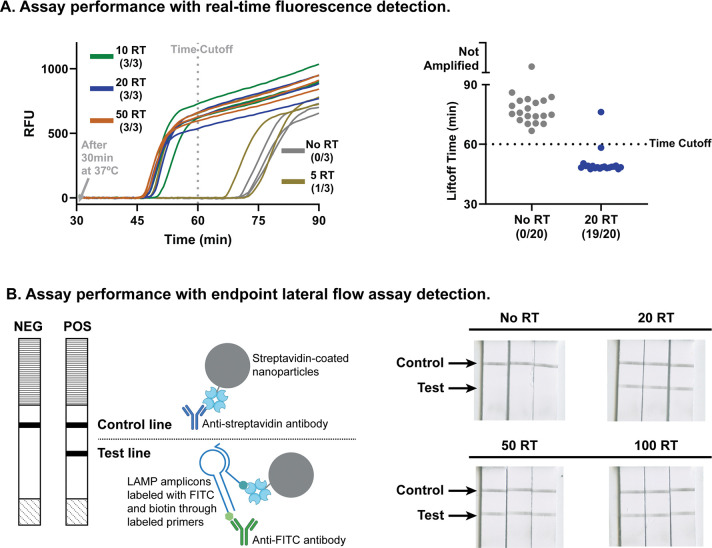
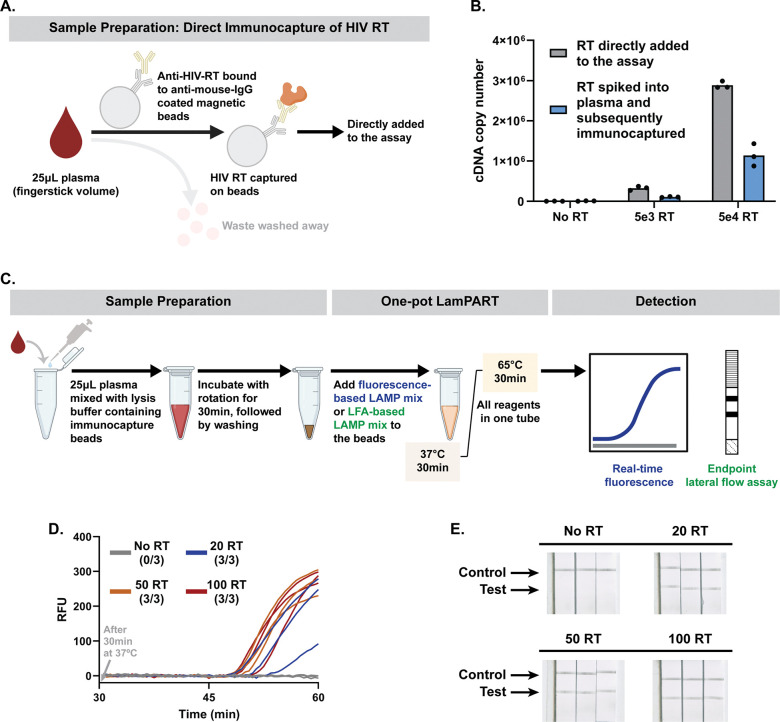
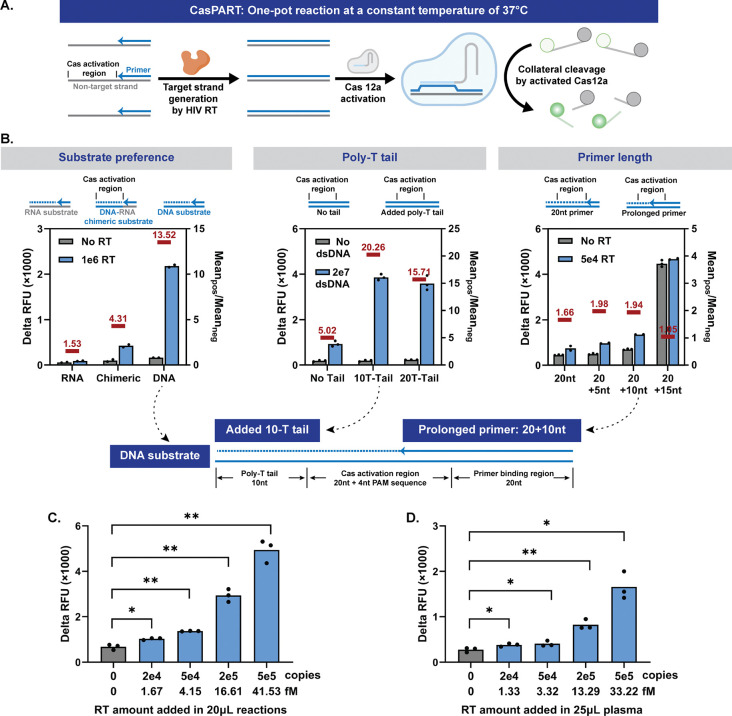
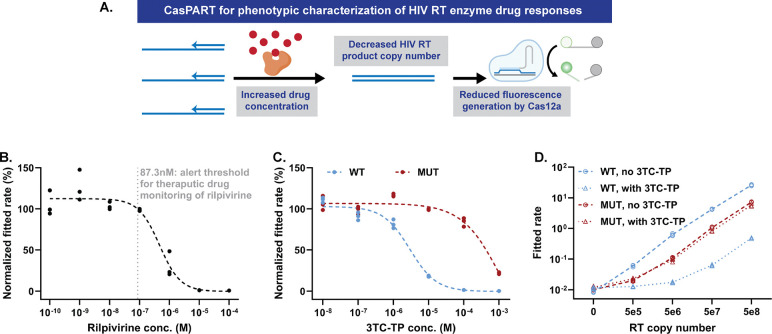
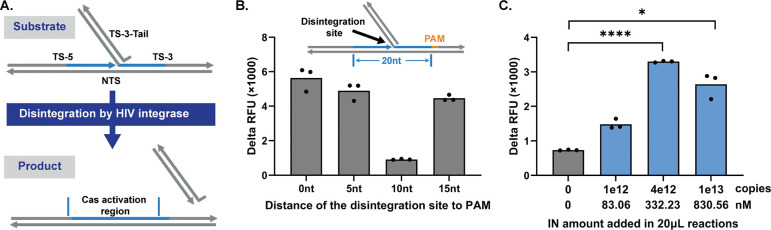
Pathogens encapsulate or encode their own suite of enzymes to facilitate replication in the host. The pathogen-derived enzymes possess specialized activities that are essential for pathogen replication and have naturally been candidates for drug targets. Phenotypic assays detecting the activities of pathogen-derived enzymes and characterizing their inhibition under drugs offer an opportunity for pathogen detection, drug resistance testing for individual patients, and as a research tool for new drug development. Here, we used HIV as an example to develop assays targeting the reverse transcriptase (RT) enzyme encapsulated in HIV for sensitive detection and phenotypic characterization, with the potential for point-of-care (POC) applications. Specifically, we targeted the complementary (cDNA) generation activity of the HIV RT enzyme by adding engineered RNA as substrates for HIV RT enzyme to generate cDNA products, followed by cDNA amplification and detection facilitated by loop-mediated isothermal amplification (LAMP) or CRISPR-Cas systems. To guide the assay design, we first used qPCR to characterize the cDNA generation activity of HIV RT enzyme. In the LAMP-mediated Product-Amplified RT activity assay (LamPART), the cDNA generation and LAMP amplification were combined into one pot with novel assay designs. When coupled with direct immunocapture of HIV RT enzyme for sample preparation and endpoint lateral flow assays for detection, LamPART detected as few as 20 copies of HIV RT enzyme spiked into 25μL plasma (fingerstick volume), equivalent to a single virion. In the Cas-mediated Product-Amplified RT activity assay (CasPART), we tailored the substrate design to achieve a LoD of 2e4 copies (1.67fM) of HIV RT enzyme. Furthermore, with its phenotypic characterization capability, CasPART was used to characterize the inhibition of HIV RT enzyme under antiretroviral drugs and differentiate between wild-type and mutant HIV RT enzyme for potential phenotypic drug resistance testing. Moreover, the CasPART assay can be readily adapted to target the activity of other pathogen-derived enzymes. As a proof-of-concept, we successfully adapted CasPART to detect HIV integrase with a sensitivity of 83nM. We anticipate the developed approach of detecting enzyme activity with product amplification has the potential for a wide range of pathogen detection and phenotypic characterization.
病原体包裹或编码自身的一套酶,以促进在宿主体内的复制。病原体衍生的酶具有专门的活性,这些活性对于病原体复制至关重要,并且自然成为药物靶点的候选对象。检测病原体衍生酶的活性并表征其在药物作用下的抑制情况的表型分析,为病原体检测、个体患者的耐药性测试以及作为新药开发的研究工具提供了机会。在此,我们以人类免疫缺陷病毒(HIV)为例,开发针对HIV中包裹的逆转录酶(RT)的分析方法,用于灵敏检测和表型表征,并具有即时检测(POC)应用的潜力。具体而言,我们通过添加工程化RNA作为HIV RT酶的底物来产生互补DNA(cDNA)产物,从而靶向HIV RT酶的互补DNA生成活性,随后通过环介导等温扩增(LAMP)或CRISPR-Cas系统促进cDNA扩增和检测。为指导分析方法的设计,我们首先使用定量聚合酶链反应(qPCR)来表征HIV RT酶的cDNA生成活性。在LAMP介导的产物扩增RT活性分析(LamPART)中,cDNA生成和LAMP扩增通过新颖的分析设计整合在一个反应体系中。当与用于样品制备的HIV RT酶直接免疫捕获以及用于检测的终点侧向流动分析相结合时,LamPART能够检测到低至20拷贝掺入25μL血浆(指尖采血体积)中的HIV RT酶,相当于单个病毒粒子。在Cas介导的产物扩增RT活性分析(CasPART)中,我们定制底物设计以实现HIV RT酶2×10⁴拷贝(1.67飞摩尔)的检测限。此外,凭借其表型表征能力,CasPART用于表征抗逆转录病毒药物作用下HIV RT酶的抑制情况,并区分野生型和突变型HIV RT酶,以进行潜在的表型耐药性测试。此外,CasPART分析可以很容易地调整以靶向其他病原体衍生酶的活性。作为概念验证,我们成功地将CasPART调整为检测HIV整合酶,灵敏度为83纳摩尔。我们预计所开发的通过产物扩增检测酶活性的方法具有广泛用于病原体检测和表型表征的潜力。