Gao Yong, Yin Si
College of Biological Resource and Food Engineering, Qujing Normal University, Qujing, Yunnan, China.
Mitochondrial DNA B Resour. 2024 Apr 16;9(4):522-526. doi: 10.1080/23802359.2024.2342934. eCollection 2024.
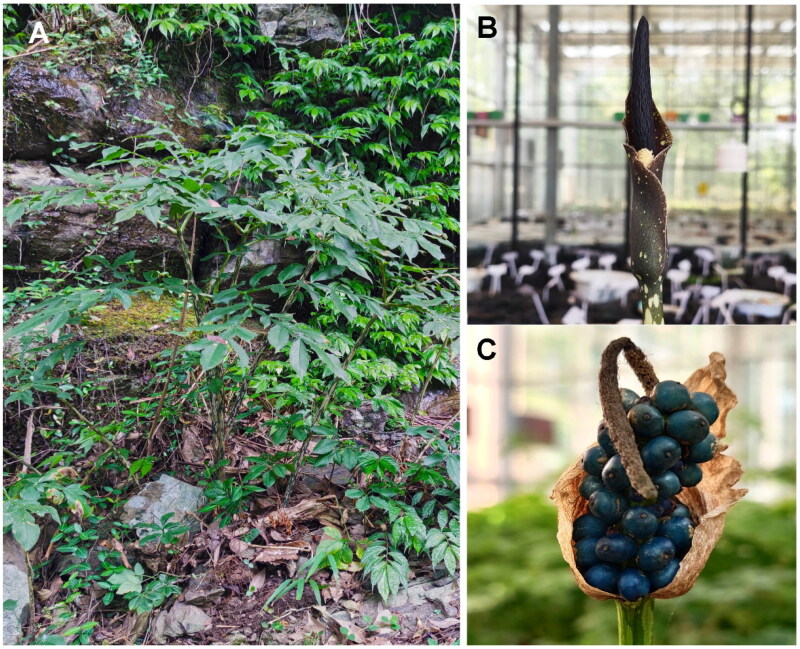
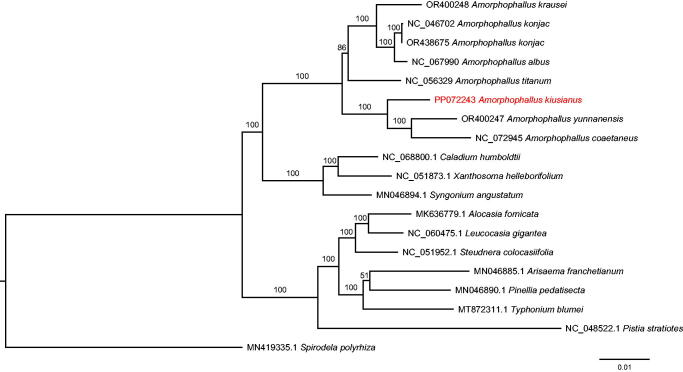
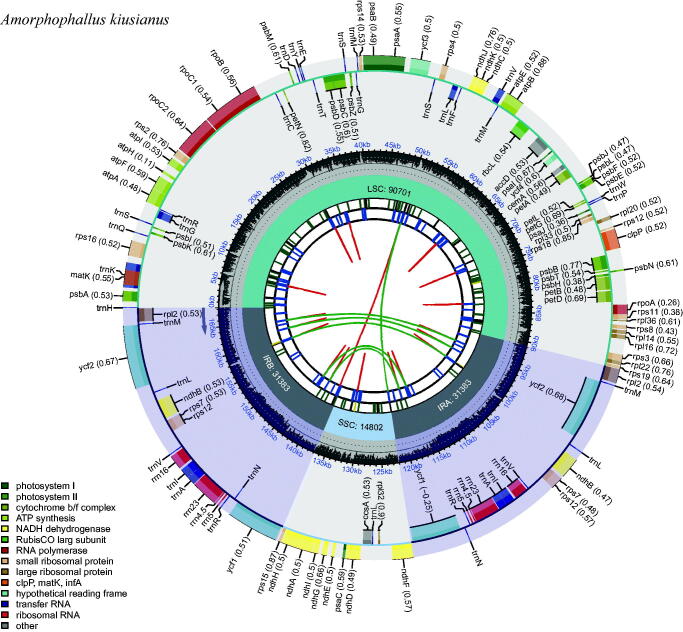
The mountainous region of southern China has been characterized by its complicated environment and topography. Makino 1913 is a representative species of extreme habitat preference that resides mainly in this region. To help study the genetic differentiation mechanisms of populations, we sequenced the first chloroplast genome of this species using next-generation sequencing. The chloroplast genome was 166,269 bp in length with an average GC content of 36% (GenBank accession number: PP072243). The lengths of the large single-copy region (LSC), small single-copy region (SSC), and two inverted repeats (IRs) were 90,701 bp, 14,802 bp, 31,383 bp, and 31,383 bp, respectively. One hundred and twenty-nine genes were annotated in the chloroplast genome, including 84 protein-coding genes, 8 rRNA genes, and 37 tRNA genes. The phylogenetic tree suggested a close relationship among , , and . The chloroplast genome reported in this study provides valuable genomic resources for the future phylogeographic research of .
中国南方山区环境和地形复杂。牧野1913是主要栖息于该地区的极端生境偏好的代表性物种。为了帮助研究种群的遗传分化机制,我们利用二代测序技术对该物种的首个叶绿体基因组进行了测序。叶绿体基因组长度为166,269 bp,平均GC含量为36%(GenBank登录号:PP072243)。大单拷贝区(LSC)、小单拷贝区(SSC)和两个反向重复序列(IR)的长度分别为90,701 bp、14,802 bp、31,383 bp和31,383 bp。叶绿体基因组中注释了129个基因,包括84个蛋白质编码基因、8个rRNA基因和37个tRNA基因。系统发育树表明[此处原文缺失具体物种名称]、[此处原文缺失具体物种名称]和[此处原文缺失具体物种名称]之间关系密切。本研究报道的叶绿体基因组为[此处原文缺失具体物种名称]未来的系统地理学研究提供了有价值的基因组资源。