Cragg William J, Bishop Liam, Gilberts Rachael, Gregg Michael, Lowdon Terry, Mancini Mary, Martins de Barros Clara, Wheatstone Pete
Clinical Trials Research Unit, Leeds Institute of Clinical Trials Research, University of Leeds, Leeds, UK.
Public contributor, Leeds, UK.
Res Involv Engagem. 2024 Apr 18;10(1):39. doi: 10.1186/s40900-024-00572-4.
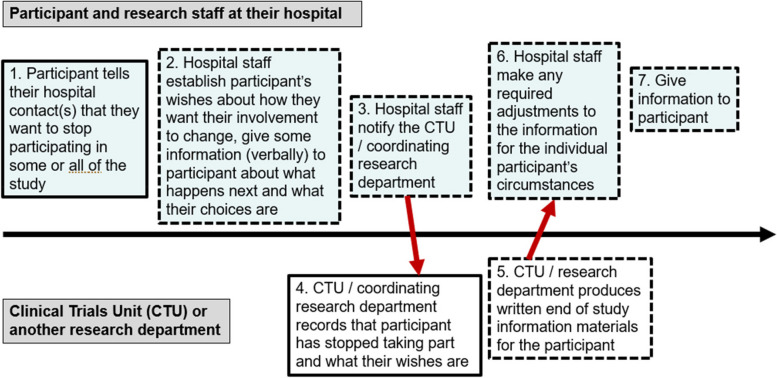
Research study participants can stop taking part early, in various circumstances. Sometimes this experience can be stressful. Providing participants with the information they want or need when they stop could improve participants' experiences, and may benefit individual studies' objectives and research in general. A group of public contributors and researchers at the Clinical Trials Research Unit, University of Leeds, aimed to develop a communication template and researcher guidance. This would address how to provide information sensitively around the time when participants stop or significantly reduce their level of participation.
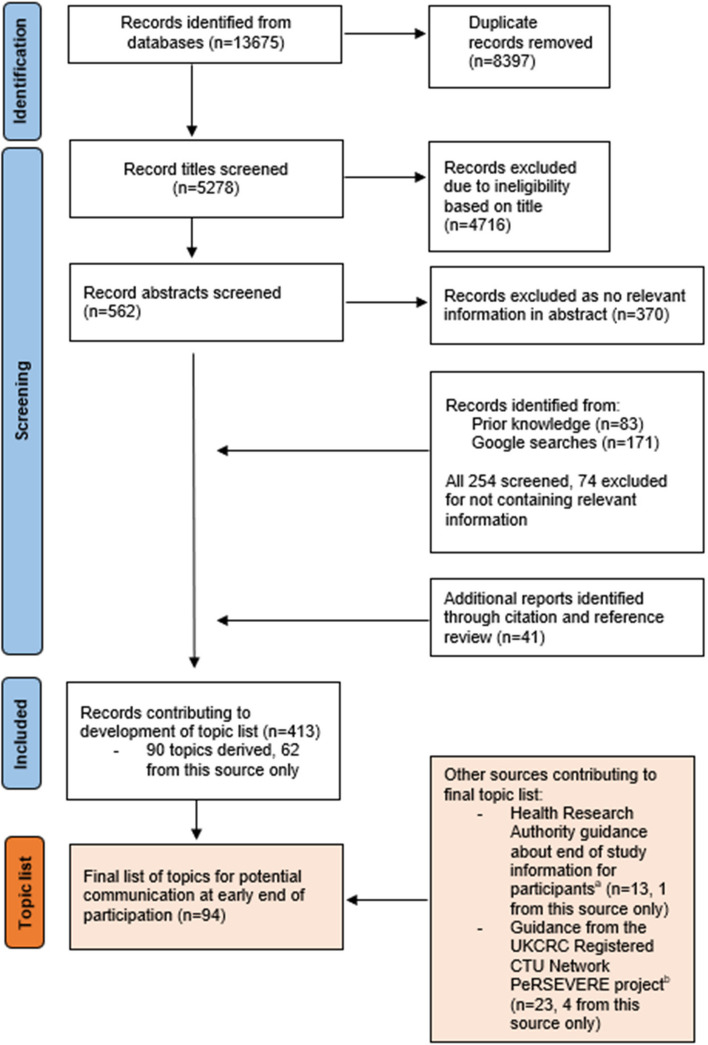
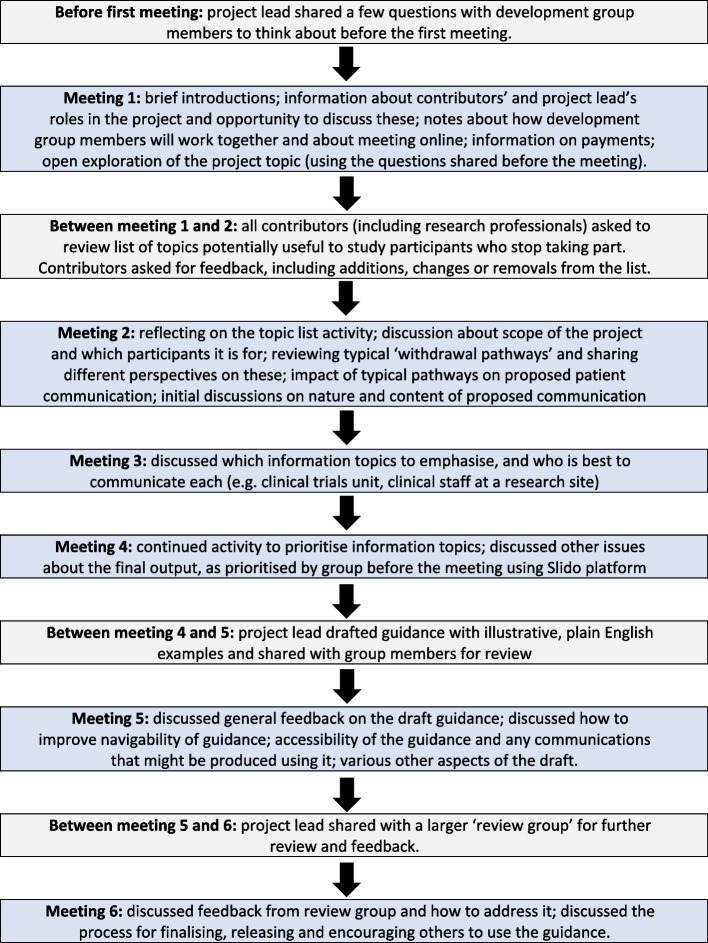
The project lead used scoping review methods to identify relevant prior evidence and derive a list of potential information topics to communicate to participants who stop taking part. The topic list was reviewed by research professionals and public contributors before finalisation. Further public contributors were identified from a range of networks. The contributors formed a 'development group', to work on the detail of the planned resources, and a larger 'review group' to review the draft output before finalisation. The involvement was planned so that the development group could shape the direction and pace of the work.
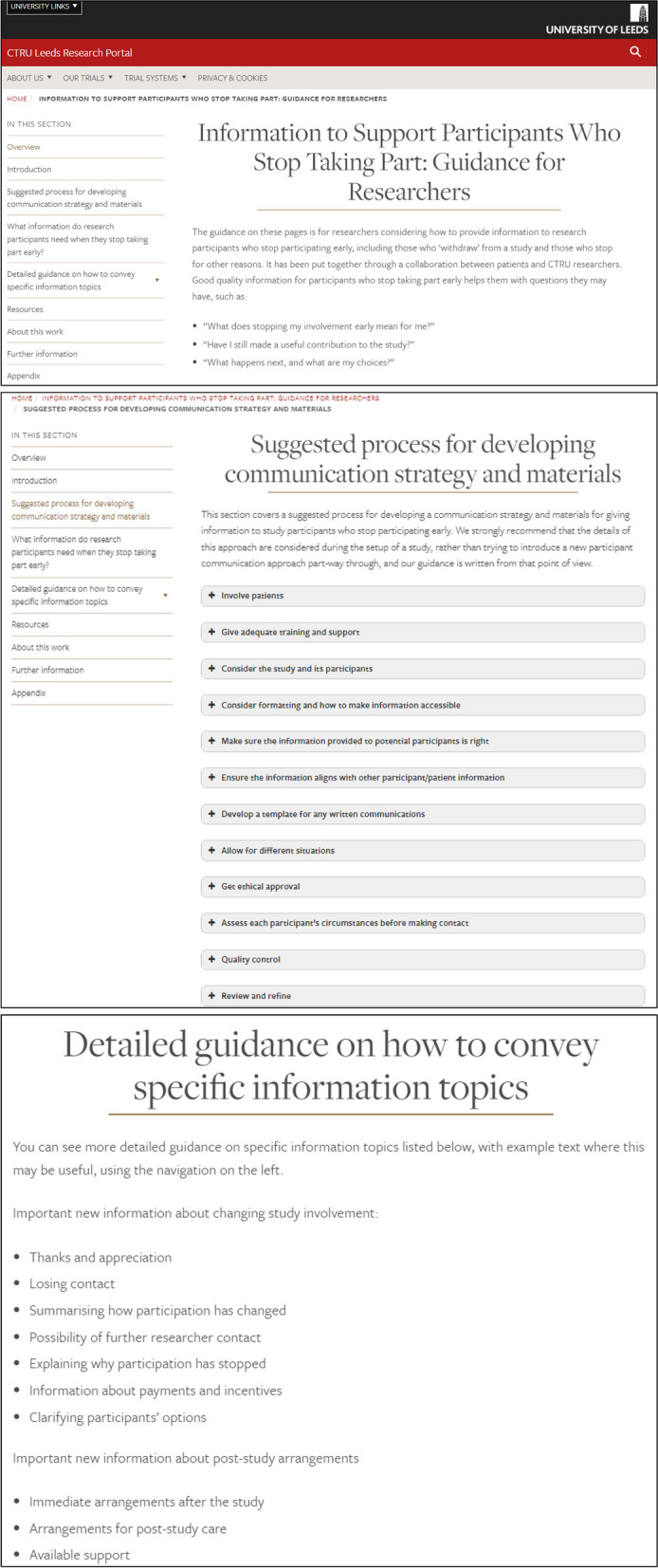
The literature review identified 413 relevant reports, resulting in 94 information topics. The review suggested that this issue has not been well explored previously. Some evidence suggested early-stopping participants are sometimes excluded from important communications (such as study results) without clear justification. The development group agreed early to focus on guidance with reusable examples rather than a template. We took time to explore different perspectives and made decisions by informal consensus. Review group feedback was broadly positive but highlighted the need to improve resource navigability, leading to its final online form.
We co-developed a resource to provide support to research participants who stop taking part. A strength of this work is that several of the public contributors have direct lived experience of stopping research participation. We encourage others to review the resource and consider how they support these participants in their studies. Our work highlights the value of researchers and participants working together, including on complex and ethically challenging topics.
在各种情况下,研究参与者可以提前退出研究。有时这种经历可能会带来压力。在参与者退出时提供他们想要或需要的信息,可能会改善参与者的体验,并可能有利于个别研究的目标以及整个研究工作。利兹大学临床试验研究单位的一群公众贡献者和研究人员旨在制定一个沟通模板和研究人员指南。这将解决如何在参与者停止或大幅减少参与程度时,敏感地提供信息的问题。
项目负责人采用范围审查方法来识别相关的先前证据,并得出一份潜在信息主题清单,以便传达给停止参与的参与者。在最终确定之前,该主题清单由研究专业人员和公众贡献者进行了审查。从一系列网络中确定了更多的公众贡献者。这些贡献者组成了一个“开发小组”,负责处理计划资源的细节,以及一个更大的“审查小组”,在最终确定之前审查草案输出。计划中的参与方式是,开发小组可以塑造工作的方向和节奏。
文献综述确定了413份相关报告,产生了94个信息主题。该综述表明,此前对这个问题的探讨并不充分。一些证据表明,提前退出的参与者有时会在没有明确理由的情况下被排除在重要沟通(如研究结果)之外。开发小组很早就同意专注于带有可重复使用示例的指南,而不是模板。我们花时间探索不同的观点,并通过非正式协商一致做出决定。审查小组的反馈总体上是积极的,但强调需要提高资源的可导航性,从而形成了最终的在线形式。
我们共同开发了一种资源,为停止参与的研究参与者提供支持。这项工作的一个优点是,一些公众贡献者有直接的停止参与研究的亲身经历。我们鼓励其他人审查该资源,并考虑他们如何在研究中支持这些参与者。我们的工作凸显了研究人员和参与者共同合作的价值,包括在复杂且具有伦理挑战性的主题上的合作。