School of Kinesiology and Health Science Muscle Health Research Centre, York University, 4700 Keele St, Toronto, ON, M3J 1P3, Canada.
Skelet Muscle. 2024 Apr 20;14(1):7. doi: 10.1186/s13395-024-00339-1.
Muscle atrophy is a common consequence of the loss of innervation and is accompanied by mitochondrial dysfunction. Mitophagy is the adaptive process through which damaged mitochondria are removed via the lysosomes, which are regulated in part by the transcription factor TFE3. The role of lysosomes and TFE3 are poorly understood in muscle atrophy, and the effect of biological sex is widely underreported.
Wild-type (WT) mice, along with mice lacking TFE3 (KO), a transcriptional regulator of lysosomal and autophagy-related genes, were subjected to unilateral sciatic nerve denervation for up to 7 days, while the contralateral limb was sham-operated and served as an internal control. A subset of animals was treated with colchicine to capture mitophagy flux.
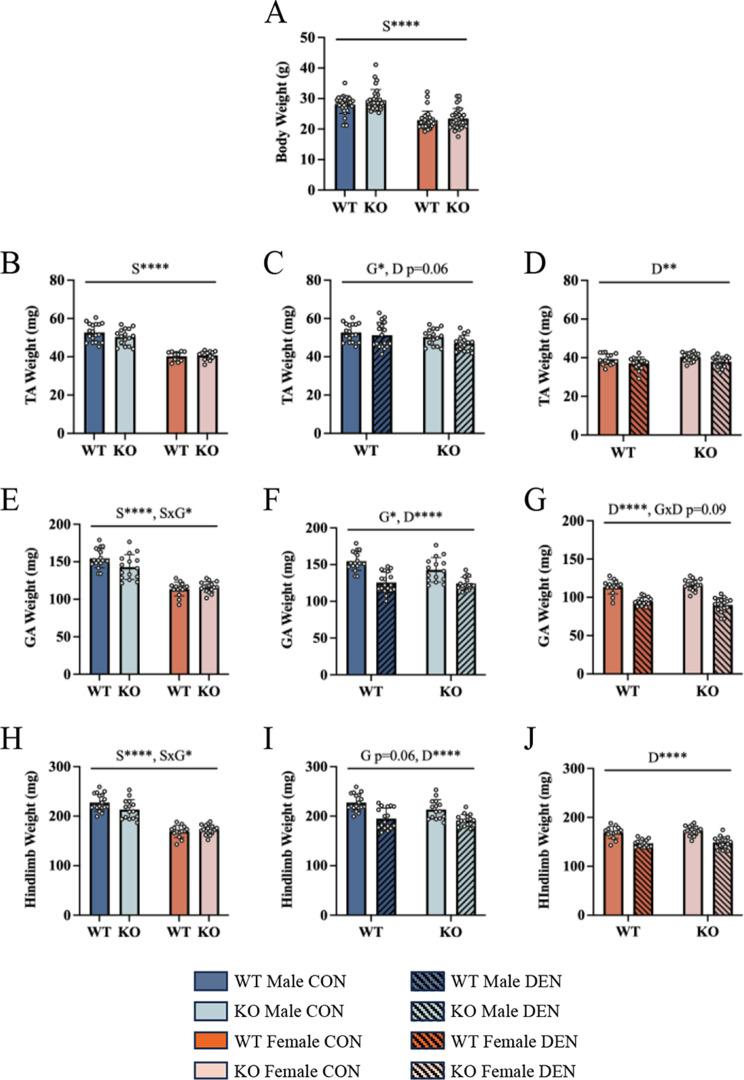
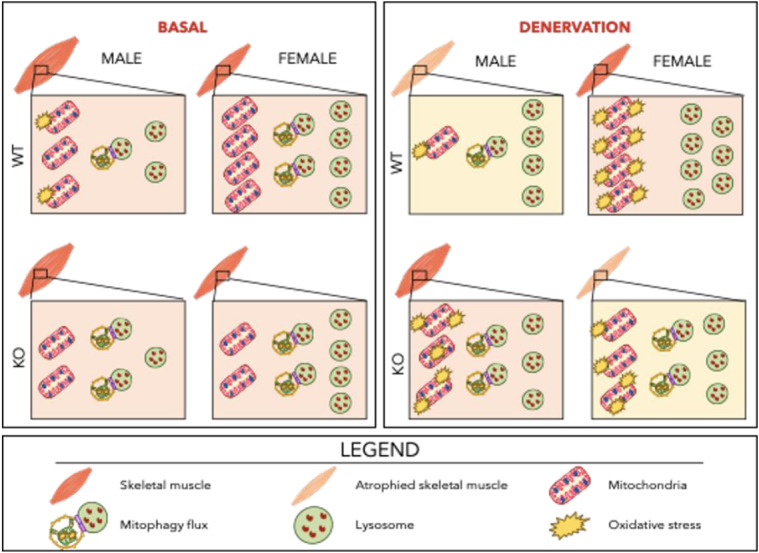
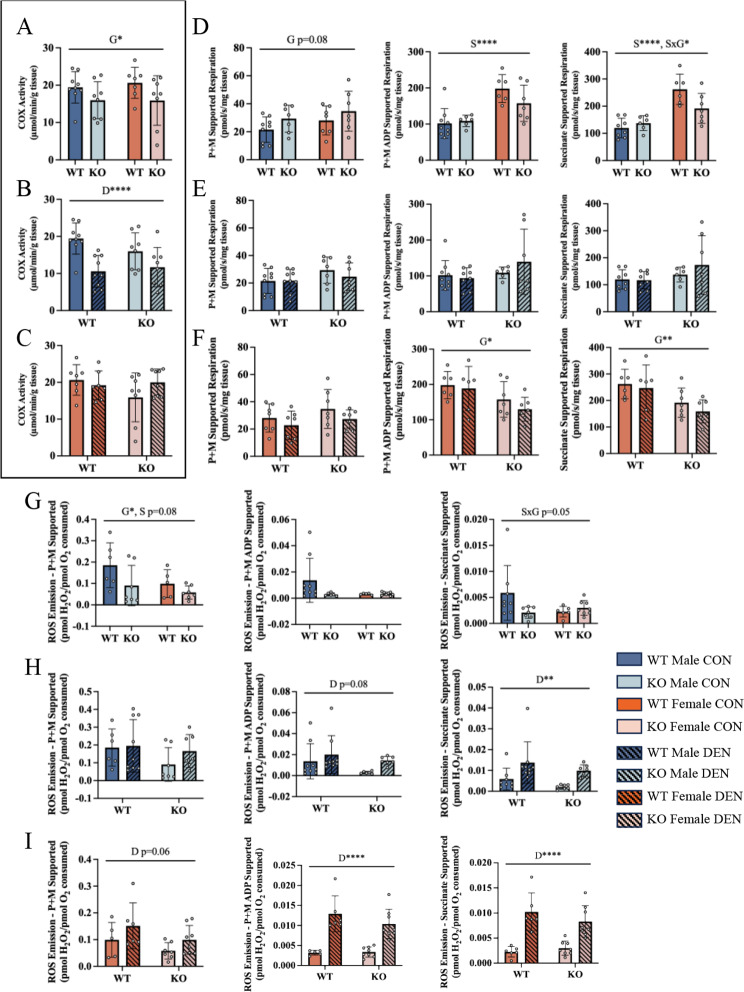
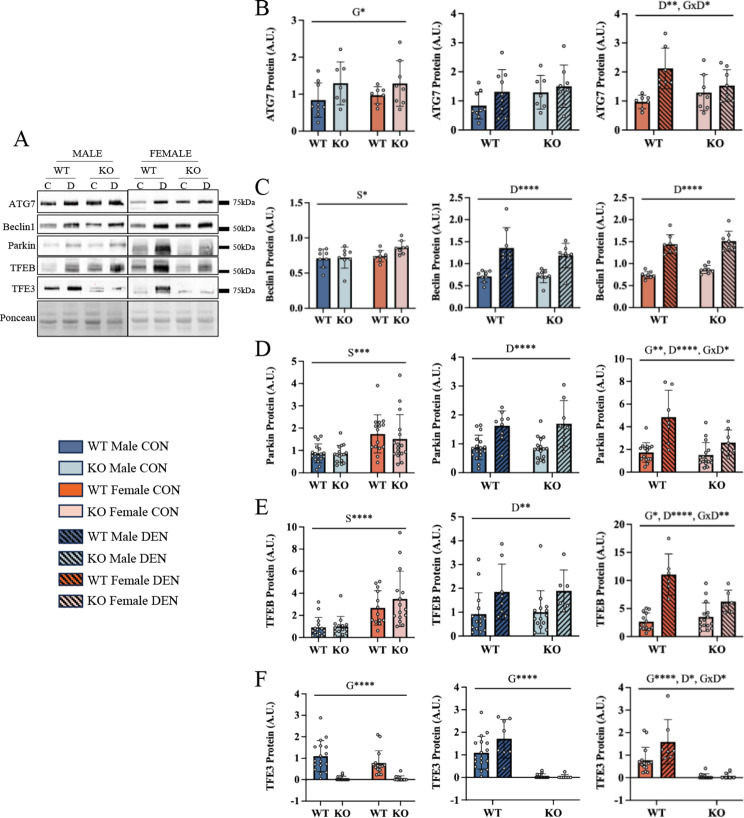
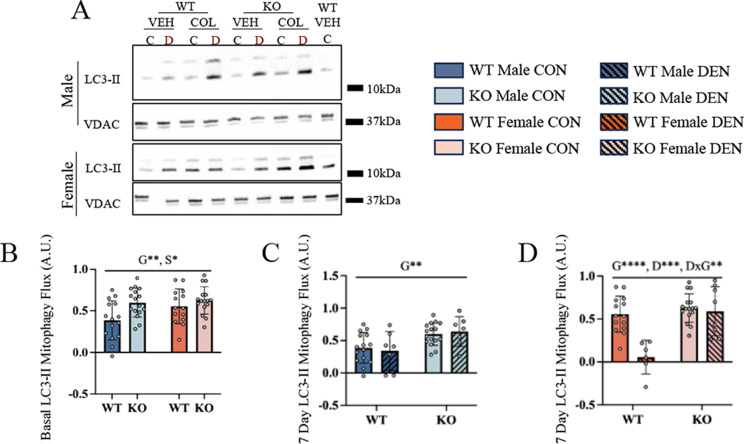
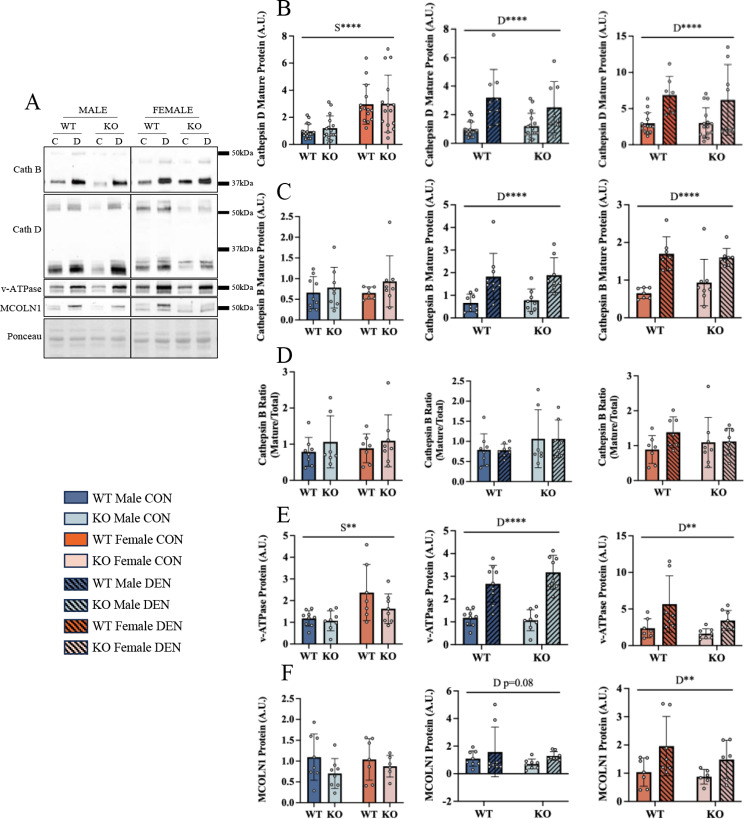
WT females exhibited elevated oxygen consumption rates during active respiratory states compared to males, however this was blunted in the absence of TFE3. Females exhibited higher mitophagy flux rates and greater lysosomal content basally compared to males that was independent of TFE3 expression. Following denervation, female mice exhibited less muscle atrophy compared to male counterparts. Intriguingly, this sex-dependent muscle sparing was lost in the absence of TFE3. Denervation resulted in 45% and 27% losses of mitochondrial content in WT and KO males respectively, however females were completely protected against this decline. Decreases in mitochondrial function were more severe in WT females compared to males following denervation, as ROS emission was 2.4-fold higher. In response to denervation, LC3-II mitophagy flux was reduced by 44% in females, likely contributing to the maintenance of mitochondrial content and elevated ROS emission, however this response was dysregulated in the absence of TFE3. While both males and females exhibited increased lysosomal content following denervation, this response was augmented in females in a TFE3-dependent manner.
Females have higher lysosomal content and mitophagy flux basally compared to males, likely contributing to the improved mitochondrial phenotype. Denervation-induced mitochondrial adaptations were sexually dimorphic, as females preferentially preserve content at the expense of function, while males display a tendency to maintain mitochondrial function. Our data illustrate that TFE3 is vital for the sex-dependent differences in mitochondrial function, and in determining the denervation-induced atrophy phenotype.
肌肉萎缩是失去神经支配的常见后果,伴随着线粒体功能障碍。自噬是一种适应性过程,通过溶酶体清除受损的线粒体,而溶酶体部分受转录因子 TFE3 调节。溶酶体和 TFE3 在肌肉萎缩中的作用以及生物性别对其的影响尚未得到充分理解。
野生型(WT)小鼠以及缺乏 TFE3(KO)的转录调节因子的溶酶体和自噬相关基因的小鼠,接受单侧坐骨神经切断术,最长达 7 天,而对侧肢体进行假手术作为内部对照。一部分动物用秋水仙碱处理以捕获线粒体自噬通量。
WT 雌性在主动呼吸状态下的耗氧量高于雄性,但在缺乏 TFE3 的情况下这种情况减弱。雌性在基础水平上表现出更高的线粒体自噬通量和更大的溶酶体含量,这与 TFE3 的表达无关。神经切断后,雌性小鼠的肌肉萎缩程度低于雄性。有趣的是,这种性别依赖性的肌肉保护在缺乏 TFE3 的情况下丧失。神经切断导致 WT 和 KO 雄性的线粒体含量分别损失 45%和 27%,而雌性则完全免受这种下降的影响。神经切断后,WT 雌性的线粒体功能下降比雄性更为严重,因为 ROS 发射高出 2.4 倍。神经切断后,LC3-II 线粒体自噬通量减少了 44%,这可能有助于维持线粒体含量和升高的 ROS 发射,但在缺乏 TFE3 的情况下,这种反应被失调。虽然雄性和雌性在神经切断后都表现出溶酶体含量增加,但这种反应在雌性中以 TFE3 依赖的方式增强。
雌性在基础水平上具有更高的溶酶体含量和线粒体自噬通量,这可能有助于改善线粒体表型。神经切断诱导的线粒体适应具有性别二态性,因为雌性优先以牺牲功能为代价来保留内容,而雄性则表现出维持线粒体功能的倾向。我们的数据表明,TFE3 对于性别依赖的线粒体功能差异以及确定神经切断诱导的萎缩表型至关重要。