
配电网中逆变器接口分布式电源的继电保护灵敏度综合优化配置与容量研究
Relay protection sensitivity integrated optimal placement and capacity of inverter interfaced distributed generators in distribution networks.
作者信息
Li Fei, Wang Deming, Li Yingliang
机构信息
School of Electronic Engineering, Xi'an Shiyou University, Xi'an, 710065, China.
Xi'an Key Laboratory of Intelligent Equipment Development for Oil, Gas and Renewable Energy, Xi'an Shiyou University, Xi'an, Shaanxi, 710065, China.
出版信息
Heliyon. 2024 Apr 11;10(8):e29138. doi: 10.1016/j.heliyon.2024.e29138. eCollection 2024 Apr 30.
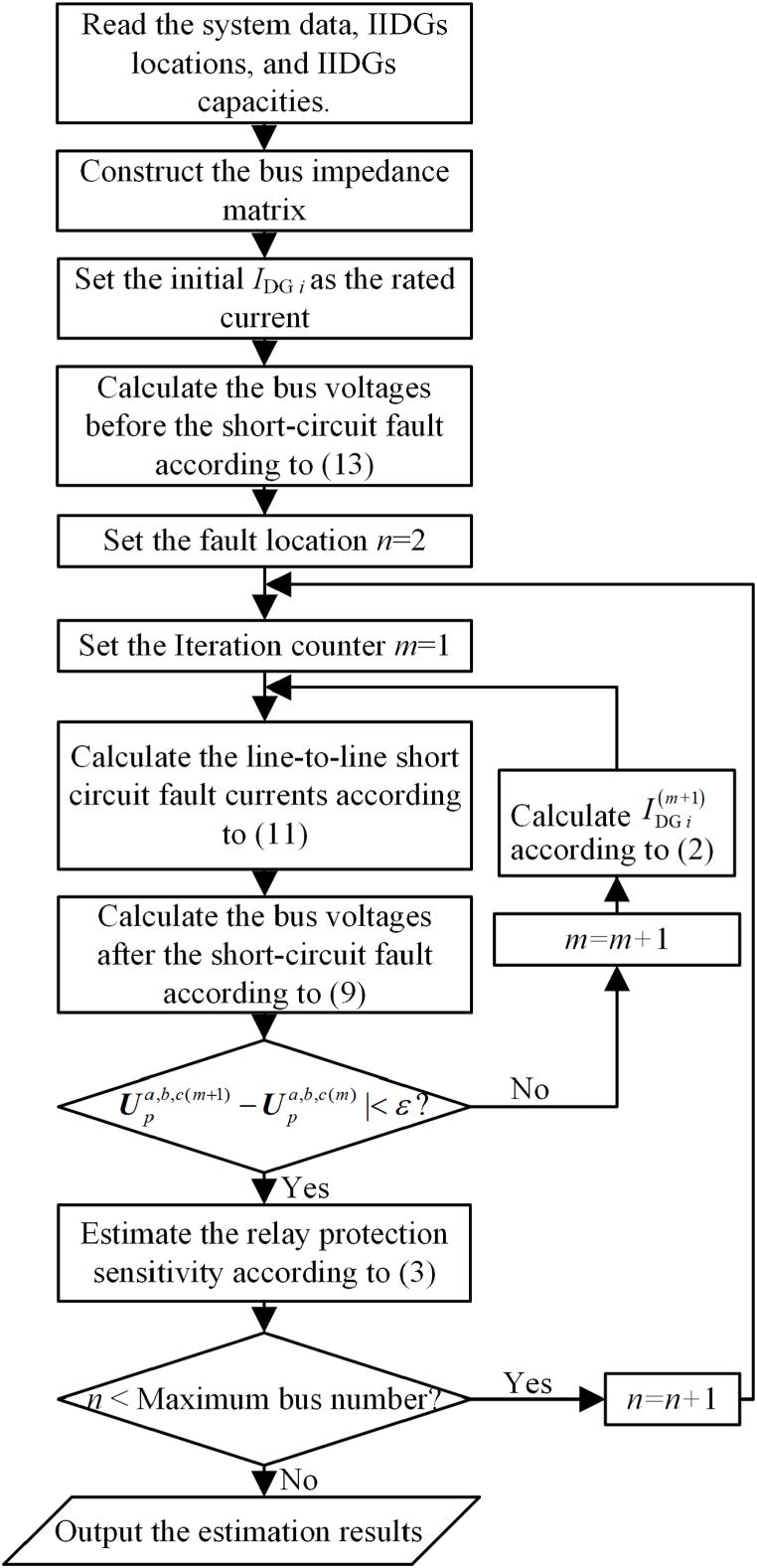
The relay protection sensitivity is one of the determined factors in the power system, however, it is often overlooked in current distribution network (DN) planning. The relay protection sensitivity can be decreased to below the minimum values, failing to meet the requirements for electrical installations. To address this challenge, a new optimization model integrated with the relay protection sensitivity to maximize the inverter interfaced distributed generator (IIDG) penetration level while minimizing IIDG investment was proposed in this paper. The IIDG effect on the relay protection sensitivity was analysed and the relay protection sensitivity re-evaluation method was developed. The relay protection sensitivity evaluation was integrated into the proposed model and the particle swarm optimization (PSO) algorithm was developed to solve the nonlinear issue. The proposed optimization method was tested on different cases, and results confirmed the effectiveness of the method. Furthermore, the relay sensitivity profiles obtained through the proposed method and the optimization without considering the relay sensitivity limits were compared. The proposed method improves the average and minimum sensitivity factors by 28.77 % and 51.76 %, respectively, when the DTO protection functions as the backup for the protected line in the thirty-three-node system. When DTO acts as the backup for the adjacent line, the average and minimum values increase by 29.91 % and 50.95 %, respectively. Comparative analysis confirms the efficacy of the proposed method. The new method extends the power system panning approaches and can be integrated into the DN planning tools to support the low-carbon initiatives.
继电保护灵敏度是电力系统中的决定性因素之一,然而,在当前配电网(DN)规划中它常常被忽视。继电保护灵敏度可能会降低到最小值以下,无法满足电气装置的要求。为应对这一挑战,本文提出了一种新的优化模型,该模型将继电保护灵敏度集成在内,以在使逆变器接入的分布式发电机(IIDG)投资最小化的同时,最大化IIDG的渗透率。分析了IIDG对继电保护灵敏度的影响,并开发了继电保护灵敏度重新评估方法。将继电保护灵敏度评估集成到所提出的模型中,并开发了粒子群优化(PSO)算法来解决非线性问题。在所提出的优化方法在不同案例上进行了测试,结果证实了该方法的有效性。此外,还比较了通过所提出的方法获得的继电保护灵敏度曲线与未考虑继电保护灵敏度限制的优化结果。当在三十三节点系统中DTO保护作为被保护线路的备用保护时,所提出的方法分别将平均灵敏度因子和最小灵敏度因子提高了28.77%和51.76%。当DTO作为相邻线路的备用保护时,平均值和最小值分别增加了29.91%和50.95%。对比分析证实了所提出方法的有效性。该新方法扩展了电力系统规划方法,并且可以集成到配电网规划工具中以支持低碳倡议。




 Zotero 插件