Aminifard Tahereh, Mehri Soghra, Ghasemzadeh Rahbardar Mahboobeh, Rajabian Fatemeh, Khajavi Rad Abolfazl, Hosseinzadeh Hossein
Department of Pharmacodynamics and Toxicology, School of Pharmacy, Mashhad University of Medical Sciences, Mashhad, Iran.
Pharmaceutical Research Center, Pharmaceutical Technology Institute, Mashhad University of Medical Sciences, Mashhad, Iran.
Iran J Basic Med Sci. 2024;27(6):768-774. doi: 10.22038/IJBMS.2024.75306.16322.
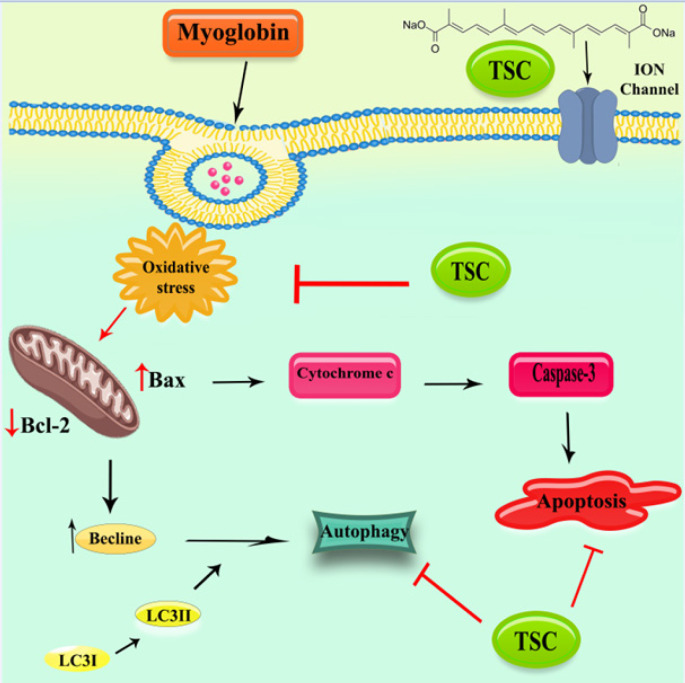
Rhabdomyolysis (RM) is a serious fatal syndrome. The RM leads to acute kidney injury (AKI) as a fatal complication. The belief is that RM-induced AKI is triggered by myoglobin (MB). MB activates oxidative and apoptotic pathways. Trans-sodium crocetinate (TSC) is obtained from saffron. It has anti-oxidant and renoprotective effects. This research was designed to assess the mechanisms of MB-induced cytotoxicity in HEK-293 cells (human embryonic kidney cells) as well as the possible effects of TSC against MB-induced cytotoxicity.
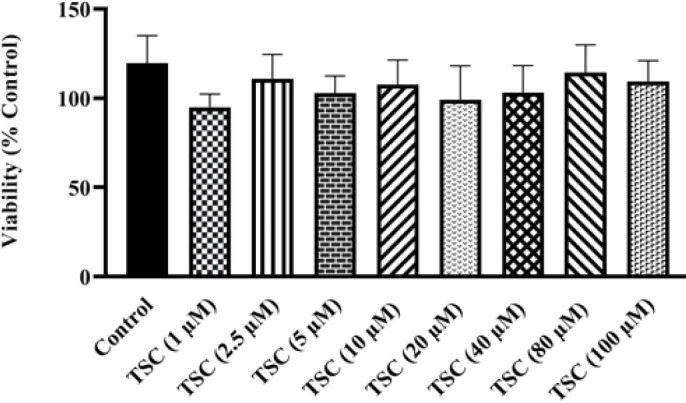
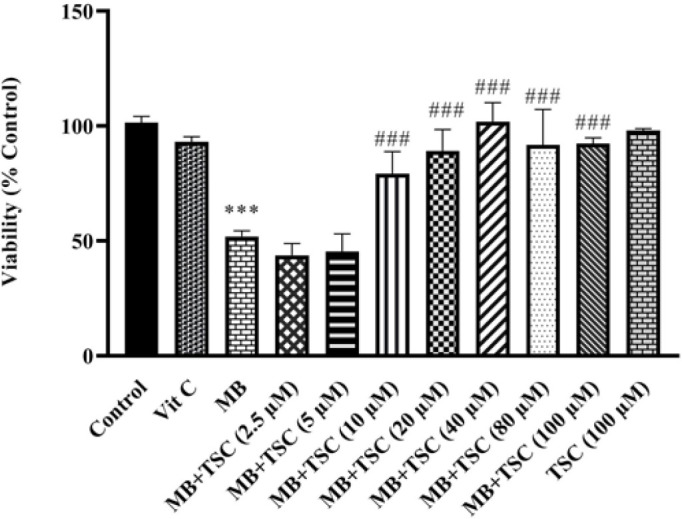
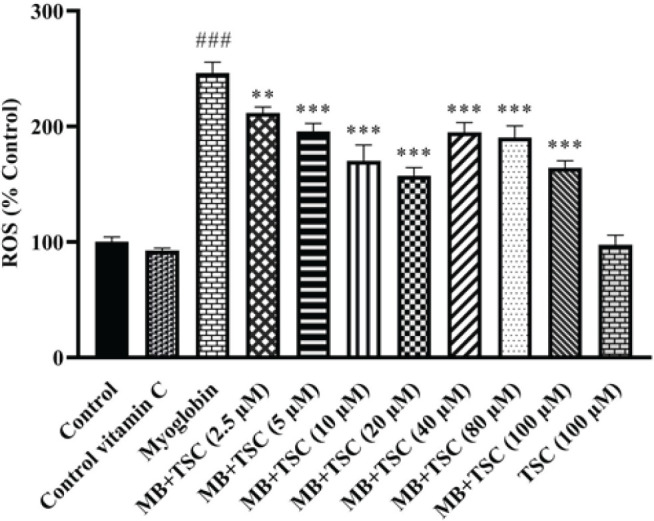
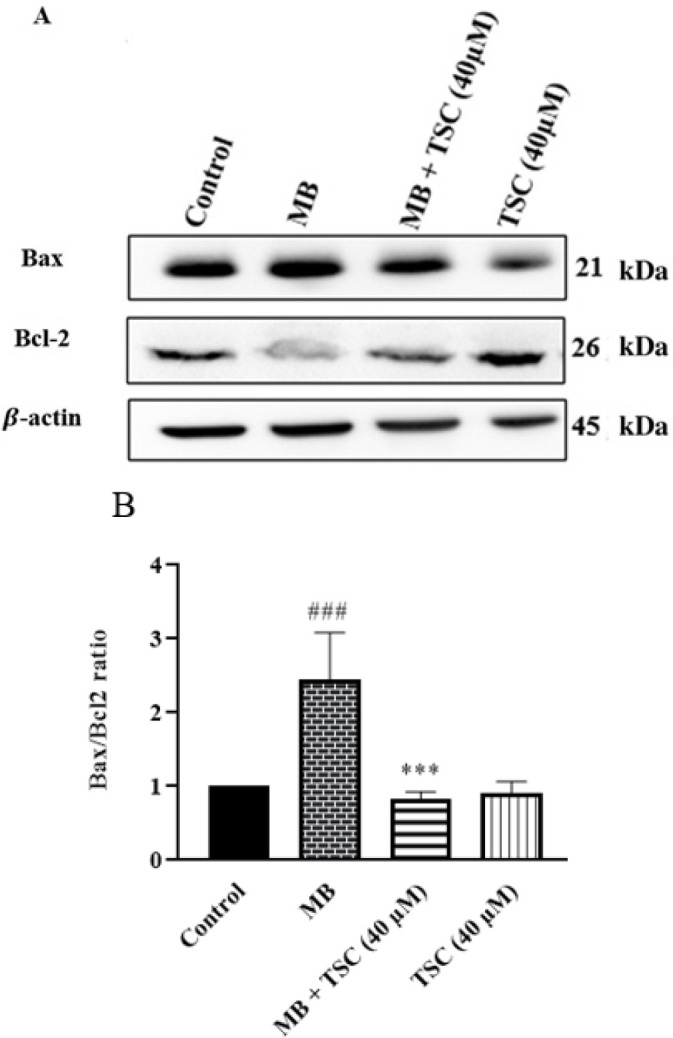
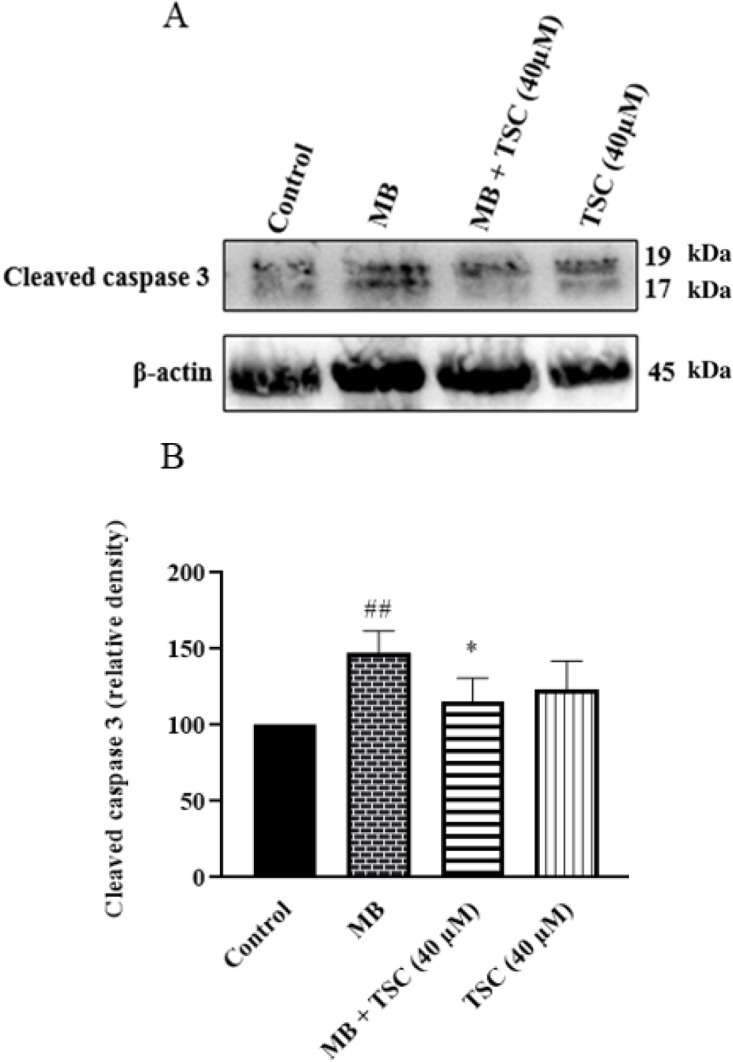
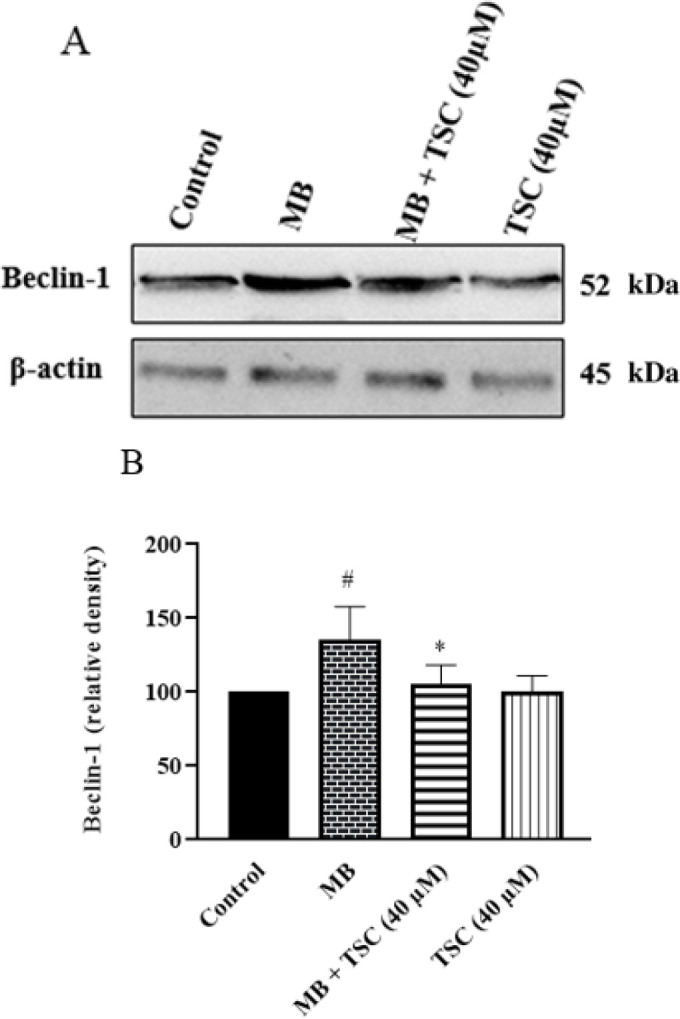
HEK-293 cells were exposed to diverse concentrations of TSC (2.5, 5, 10, 20, 40, 80, and 100 µM) for 24 hr. Then, MB (9 mg/ml) was added to the cells. After 24 hr, cell viability was measured through MTT, and the values of ROS generation were calculated using DCFH-DA assay. Also, autophagy and apoptosis markers in cells were assessed by western blot analysis.
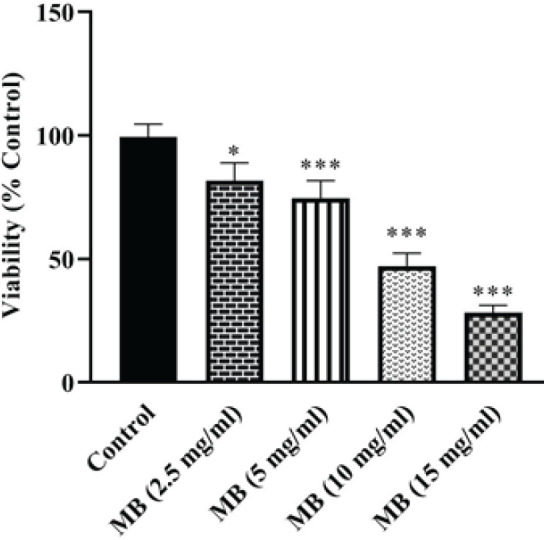
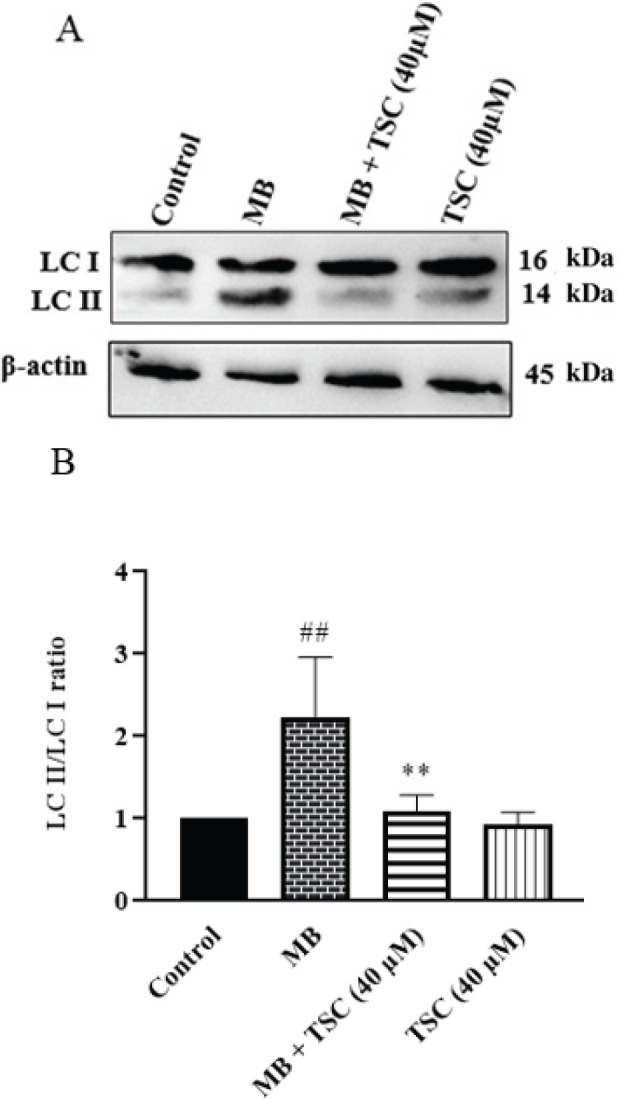
MB decreased viability and increased ROS levels in HEK-293 cells. However, pretreatment of HEK-293 cells with TSC for 24 hr reduced the cytotoxicity and ROS production caused by MB. Furthermore, MB enhanced both the apoptosis (cleaved caspase-3 and Bax/Bcl-2 ratio) and autophagy markers (LC3II/I ratio and Beclin-1) in HEK-293 cells. On the other hand, TSC pretreatment condensed the levels of autophagy and apoptosis criteria in response to MB cytotoxicity.
TSC has a positive effect in preventing MB-induced cytotoxicity in HEK-293 cells by increasing anti-oxidant activity and regulation of apoptotic and autophagy signaling pathways.
横纹肌溶解症(RM)是一种严重的致命综合征。RM会导致急性肾损伤(AKI)这一致命并发症。人们认为RM诱导的AKI是由肌红蛋白(MB)引发的。MB会激活氧化和凋亡途径。反式藏红花酸(TSC)源自藏红花。它具有抗氧化和肾脏保护作用。本研究旨在评估MB诱导人胚肾细胞(HEK - 293细胞)产生细胞毒性的机制,以及TSC对MB诱导的细胞毒性可能产生的影响。
将HEK - 293细胞暴露于不同浓度的TSC(2.5、5、10、20、40、80和100 μM)中24小时。然后,向细胞中加入MB(9 mg/ml)。24小时后,通过MTT法测量细胞活力,并使用DCFH - DA检测法计算活性氧生成值。此外,通过蛋白质免疫印迹分析评估细胞中的自噬和凋亡标志物。
MB降低了HEK - 293细胞的活力并提高了活性氧水平。然而,用TSC对HEK - 293细胞进行24小时预处理可降低MB引起的细胞毒性和活性氧生成。此外,MB增强了HEK - 293细胞中的凋亡(裂解的半胱天冬酶 - 3以及Bax/Bcl - 2比值)和自噬标志物(LC3II/I比值和Beclin - 1)。另一方面,TSC预处理降低了响应MB细胞毒性时的自噬水平和凋亡指标。
TSC通过增强抗氧化活性以及调节凋亡和自噬信号通路,对预防MB诱导的HEK - 293细胞毒性具有积极作用。