Eraslan Evren, Castelhano-Carlos Magda J, Amorim Liliana, Soares-Cunha Carina, Rodrigues Ana J, Sousa Nuno
Life and Health Sciences Research Institute (ICVS), School of Medicine, University of Minho, Braga, Portugal.
ICVS/3B's - PT Government Associate Laboratory, Guimarães, Portugal.
Neurobiol Stress. 2024 Apr 11;30:100635. doi: 10.1016/j.ynstr.2024.100635. eCollection 2024 May.
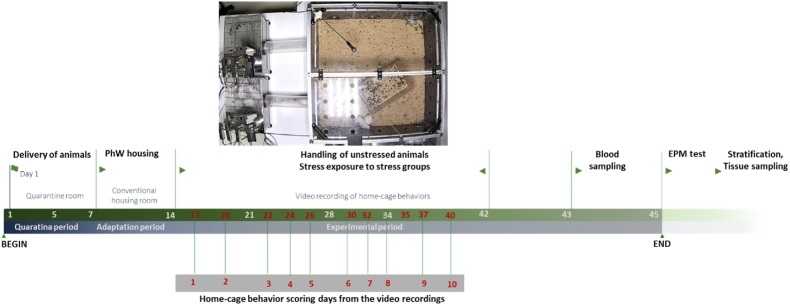
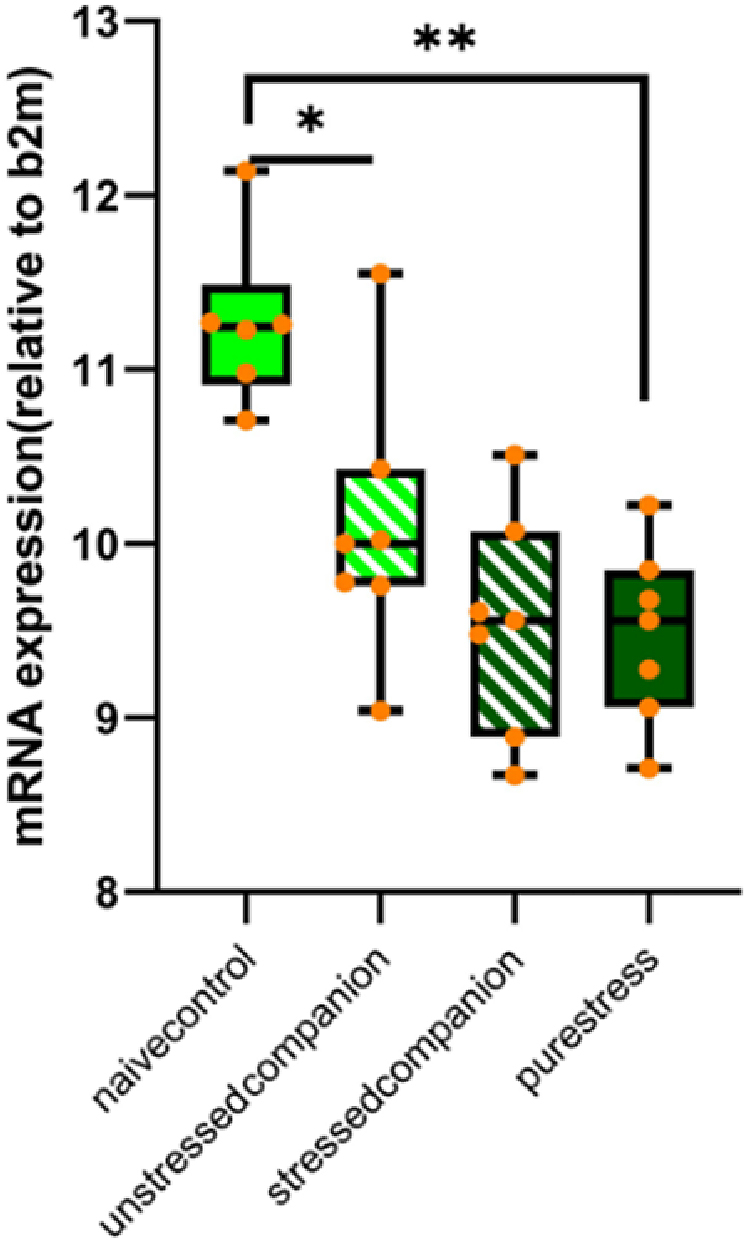
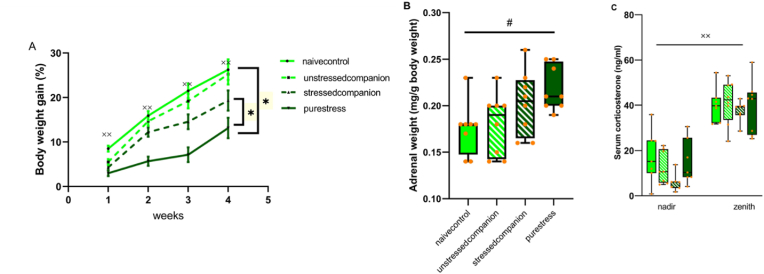
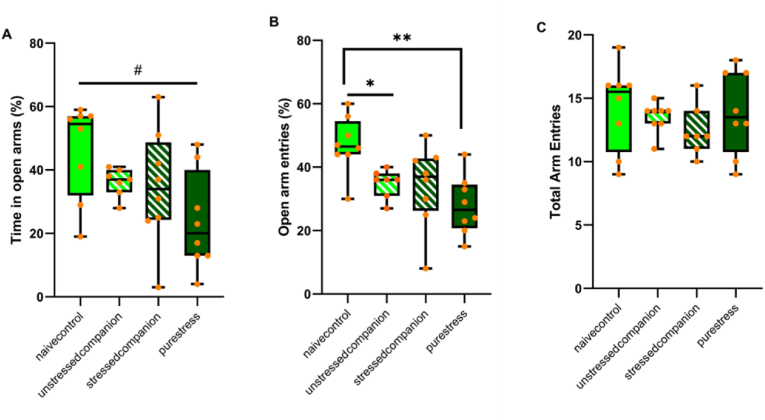
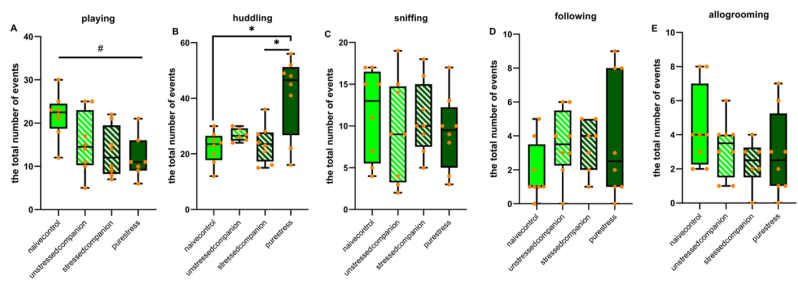
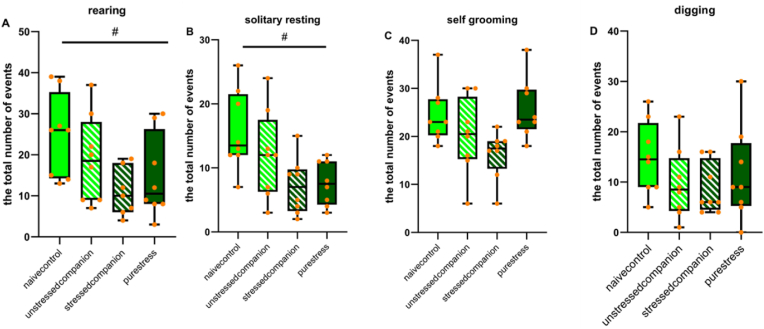
Rodents are sensitive to the emotional state of conspecifics. While the presence of affiliative social partners mitigates the physiological response to stressors (buffering), the partners of stressed individuals show behavioral and endocrine changes indicating that stress parameters can be transmitted across the group members (contagion). In this study, we investigated the social contagion/buffering phenomena in behavior and neuroendocrine mechanisms after exposure to chronic stress, in groups of rats living in the PhenoWorld (PhW). Three groups were tested (8 stressed rats, 8 unstressed rats, and a mixed group with 4 and 4) and these were analyzed under 4 conditions: stressed (pure stress group, n = 8), unstressed (naive control group, n = 8), stressed from mixed group (stressed companion group, n = 8), unstressed from mixed group (unstressed companion group, n = 8. While naive control animals remained undisturbed, pure stress group animals were all exposed to stress. Half of the animals under the mixed-treatment condition were exposed to stress (stressed companion group) and cohabitated with their unstressed partners (unstressed companion group). We confirmed the well-established chronic unpredictable stress (CUS) effects in physiological, behavioral, and neuroendocrine endpoints; body weight gain, open arm entries and time in EPM, and oxytocin receptor expression levels in the amygdala decreased by stress exposure, whereas adrenal weight was increased by stress. Furthermore, we found that playing, rearing and solitary resting behaviors decreased, whereas huddling behavior increased by CUS. In addition, we detected significant increases (stress-buffering) in body weight gain and huddling behaviors between pure stress and stress companion animals, and significant stress contagion effects in emotional behavior and oxytocin receptor expression levels between naive control and control companion groups. Hence, we demonstrate buffering and contagion effects were evident in physiological parameters, emotional behaviors, and social home-cage behaviors of rats and we suggest a possible mediation of these effects by oxytocin neurotransmission. In conclusion, the results herein suggest that the stress status of animals living in the same housing environment influences the behavior of the group.
啮齿动物对同种个体的情绪状态敏感。虽然有亲密的社会伙伴能减轻对应激源的生理反应(缓冲作用),但应激个体的伙伴会出现行为和内分泌变化,这表明应激参数可在群体成员间传递(感染)。在本研究中,我们在生活于PhenoWorld(PhW)的大鼠群体中,调查了暴露于慢性应激后行为和神经内分泌机制中的社会感染/缓冲现象。测试了三组(8只应激大鼠、8只非应激大鼠以及一组4只应激和4只非应激的混合组),并在4种条件下进行分析:应激组(纯应激组,n = 8)、非应激组(未处理对照组,n = 8)、混合组中的应激组(应激同伴组,n = 8)、混合组中的非应激组(非应激同伴组,n = 8)。未处理对照组动物未受干扰,纯应激组动物均暴露于应激。混合处理条件下一半的动物暴露于应激(应激同伴组)并与它们的非应激伙伴同居(非应激同伴组)。我们证实了在生理、行为和神经内分泌终点方面已得到充分证实的慢性不可预测应激(CUS)效应;应激暴露使体重增加、在高架十字迷宫中的开臂进入次数和停留时间以及杏仁核中催产素受体表达水平降低,而应激使肾上腺重量增加。此外,我们发现CUS使玩耍、竖毛和单独休息行为减少,而抱团行为增加。另外,我们检测到纯应激组和应激同伴组动物之间体重增加和抱团行为有显著增加(应激缓冲),未处理对照组和对照同伴组之间在情绪行为和催产素受体表达水平上有显著的应激感染效应。因此,我们证明缓冲和感染效应在大鼠的生理参数、情绪行为和社会笼内行为中很明显,并且我们认为这些效应可能由催产素神经传递介导。总之,本文结果表明生活在相同饲养环境中的动物的应激状态会影响群体行为。