Liu Shentan, Xue Hongpu, Wang Yue, Wang Zuo, Feng Xiaojuan, Pyo Sang-Hyun
College of Geology and Environment, Xi'an University of Science and Technology, Xi'an, 710054, Shaanxi, China.
Biotechnology, Department of Chemistry, Faculty of Engineering, Lund University, 22100, Lund, Sweden.
Bioresour Bioprocess. 2022 Jun 20;9(1):69. doi: 10.1186/s40643-022-00558-8.
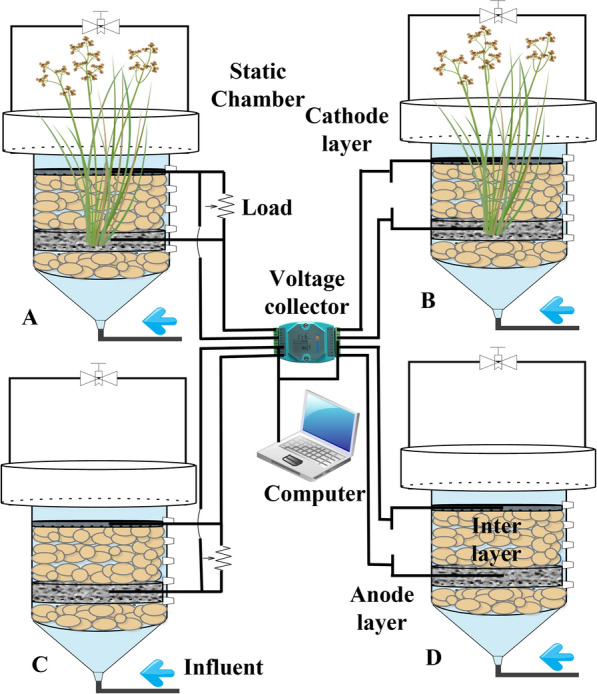
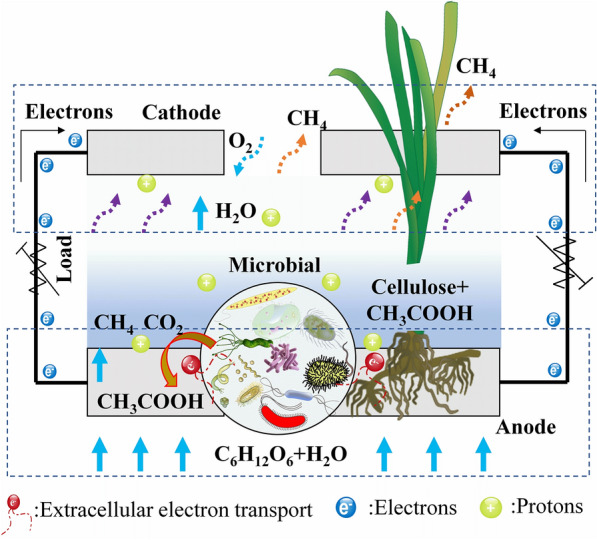
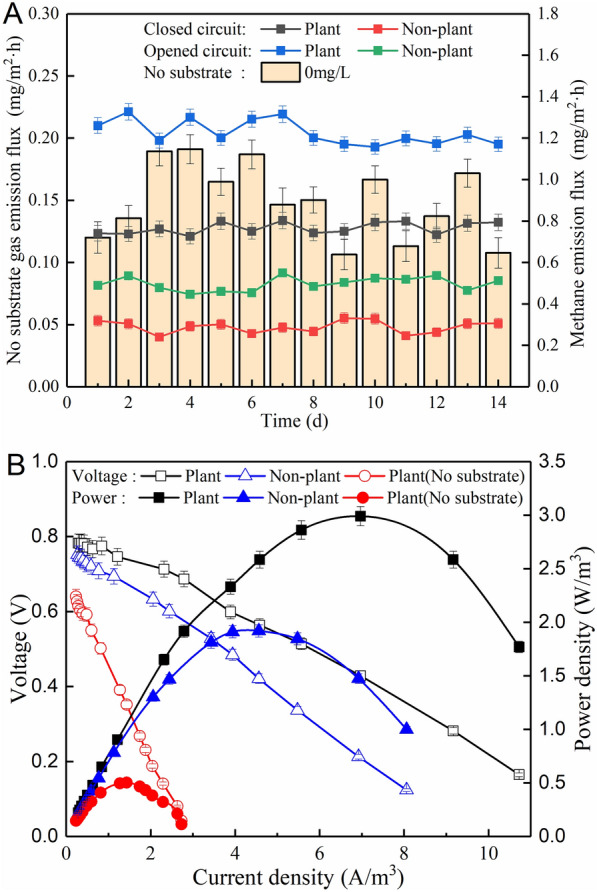
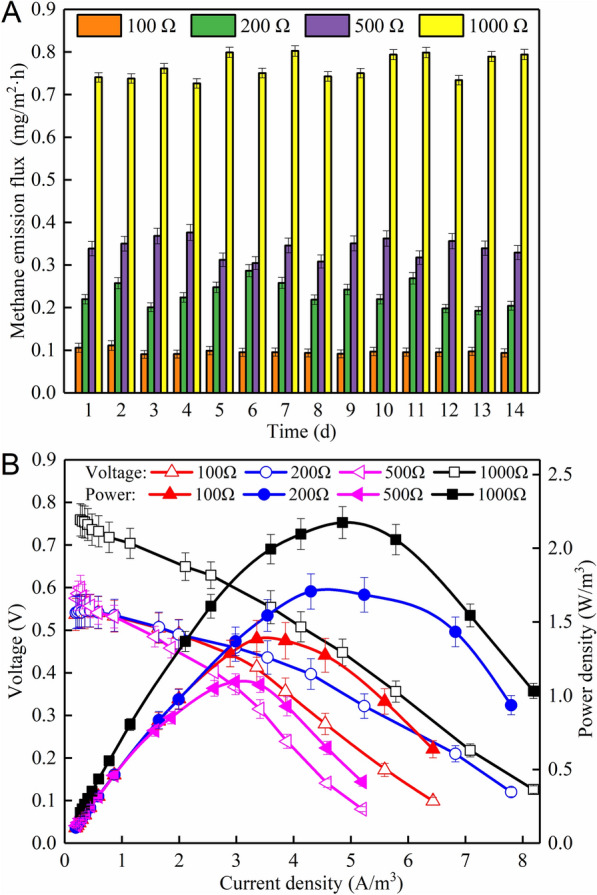
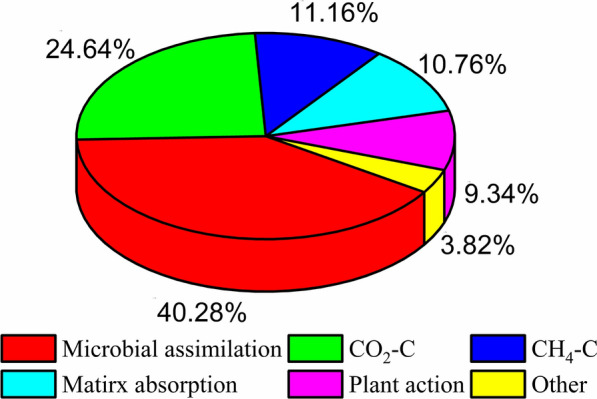
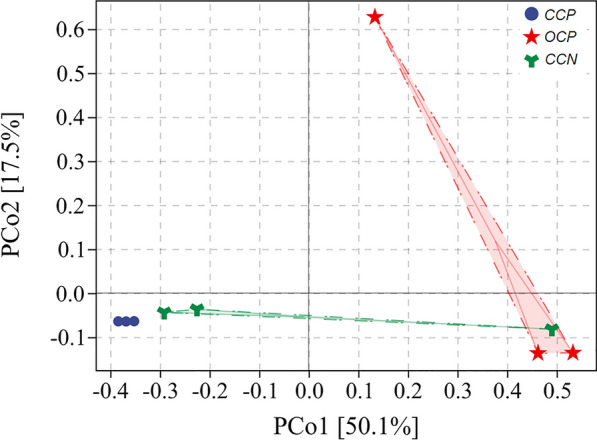
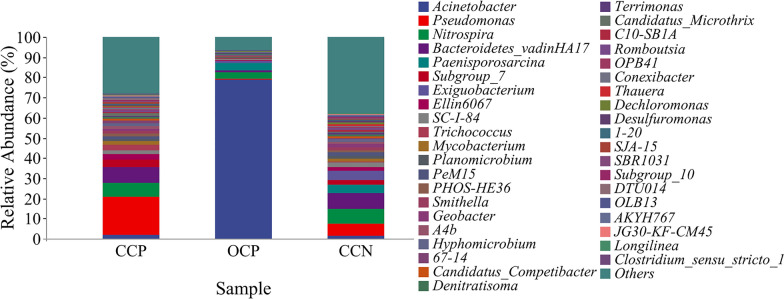
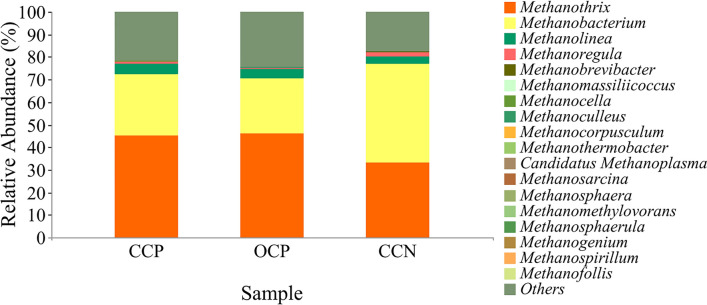
Wetlands are an important carbon sink for greenhouse gases (GHGs), and embedding microbial fuel cell (MFC) into constructed wetland (CW) has become a new technology to control methane (CH) emission. Rhizosphere anode CW-MFC was constructed by selecting rhizome-type wetland plants with strong hypoxia tolerance, which could provide photosynthetic organics as alternative fuel. Compared with non-planted system, CH emission flux and power output from the planted CW-MFC increased by approximately 0.48 ± 0.02 mg/(m·h) and 1.07 W/m, respectively. The CH emission flux of the CW-MFC operated under open-circuit condition was approximately 0.46 ± 0.02 mg/(m·h) higher than that under closed-circuit condition. The results indicated that plants contributed to the CH emission from the CW-MFC, especially under open-circuit mode conditions. The CH emission from the CW-MFC was proportional to external resistance, and it increased by 0.67 ± 0.01 mg/(m·h) when the external resistance was adjusted from 100 to 1000 Ω. High throughput sequencing further showed that there was a competitive relationship between electrogenic bacteria and methanogens. The flora abundance of electrogenic bacteria was high, while methanogens mainly consisted of Methanothrix, Methanobacterium and Methanolinea. The form and content of element C were analysed from solid phase, liquid phase and gas phase. It was found that a large amount of carbon source (TC = 254.70 mg/L) was consumed mostly through microbial migration and conversion, and carbon storage and GHGs emission accounted for 60.38% and 35.80%, respectively. In conclusion, carbon transformation in the CW-MFC can be properly regulated via competition of microorganisms driven by environmental factors, which provides a new direction and idea for the control of CH emission from wetlands.
湿地是温室气体(GHGs)的重要碳汇,将微生物燃料电池(MFC)嵌入人工湿地(CW)已成为一种控制甲烷(CH)排放的新技术。通过选择耐缺氧能力强的根茎型湿地植物构建根际阳极CW-MFC,其可为光合作用产生的有机物作为替代燃料。与未种植植物的系统相比,种植植物的CW-MFC的CH排放通量和功率输出分别增加了约0.48±0.02mg/(m²·h)和1.07W/m²。开路条件下运行的CW-MFC的CH排放通量比闭路条件下高约0.46±0.02mg/(m²·h)。结果表明,植物促进了CW-MFC的CH排放,尤其是在开路模式条件下。CW-MFC的CH排放与外部电阻成正比,当外部电阻从100Ω调整到1000Ω时,CH排放增加了0.67±0.01mg/(m²·h)。高通量测序进一步表明,产电细菌和产甲烷菌之间存在竞争关系。产电细菌的菌群丰度较高,而产甲烷菌主要由甲烷丝菌属、甲烷杆菌属和甲烷线菌属组成。从固相、液相和气相分析了元素C的形态和含量。结果发现,大量碳源(总碳TC = 254.70mg/L)主要通过微生物迁移和转化被消耗,碳储存和温室气体排放分别占60.38%和35.80%。总之,通过环境因素驱动的微生物竞争可以适当调节CW-MFC中的碳转化,这为控制湿地CH排放提供了新的方向和思路。