Green Ellen, Hamm Megan, Gowl Catherine, Van Deusen Reed, Liebschutz Jane M, Wilson J Deanna, Merlin Jessica
College of Health Solutions, Arizona State University, Tempe, AZ, USA.
School of Medicine, University of Pittsburgh, Pittsburgh, PA, USA.
Implement Sci Commun. 2024 Apr 22;5(1):44. doi: 10.1186/s43058-024-00575-y.
Substantial work has been done to update or create evidence-based practices (EBPs) in the changing health care landscape. However, the success of these EBPs is limited by low levels of clinician implementation.
The goal of this study is to describe the use of standardized/simulated patient/person (SP) methodology as a framework to develop implementation bundles to increase the effectiveness, sustainability, and reproducibility of EBPs across health care clinicians.
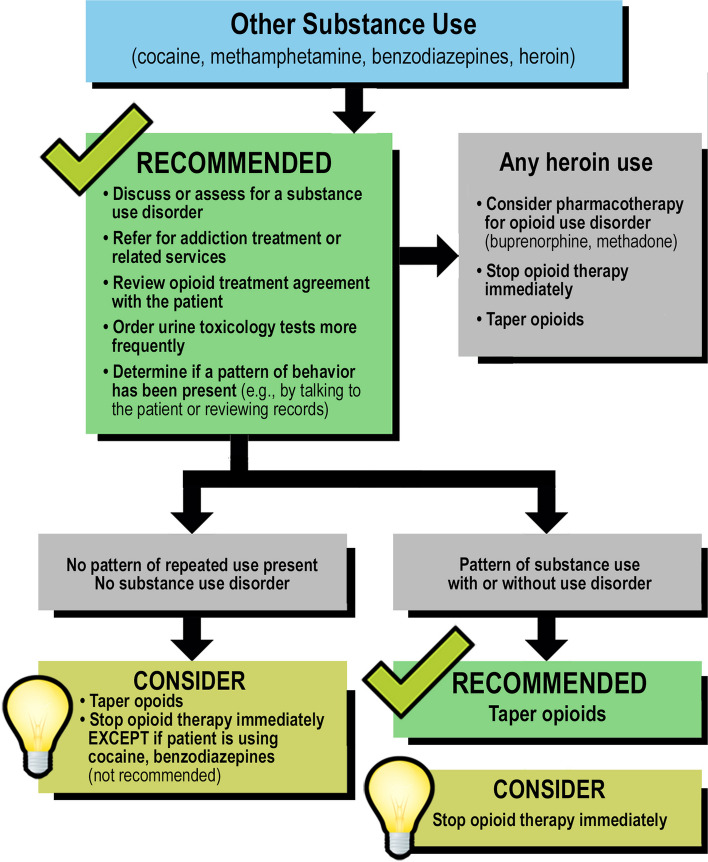
We observed 12 clinicians' first-time experiences with six unique decision-making algorithms, developed previously using rigorous Delphi methods, for use with patients exhibiting concerning behaviors associated with long-term opioid therapy (LTOT) for chronic pain. Clinicians were paired with two SPs trained to portray individuals with one of the concerning behaviors addressed by the algorithms in a telehealth environment. The SP evaluations were followed by individual interviews, guided by the Consolidated Framework for Implementation Research (CFIR), with each of the clinician participants.
Twelve primary care clinicians and 24 SPs in Western Pennsylvania.
The primary outcome was identifying likely facilitators for the successful implementation of the EBP using the SP methodology. Our secondary outcome was to assess the feasibility of using SPs to illuminate likely implementation barriers and facilitators.
The SP portrayal illuminated factors that were pertinent to address in the implementation bundle. SPs were realistic in their portrayal of patients with concerning behaviors associated with LTOT for chronic pain, but clinicians also noted that their patients in practice may have been more aggressive about their treatment plan.
SP simulation provides unique opportunities for obtaining crucial feedback to identify best practices in the adoption of new EBPs for high-risk patients.
Zoom simulated patient evaluations.
在不断变化的医疗保健环境中,人们已开展了大量工作来更新或创建循证实践(EBP)。然而,这些循证实践的成功受到临床医生低实施水平的限制。
本研究的目的是描述使用标准化/模拟患者/人员(SP)方法作为框架来制定实施包,以提高循证实践在医疗保健临床医生中的有效性、可持续性和可重复性。
我们观察了12名临床医生首次使用六种独特决策算法的经历,这些算法先前是使用严格的德尔菲方法开发的,用于治疗表现出与慢性疼痛长期阿片类药物治疗(LTOT)相关的可疑行为的患者。临床医生与两名经过培训的模拟患者配对,这些模拟患者在远程医疗环境中扮演算法所涉及的一种可疑行为的个体。模拟患者评估之后,根据实施研究综合框架(CFIR)对每位临床医生参与者进行单独访谈。
宾夕法尼亚州西部的12名初级保健临床医生和24名模拟患者。
主要结果是使用模拟患者方法确定循证实践成功实施的可能促进因素。次要结果是评估使用模拟患者来阐明可能的实施障碍和促进因素的可行性。
模拟患者的表现揭示了实施包中需要解决的相关因素。模拟患者对与慢性疼痛长期阿片类药物治疗相关的可疑行为患者的表现很逼真,但临床医生也指出,他们实际治疗的患者可能对治疗方案更积极。
模拟患者模拟为获取关键反馈提供了独特机会,以确定针对高危患者采用新循证实践的最佳做法。
Zoom模拟患者评估。