Geladaris Anastasia, Torke Sebastian, Saberi Darius, Alankus Yasemin B, Streit Frank, Zechel Sabrina, Stadelmann-Nessler Christine, Fischer Andreas, Boschert Ursula, Häusler Darius, Weber Martin S
Institute of Neuropathology, University Medical Center, Georg August University, Robert-Koch-Str. 40, 37075, Göttingen, Germany.
Fraunhofer Institute for Translational Medicine and Pharmacology, Göttingen, Germany.
Acta Neuropathol. 2024 Apr 24;147(1):75. doi: 10.1007/s00401-024-02730-0.
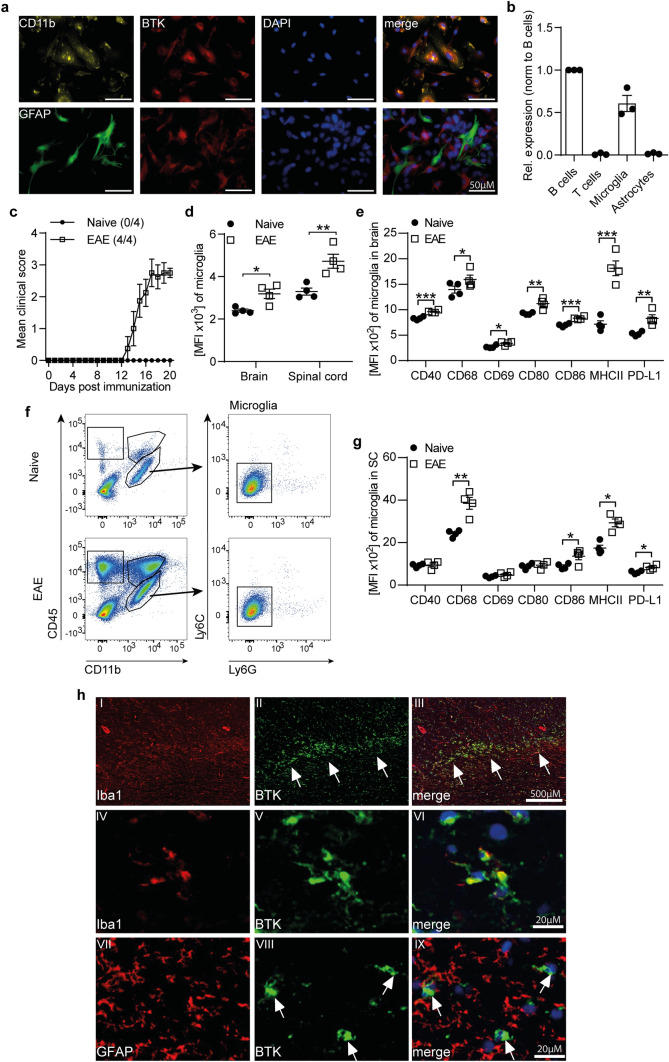
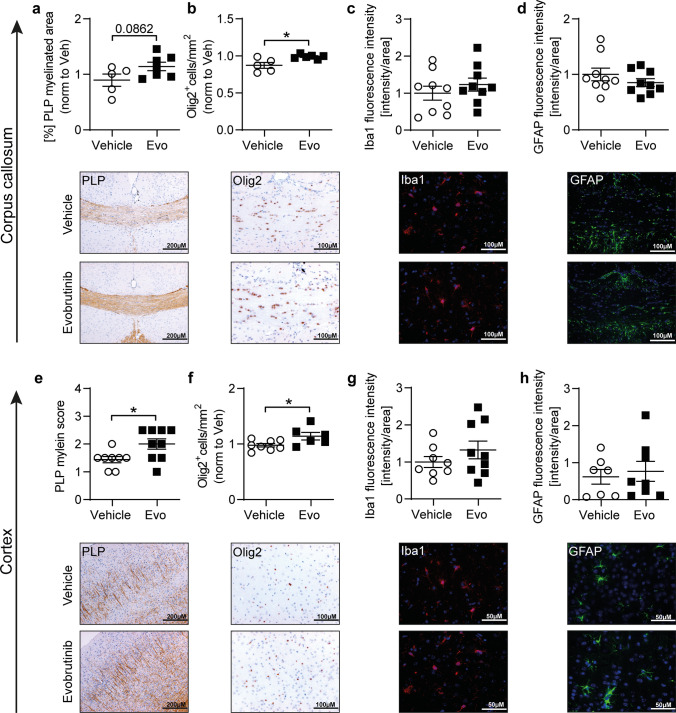
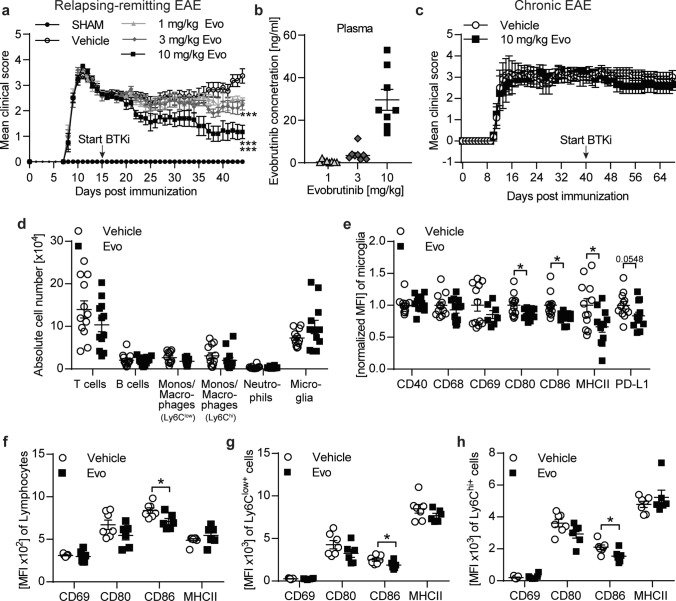
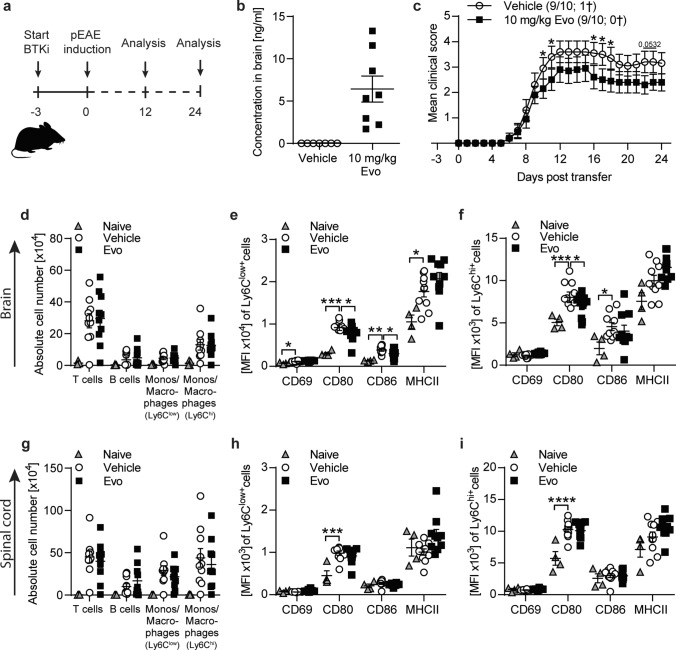
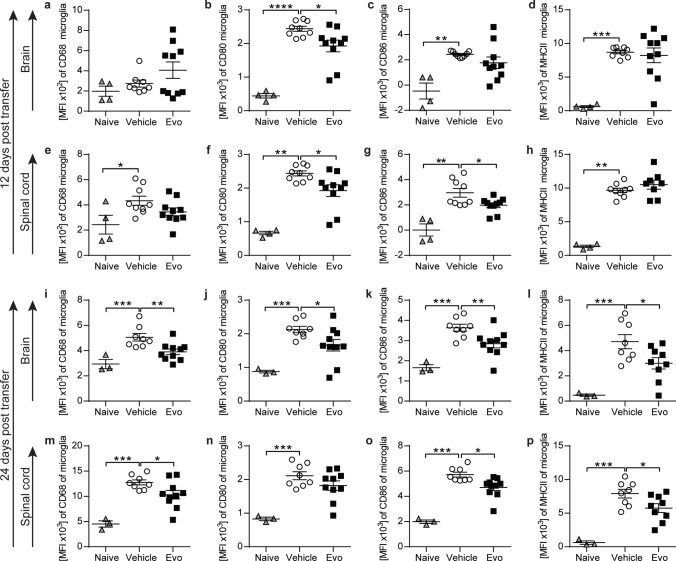
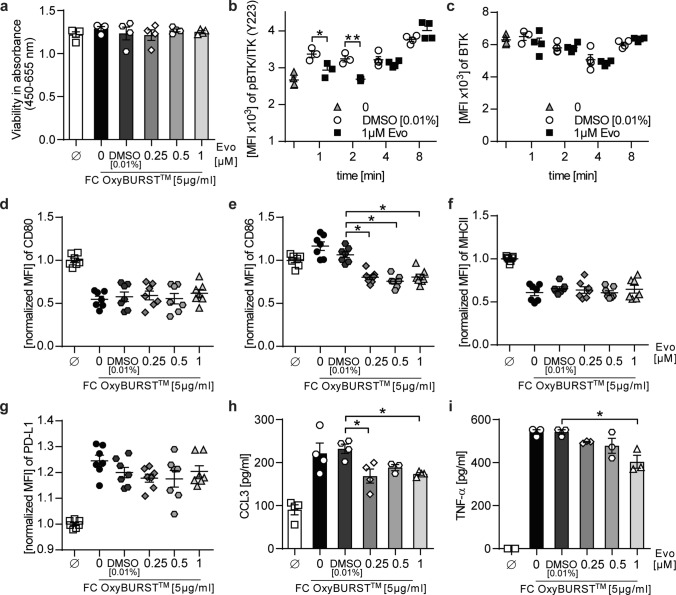
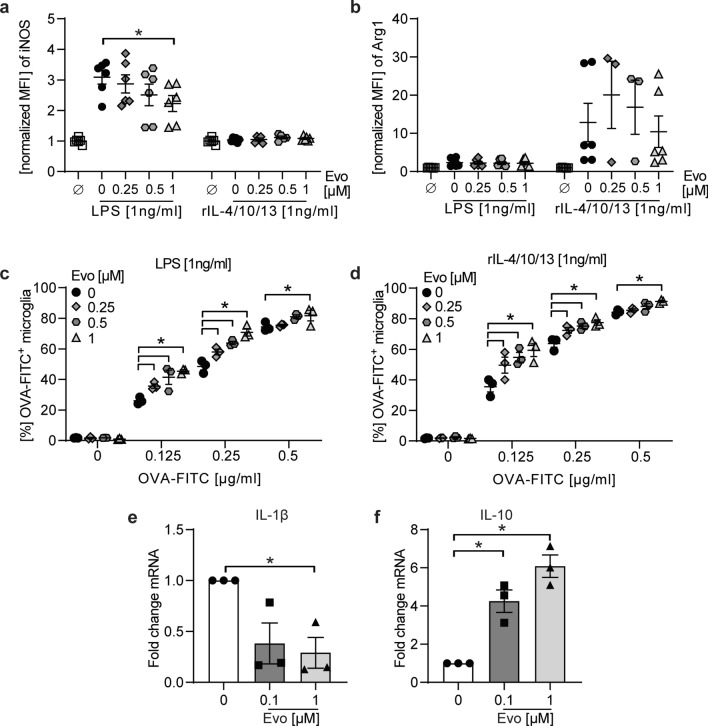
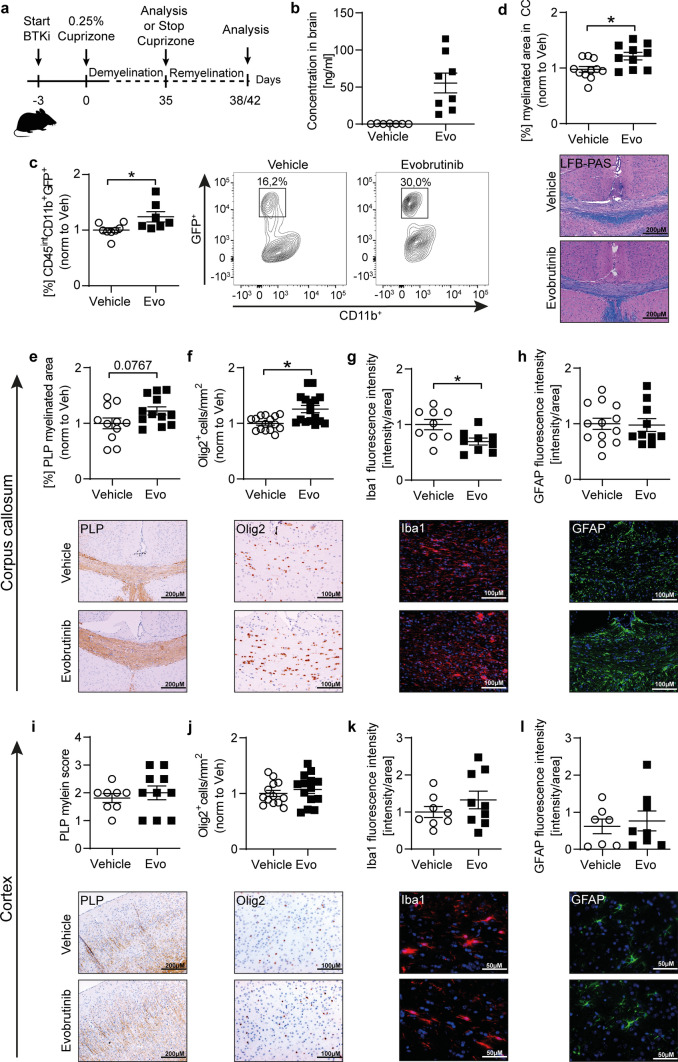
In multiple sclerosis (MS), persisting disability can occur independent of relapse activity or development of new central nervous system (CNS) inflammatory lesions, termed chronic progression. This process occurs early and it is mostly driven by cells within the CNS. One promising strategy to control progression of MS is the inhibition of the enzyme Bruton's tyrosine kinase (BTK), which is centrally involved in the activation of both B cells and myeloid cells, such as macrophages and microglia. The benefit of BTK inhibition by evobrutinib was shown as we observed reduced pro-inflammatory activation of microglia when treating chronic experimental autoimmune encephalomyelitis (EAE) or following the adoptive transfer of activated T cells. Additionally, in a model of toxic demyelination, evobrutinib-mediated BTK inhibition promoted the clearance of myelin debris by microglia, leading to an accelerated remyelination. These findings highlight that BTK inhibition has the potential to counteract underlying chronic progression of MS.
在多发性硬化症(MS)中,持续性残疾可能独立于复发活动或新的中枢神经系统(CNS)炎性病变的发展而出现,这被称为慢性进展。这个过程发生得很早,并且主要由中枢神经系统内的细胞驱动。一种控制MS进展的有前景的策略是抑制布鲁顿酪氨酸激酶(BTK),该酶在B细胞和髓样细胞(如巨噬细胞和小胶质细胞)的激活中起核心作用。当我们在治疗慢性实验性自身免疫性脑脊髓炎(EAE)时或在活化T细胞的过继转移后观察到小胶质细胞的促炎激活减少时,显示了依鲁替尼抑制BTK的益处。此外,在毒性脱髓鞘模型中,依鲁替尼介导的BTK抑制促进了小胶质细胞对髓鞘碎片的清除,导致髓鞘再生加速。这些发现突出表明,抑制BTK有可能对抗MS潜在的慢性进展。