Zhou Jieru, Cai Wei, Jin Min, Xu Jingwei, Wang Yanan, Xiao Yichuan, Hao Li, Wang Bei, Zhang Yanyun, Han Jie, Huang Rui
Department of Rheumatology, East Hospital, Tongji University School of Medicine, Shanghai, China.
Medical College of Soochow University, Suzhou, Jiangsu, China.
Sci Rep. 2015 Sep 2;5:13713. doi: 10.1038/srep13713.
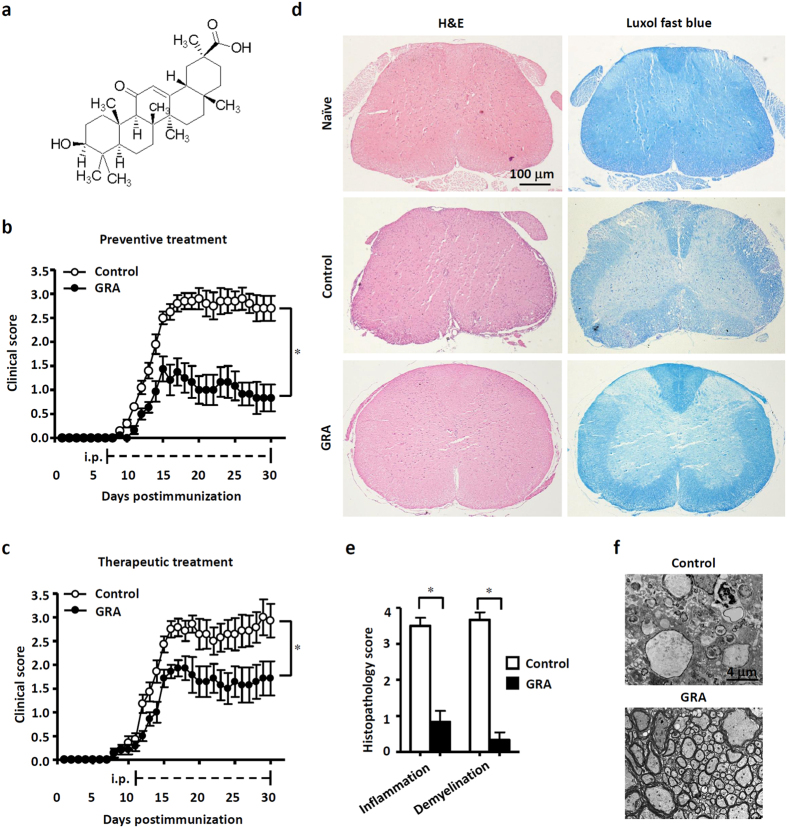
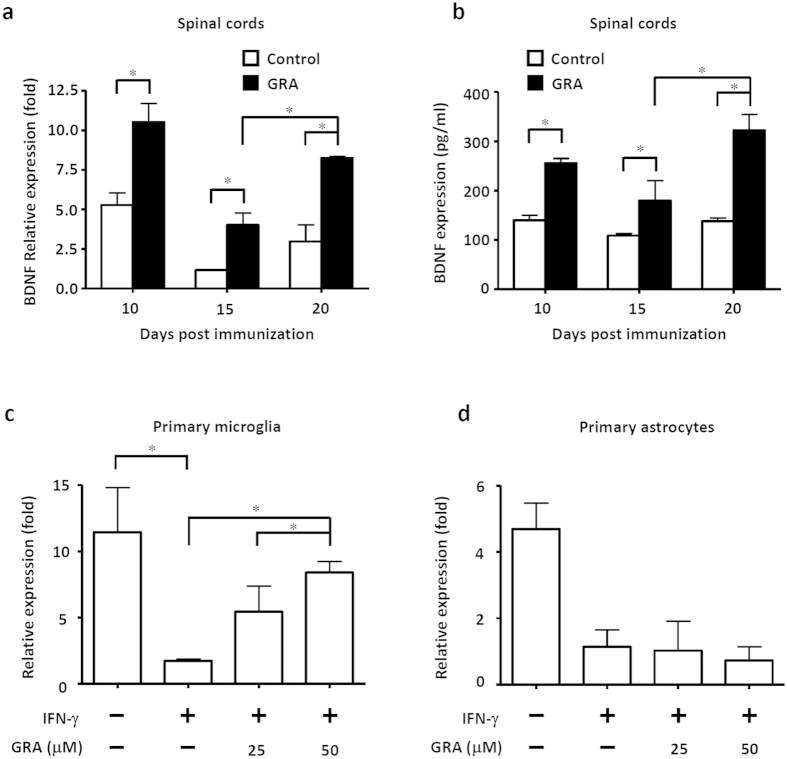
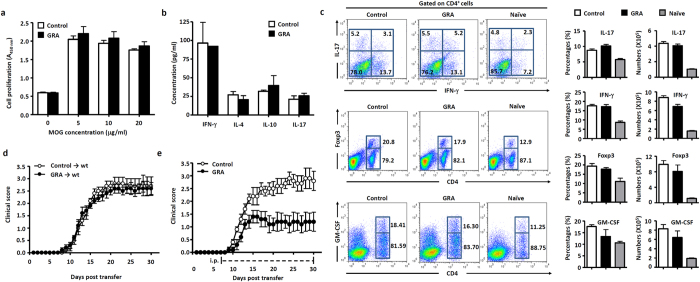
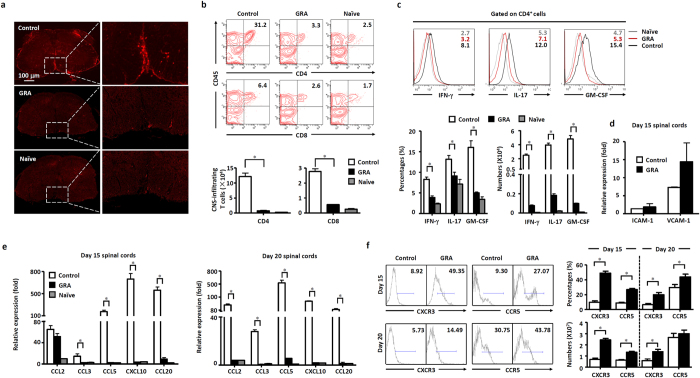
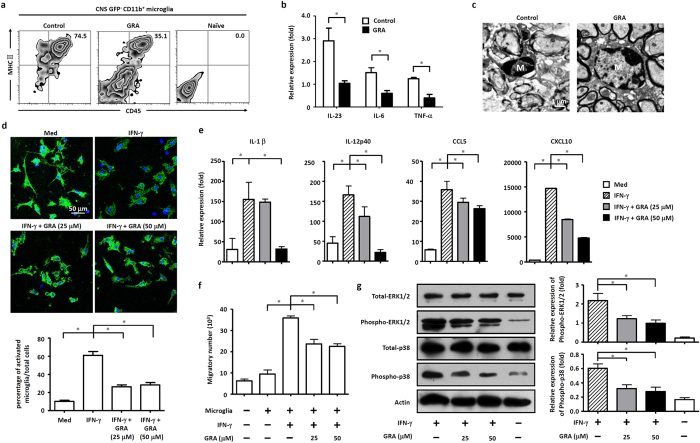
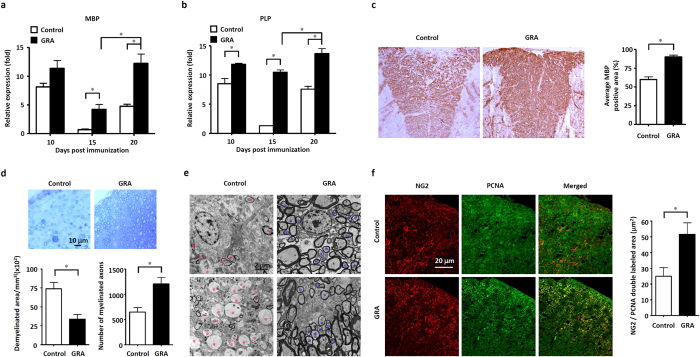
Microglia are intrinsic immune cells in the central nervous system (CNS). The under controlled microglia activation plays important roles in inflammatory demyelination diseases, such as multiple sclerosis (MS). However, the means to modulate microglia activation as a therapeutic modality and the underlying mechanisms remain elusive. Here we show that administration of 18β-glycyrrhetinic acid (GRA), by using both preventive and therapeutic treatment protocols, significantly suppresses disease severity of experimental autoimmune encephalomyelitis (EAE) in C57BL/6 mice. The treatment effect of GRA on EAE is attributed to its regulatory effect on microglia. GRA-modulated microglia significantly decreased pro-inflammatory profile in the CNS through suppression of MAPK signal pathway. The ameliorated CNS pro-inflammatory profile prevented the recruitment of encephalitogenic T cells into the CNS, which alleviated inflammation-induced demyelination. In addition, GRA treatment promoted remyelination in the CNS of EAE mice. The induced remyelination can be mediated by the overcome of inflammation-induced blockade of brain-derived neurotrophic factor expression in microglia, as well as enhancing oligodendrocyte precursor cell proliferation. Collectively, our results demonstrate that GRA-modulated microglia suppresses EAE through inhibiting microglia activation-mediated CNS inflammation, and promoting neuroprotective effect of microglia, which represents a potential therapeutic strategy for MS and maybe other neuroinflammatory diseases associated with microglia activation.
小胶质细胞是中枢神经系统(CNS)中的固有免疫细胞。小胶质细胞的过度激活在炎症性脱髓鞘疾病(如多发性硬化症(MS))中起重要作用。然而,作为一种治疗方式调节小胶质细胞激活的方法及其潜在机制仍然不清楚。在这里,我们表明,通过预防性和治疗性治疗方案给予18β-甘草次酸(GRA),可显著抑制C57BL/6小鼠实验性自身免疫性脑脊髓炎(EAE)的疾病严重程度。GRA对EAE的治疗作用归因于其对小胶质细胞的调节作用。GRA调节的小胶质细胞通过抑制MAPK信号通路,显著降低了CNS中的促炎特征。改善的CNS促炎特征阻止了致脑炎性T细胞向CNS的募集,从而减轻了炎症诱导的脱髓鞘。此外,GRA治疗促进了EAE小鼠CNS中的髓鞘再生。诱导的髓鞘再生可通过克服炎症诱导的小胶质细胞中脑源性神经营养因子表达的阻断,以及增强少突胶质前体细胞增殖来介导。总体而言,我们的结果表明,GRA调节的小胶质细胞通过抑制小胶质细胞激活介导的CNS炎症,并促进小胶质细胞的神经保护作用,从而抑制EAE,这代表了一种针对MS以及可能其他与小胶质细胞激活相关的神经炎症性疾病的潜在治疗策略。